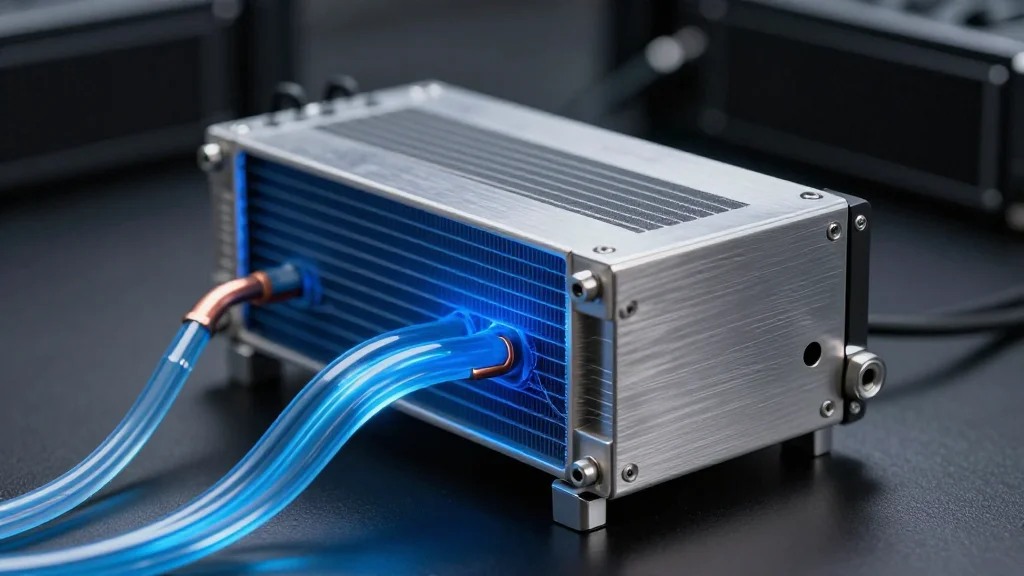
Midea Launches $1.4 B Liquid‑cooling Hub to Power AI Data Centers

Why It Matters
The launch comes at a moment when AI‑driven workloads are pushing data‑center power densities beyond the limits of conventional air‑cooling. By offering a turnkey, low‑PUE liquid‑cooling solution, Midea could help operators curb the steep rise in electricity demand that threatens both operating costs and climate goals. Moreover, the company’s vertical integration reduces exposure to geopolitical supply‑chain shocks, a factor increasingly scrutinized by investors and regulators. If Midea’s technology delivers on its efficiency promises, it could set a new benchmark for data‑center design, prompting rivals to accelerate their own liquid‑cooling roadmaps. The ripple effect would be a faster transition toward greener, more resilient digital infrastructure worldwide.
Key Takeaways
- •Midea Building Technology invests >10 billion yuan ($1.4 billion) in a liquid‑cooling manufacturing hub
- •Self‑developed magnetic‑levitation compressors hold 2025 domestic market‑share leader position
- •Flexible "wind‑liquid" architecture adapts to AI workload spikes across AI, IDC and edge sites
- •Company aims to shift from equipment supplier to full compute‑infrastructure services, adding power, storage and PV
- •Pilot projects have shown ultra‑low PUE, promising significant energy‑use reductions for data centers
Pulse Analysis
Midea’s $1.4 billion bet on liquid cooling arrives as the data‑center industry confronts a dual pressure: exploding AI compute demand and tightening climate regulations. Historically, cooling has been the second‑largest electricity consumer in data centers, after the IT load itself. By internalizing the entire cooling value chain, Midea not only cuts procurement costs but also gains granular control over performance metrics such as PUE, enabling it to offer differentiated service‑level agreements that many Western rivals cannot match.
The strategic timing is noteworthy. While U.S. and European firms have been investing heavily in liquid‑cooling R&D, they remain fragmented across hardware, software and integration partners. Midea’s end‑to‑end model could attract data‑center operators seeking a single point of contact, especially in emerging markets where supply‑chain reliability is a premium. However, the company will need to prove its technology at scale and navigate export controls that increasingly target advanced cooling components tied to high‑performance computing.
Looking ahead, Midea’s expansion into power distribution, storage and photovoltaic integration hints at a broader vision of becoming a one‑stop shop for compute‑infrastructure ecosystems. If successful, this could reshape procurement dynamics, forcing traditional cooling specialists to either partner with or be acquired by larger platform players. The next 12‑18 months will be critical as Midea ramps production, secures global contracts, and demonstrates that its low‑PUE claims hold up under real‑world AI workloads.
Midea launches $1.4 B liquid‑cooling hub to power AI data centers
Comments
Want to join the conversation?
Loading comments...