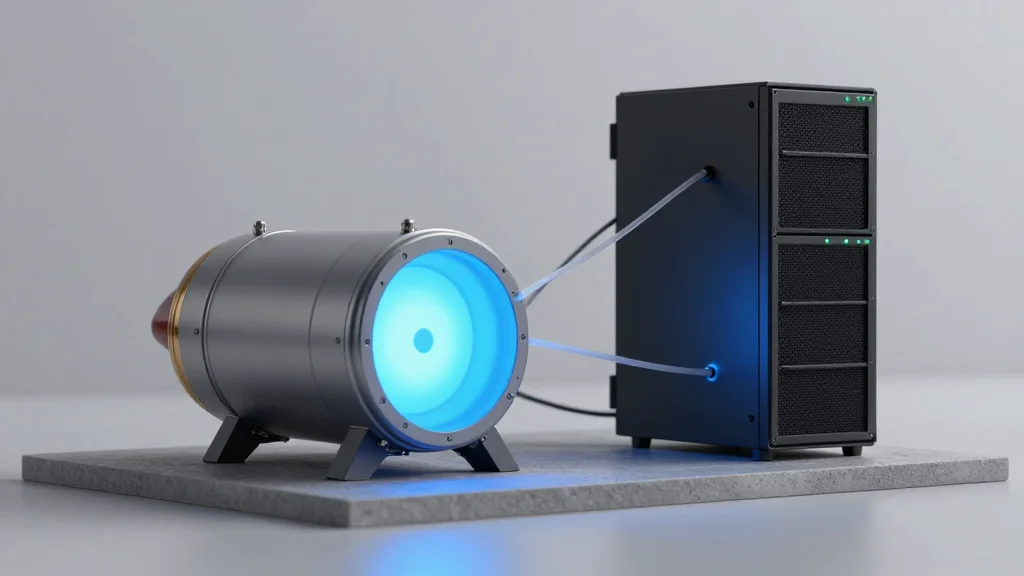
Nano Nuclear Signs MOU with Supermicro to Power AI Data Centers with On‑site Micro‑reactors

Why It Matters
The Nano Nuclear‑Supermicro partnership tackles two converging challenges: the climate imperative to decarbonize compute and the practical need for reliable, high‑density power. By offering a grid‑independent, zero‑emission energy source, micro‑reactors could dramatically reduce the carbon footprint of AI workloads, which currently rely on fossil‑fuel‑heavy grids in many regions. Moreover, the deal signals that the nuclear industry is finally finding a commercial foothold in the fast‑moving technology sector, potentially accelerating regulatory reforms and public acceptance of SMRs. If successful, the model could reshape data‑center economics, lowering operating costs tied to electricity price volatility and carbon pricing. It also creates a new revenue stream for nuclear technology firms, diversifying beyond traditional utility contracts and aligning with the growing demand for sustainable infrastructure from ESG‑focused investors.
Key Takeaways
- •Nano Nuclear and Supermicro sign a non‑binding MOU to integrate KRONOS micro‑reactors with AI server platforms
- •Nano Nuclear’s stock jumped 14.2% on the announcement
- •KRONOS MMR delivers up to 10 MW of clean power per unit, designed for on‑site data‑center use
- •There are now 18 nuclear‑powered AI data‑center facilities worldwide with a combined 31.2 GW capacity
- •Partnership aims to address AI’s power demand that is outpacing traditional grid capacity
Pulse Analysis
The Nano Nuclear‑Supermicro tie‑up arrives at a moment when AI compute is becoming a utility in its own right. Companies like OpenAI, Microsoft, and Google are spending billions on training runs that can consume megawatts of electricity for days on end. Traditional power grids, especially in regions with high renewable penetration, often lack the firm capacity to meet these spikes, leading to costly demand‑response measures or reliance on diesel backup. By offering a modular, carbon‑free power source that can be co‑located with the compute hardware, the partnership could fundamentally alter the economics of AI scaling.
Historically, nuclear has been viewed as a monolithic, capital‑intensive technology suited for baseload generation. The emergence of SMRs and micro‑reactors, however, is reshaping that narrative. The KRONOS design promises shorter construction timelines, lower upfront costs, and a licensing pathway that leverages existing regulatory frameworks for small reactors. If the MOU progresses to a binding contract and pilots demonstrate reliability, we could see a wave of similar agreements as other hardware vendors—Dell, HPE, and even hyperscale cloud providers—seek to secure their own low‑carbon power sources.
Nevertheless, the road ahead is fraught with challenges. Nuclear safety, public perception, and the need for clear regulatory pathways remain significant hurdles. Moreover, the economics of micro‑reactors must compete with rapidly falling renewable costs and advances in battery storage. Investors will be watching closely for concrete cost‑per‑kilowatt‑hour figures and the timeline for commercial deployment. Should Nano Nuclear and Supermicro deliver a working prototype within the next 12‑18 months, the partnership could become a benchmark for the next generation of climate‑tech infrastructure, accelerating the decarbonization of AI while opening a new market for nuclear innovators.
Nano Nuclear signs MOU with Supermicro to power AI data centers with on‑site micro‑reactors
Comments
Want to join the conversation?
Loading comments...