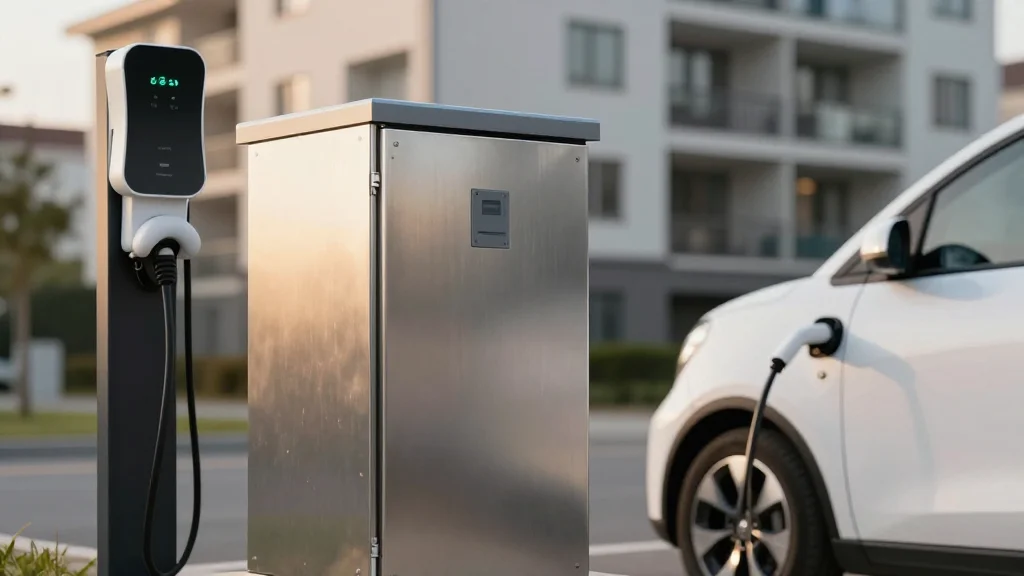
Neighborhood Battery Combined With Solar & EV Chargers
Why It Matters
The deployment demonstrates how shared storage can expand renewable access for non‑homeowners and support EV adoption in suburbs lacking private charging, accelerating decarbonization goals. It offers a scalable model for utilities and municipalities to reduce grid stress and defer costly infrastructure upgrades.
Key Takeaways
- •Community battery supplies renewable power to renters without solar
- •Reduces grid strain and overvoltage from excess solar generation
- •Powers local EV chargers using solar‑derived electricity
- •Lowers network upgrade costs and pressure on electricity prices
- •Strengthens neighborhood ties through shared clean‑energy infrastructure
Pulse Analysis
Community‑scale battery storage has moved from niche projects to a mainstream tool for integrating intermittent renewables. By aggregating multiple households’ demand, a shared battery can store excess solar generation during midday and release it when the sun sets, smoothing the load curve without requiring each homeowner to install a personal system. Utilities worldwide are evaluating this model to defer expensive network reinforcement, while policymakers see it as a pathway to meet renewable‑energy targets. The technology also creates new revenue streams for asset owners through grid services such as frequency regulation.
The Yarra Energy Foundation’s pilot in Clifton Hill couples a 1‑megawatt‑hour community battery with several public EV chargers, delivering solar‑derived electricity to renters who cannot charge at home. Early data suggest the battery reduces peak‑demand spikes by up to 15 percent, easing overvoltage risks that often force utilities to curtail rooftop solar. By supplying clean power to the chargers, the project cuts the marginal cost of EV charging, which in turn lowers the overall electricity price for the neighbourhood. The integrated approach also showcases how storage can act as a backup for both homes and the charging network.
If the Clifton Hill test proves successful, municipalities and distribution network service providers are likely to replicate the model across dense urban suburbs. The financial case strengthens as battery costs continue to fall—prices have dropped roughly 70 % over the past decade—while EV adoption accelerates, creating higher demand for accessible charging. Moreover, the social dimension—building community around a shared clean‑energy asset—aligns with emerging ESG criteria that investors increasingly demand. Scaling community batteries could become a cornerstone of a resilient, low‑carbon grid in cities worldwide.
Neighborhood Battery Combined With Solar & EV Chargers
Comments
Want to join the conversation?
Loading comments...