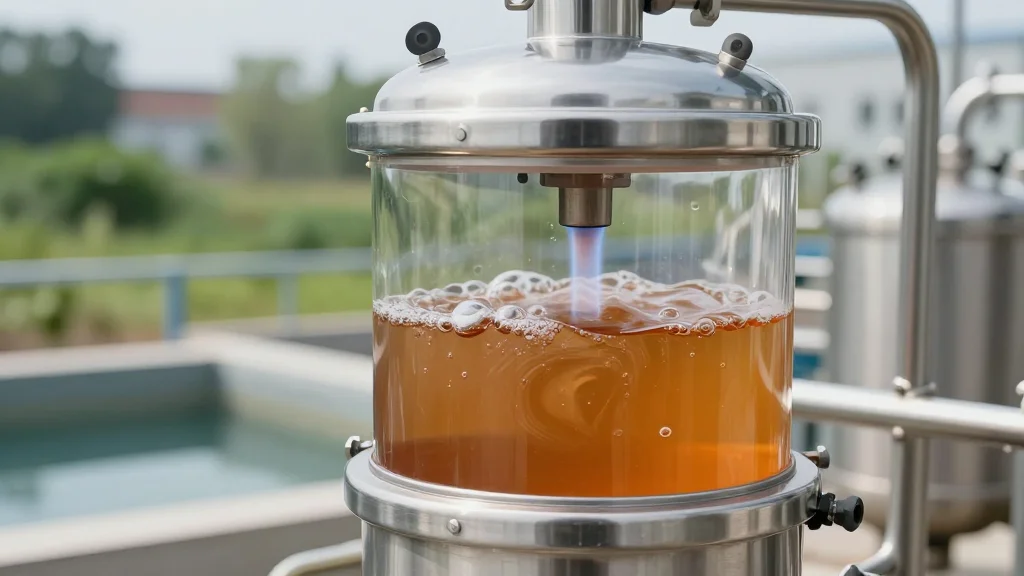
New Technique Radically Boosts Biogas Yields From Sewage Sludge
Why It Matters
The breakthrough could transform wastewater treatment from an energy‑intensive liability into a profitable source of renewable natural gas, accelerating decarbonization and cost reductions across thousands of facilities.
Key Takeaways
- •APAD process triples biogas yield from sewage sludge.
- •Pretreatment cuts sludge disposal cost by 48% to $253 per dry ton.
- •New methanogenic strain converts CO₂ to methane, boosting RNG quality.
- •Carbon conversion efficiency reaches 83%, far above conventional under 40%.
- •Scaling could generate billions in annual U.S. sewage‑sludge treatment savings.
Pulse Analysis
Wastewater‑treatment plants consume 3%‑4% of U.S. electricity and emit roughly 21 million metric tons of CO₂ annually, making them a hidden but significant energy and climate challenge. Conventional anaerobic digestion captures only a fraction of the sludge’s carbon, leaving large biosolids piles and low‑purity biogas that requires costly upgrading. The new APAD system directly addresses these inefficiencies by adding an advanced wet oxidation and steam‑explosion pretreatment, which breaks down recalcitrant organics before a second digestion stage, dramatically improving feedstock availability for methane‑producing microbes.
At the heart of the process is a patented strain of Methanothermobacter wolfeii BSEL, engineered to thrive on hydrogen and convert the CO₂ portion of biogas into additional methane. This biological upgrading eliminates the need for energy‑intensive chemical scrubbing, raising renewable natural‑gas (RNG) purity and delivering a 200% output boost. The integrated approach lifts overall carbon‑conversion efficiency to 83%, more than double the typical performance of legacy systems, while cutting sludge‑disposal expenses from $494 to $253 per dry ton. These gains translate into both operational savings and a substantial reduction in greenhouse‑gas footprints for municipalities.
If the technology scales to the nation’s roughly 15,000 treatment facilities, the cumulative economic impact could reach billions of dollars annually, according to the researchers’ modeling. Beyond cost, the higher‑grade RNG can be injected directly into existing natural‑gas pipelines, supporting broader decarbonization goals and providing a reliable, locally sourced energy feedstock. Federal support from the DOE’s Bioenergy Technologies Office signals policy alignment, and partnerships with industrial players could accelerate commercial deployment, positioning APAD as a cornerstone of the circular‑economy transition in the water sector.
New technique radically boosts biogas yields from sewage sludge
Comments
Want to join the conversation?
Loading comments...