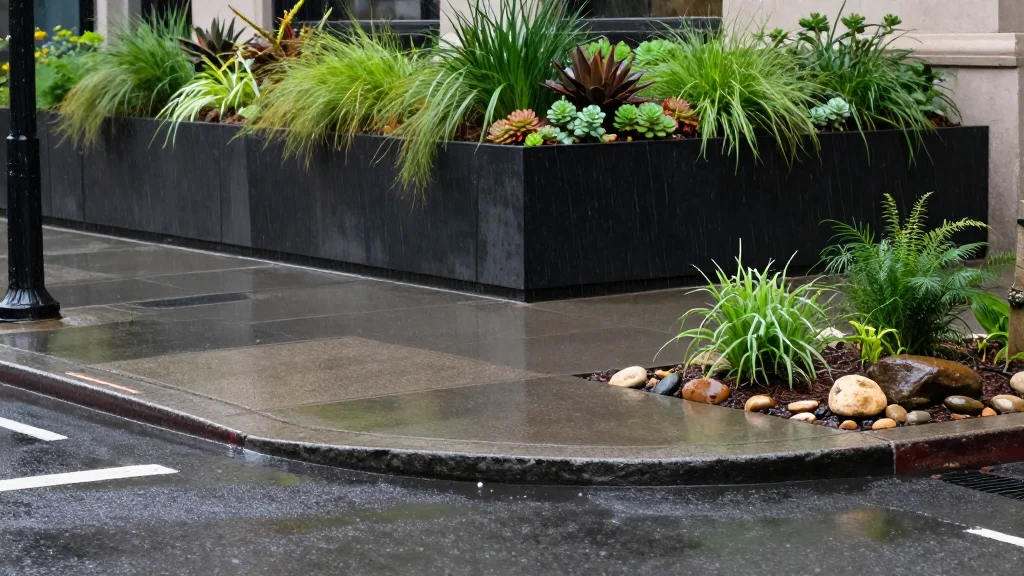
New York’s Climate Resilience Roadmap Pushes ‘Sponge City’ Designs After Record Brooklyn Flood

Companies Mentioned
Why It Matters
Sponge City designs represent a paradigm shift from traditional flood control to integrated, nature‑based solutions that can simultaneously reduce runoff, improve water quality and create urban green space. For a city as densely populated as New York, adopting permeable infrastructure could lower flood insurance premiums, protect critical transit assets and enhance public health by mitigating heat‑island effects. Moreover, the roadmap signals to investors that climate‑tech solutions are gaining policy backing, potentially accelerating capital flows into startups that specialize in porous materials, smart sensors and decentralized water storage. If New York’s pilots demonstrate measurable reductions in flood depth and response time, other coastal megacities—London, Tokyo, Mumbai—may adopt similar frameworks, scaling the market for green‑infrastructure technologies. The initiative also raises equity questions: ensuring that low‑income neighborhoods receive the same level of investment will be crucial to avoid widening climate‑justice gaps.
Key Takeaways
- •Brooklyn flash flood delivered 22.4 inches of water in 25 minutes, classified as a 5‑10‑year event.
- •NYC Climate Resilience Roadmap proposes 10 % of downtown asphalt be replaced with permeable concrete within three years.
- •Pilot program includes 50 new rain gardens and a 15 % increase in green‑roof coverage.
- •City seeks $250 million in state and federal grants to fund Sponge City pilots.
- •Real‑time sensor network will feed data to a public dashboard for adaptive management.
Pulse Analysis
The push for Sponge City infrastructure in New York reflects a broader market transition where climate‑tech firms are moving from niche projects to city‑scale contracts. Historically, flood mitigation relied on massive gray‑infrastructure investments that are now proving insufficient against the frequency and intensity of climate‑driven storms. By embedding green solutions into the urban fabric, municipalities can unlock multiple revenue streams: reduced emergency response costs, lower insurance payouts, and new green‑bond financing.
Investors should watch the upcoming public hearing as a litmus test for political appetite. If the city secures the $250 million grant and demonstrates early success, it could catalyze a wave of federal funding under the Infrastructure Investment and Jobs Act, creating a pipeline of contracts for firms that provide permeable paving, bioswale design and sensor analytics. Conversely, pushback from developers over retrofitting costs could stall implementation, highlighting the importance of public‑private partnership structures that share risk and reward.
Strategically, companies that can integrate data analytics with physical infrastructure—offering predictive flood modeling tied to sensor feeds—will command premium pricing. The New York case also underscores the need for community engagement; equitable rollout will be a differentiator for firms seeking to avoid the backlash that has plagued past urban greening projects. In sum, the Sponge City roadmap is not just a policy document; it is a market catalyst that could reshape the climate‑tech investment landscape over the next decade.
New York’s Climate Resilience Roadmap Pushes ‘Sponge City’ Designs After Record Brooklyn Flood
Comments
Want to join the conversation?
Loading comments...