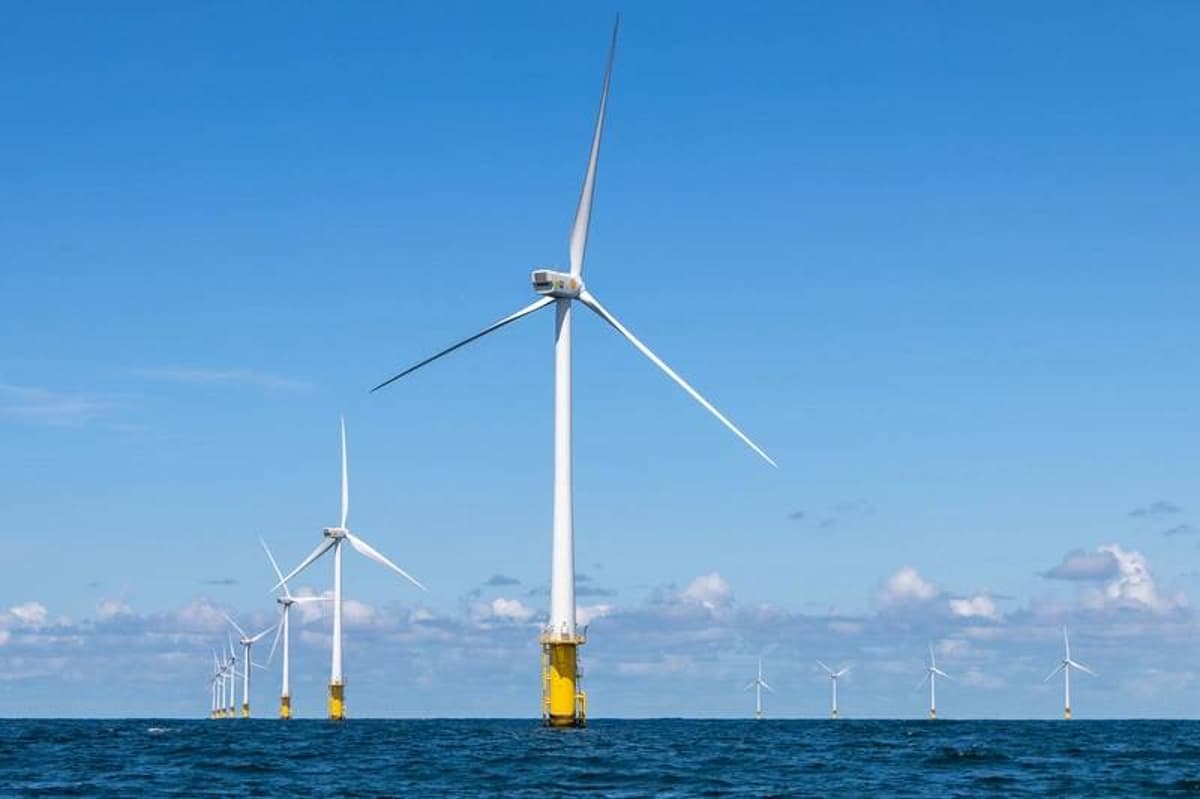
NextEra CEO Positive About Dominion Offshore Wind Project
Companies Mentioned
Why It Matters
NextEra’s endorsement could accelerate offshore wind adoption in the U.S., signaling broader industry confidence and unlocking additional capital for large‑scale projects.
Key Takeaways
- •NextEra bid $66.8 B for Dominion Energy.
- •Dominion's offshore wind now costs $11.4 B after $100 M cut.
- •Project will be largest U.S. offshore wind, online by 2025.
- •NextEra, previously skeptical, now backs offshore wind development.
- •Federal judge lifted Trump-era stop‑work order in January.
Pulse Analysis
Offshore wind has emerged as a pivotal component of the United States’ clean‑energy roadmap, yet high capital costs and regulatory uncertainty have slowed deployment. Dominion’s Coastal Virginia Offshore Wind project, slated to become the nation’s largest offshore wind farm, illustrates both the challenges and progress of the sector. After more than $1 billion in cost overruns and a Trump‑era construction pause, a federal judge lifted the stop‑work order in January, allowing the project to resume and begin delivering electricity to the grid. The recent $100 million cost reduction to $11.4 billion underscores how engineering refinements and supply‑chain efficiencies are beginning to tame the historically steep price tag.
NextEra Energy, the world’s largest renewable‑energy generator, has historically shied away from offshore wind, citing corrosion, hurricane risk, and the need for specialized vessels. CEO John Ketchum’s public endorsement marks a notable strategic pivot, especially as the company pursues a $66.8 billion acquisition of Dominion Energy. By aligning with Dominion’s offshore venture, NextEra signals that the economics of offshore wind are reaching a threshold where the technology can complement its extensive on‑shore wind and solar portfolio. This endorsement may also reassure investors that offshore wind is maturing into a financially viable asset class.
The broader market is likely to interpret NextEra’s stance as a validation of offshore wind’s evolving cost structure and risk profile. Institutional investors, who have been cautious about allocating capital to offshore projects, may now view them as more attractive, potentially spurring a wave of new financing and joint‑venture agreements. Moreover, the endorsement could influence policy makers to accelerate permitting reforms and tax incentives, further reducing barriers. As offshore wind projects scale up and achieve cost parity with on‑shore renewables, the United States could see a rapid expansion of clean‑energy capacity, helping meet its 2030 emissions targets while delivering stable, long‑term returns for utilities and investors alike.
NextEra CEO Positive About Dominion Offshore Wind Project
Comments
Want to join the conversation?
Loading comments...