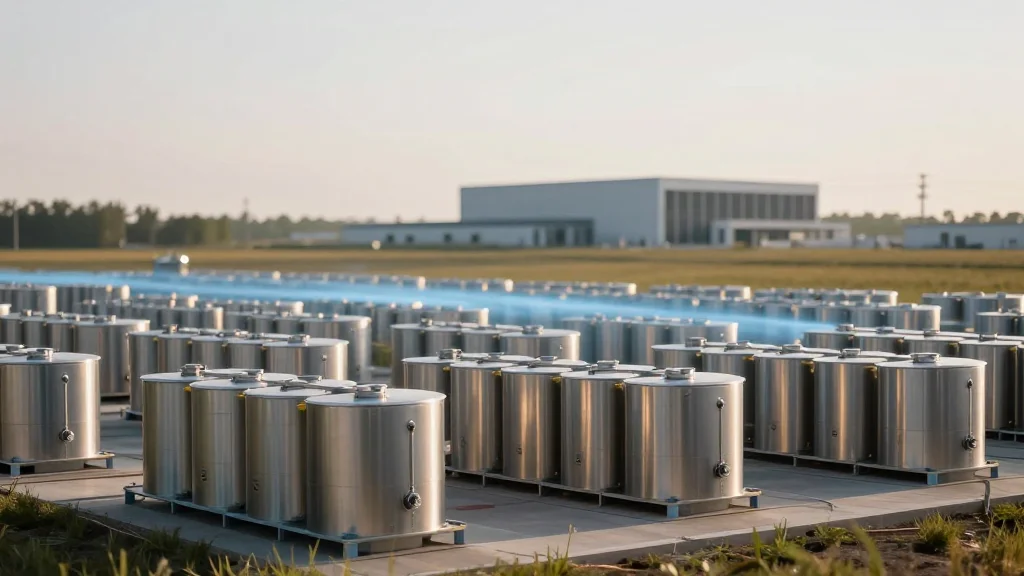
Noon Energy Lands up to 1 GW Ultra‑long‑duration Storage Deal with Meta Platforms

Companies Mentioned
Why It Matters
The Noon Energy–Meta contract illustrates how corporate power users are becoming pivotal financiers of grid‑scale clean‑energy infrastructure. By directly reserving storage capacity, Meta reduces its exposure to grid outages and accelerates its net‑zero timeline, while Noon Energy gains a high‑profile customer that validates its ultra‑long‑duration technology. This model could reshape financing flows in the ClimateTech ecosystem, shifting capital from traditional utility projects to corporate‑driven, purpose‑built storage solutions. If replicated across other data‑center operators, cloud providers, and heavy‑industry players, such deals could unlock billions in new storage investment, hasten the retirement of fossil‑fuel peakers, and improve grid resilience amid increasing climate‑related disruptions. The deal also pressures policymakers to create market mechanisms—such as capacity credits and tax incentives—that recognize the value of long‑duration storage for overall system reliability.
Key Takeaways
- •Noon Energy and Meta Platforms sign a contract for up to 1 GW of ultra‑long‑duration storage (100 GWh).
- •The agreement is one of the largest corporate‑directed storage deals announced in 2026.
- •Ultra‑long‑duration storage can discharge for 10+ hours, enabling deep renewable integration.
- •Meta aims to use the storage for data‑center resilience and carbon‑reduction targets.
- •Construction slated for 2027 with commissioning expected in 2029.
Pulse Analysis
Noon Energy’s win marks a watershed for the emerging ultra‑long‑duration storage niche, which has long lagged behind short‑duration battery projects in terms of commercial traction. The deal’s size—1 GW of capacity—suggests that the technology has crossed a cost‑competitiveness threshold that can now attract corporate balance sheets. Historically, storage adoption has been driven by utility procurement, but the Meta contract flips that script, positioning demand‑side players as the primary market catalyst.
From a competitive standpoint, Noon Energy now faces a race to scale manufacturing while maintaining performance guarantees. Its proprietary chemistry must prove reliability over multi‑year cycles, a hurdle that has slowed earlier entrants. Success will likely spur a wave of strategic partnerships, as other tech giants and industrial firms seek similar resilience. Moreover, the contract could influence regulatory frameworks; policymakers may need to adapt capacity market rules to accommodate corporate‑sourced storage, ensuring that these assets receive appropriate compensation for grid services.
Looking forward, the broader implication is a re‑balancing of risk and reward in the clean‑energy transition. By locking in storage capacity, corporations like Meta can hedge against grid instability and carbon‑pricing volatility, while investors gain exposure to a high‑growth, low‑carbon asset class. If Noon Energy delivers on its timeline, the deal could become a template for future corporate‑utility collaborations, accelerating the decarbonization of power‑intensive sectors and reinforcing the role of advanced storage as a cornerstone of a resilient, net‑zero grid.
Noon Energy lands up to 1 GW ultra‑long‑duration storage deal with Meta Platforms
Comments
Want to join the conversation?
Loading comments...