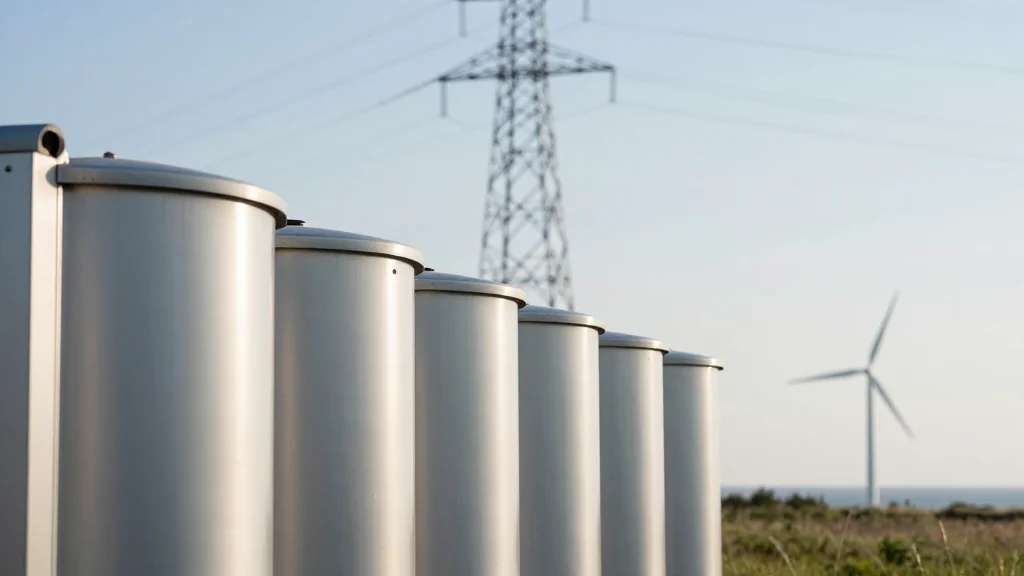
Noveria Energy Secures Grid Deal with TenneT Germany for 250MW Battery Storage Project

Companies Mentioned
Why It Matters
The Noveria‑TenneT deal illustrates how large‑scale battery storage is moving from pilot projects to core grid infrastructure. By anchoring 250 MW of dispatchable capacity to a region rich in offshore wind, the project directly tackles two of Europe’s biggest energy challenges: integrating variable renewables and ensuring reliable power for energy‑intensive industries. Successful execution will demonstrate that private developers can align with transmission operators to deliver grid‑forming assets, encouraging further investment and policy support. Moreover, the agreement reinforces Germany’s commitment to meet its 2030 renewable targets while maintaining system stability. As the country phases out fossil‑fuel generation, storage solutions like Noveria’s BESS will become indispensable for balancing supply, reducing curtailment, and providing the firm capacity needed for industrial competitiveness. The project’s timeline—connection by early 2028—offers a near‑term benchmark for how quickly large‑scale storage can be brought online when regulatory and stakeholder alignment is achieved.
Key Takeaways
- •Noveria Energy signed a grid‑construction agreement with TenneT Germany for a 250 MW battery storage project in Niedersachsen
- •Connection is scheduled for early 2028, securing technical prerequisites for grid stability
- •The BESS will support integration of offshore wind from the North Sea and serve industrial loads
- •Noveria’s overall pipeline exceeds 3 GW of battery assets, underscoring its growth strategy
- •The deal exemplifies private‑public collaboration to accelerate large‑scale storage deployment in Europe
Pulse Analysis
Noveria’s agreement with TenneT Germany is more than a contractual milestone; it signals a shift in how Europe will meet its renewable ambitions. Historically, grid‑scale storage lagged behind wind and solar because of high capital costs and uncertain revenue streams. By locking in a connection date, Noveria reduces one of the biggest risk vectors—grid access—making the project more attractive to lenders and equity investors. This de‑risking trend is already evident in other European markets where developers secure "grid‑first" agreements before final financing.
The partnership also reflects the evolving role of transmission system operators. TenneT, traditionally a passive conduit for electricity, is now an active participant in shaping the generation mix by commissioning flexible resources that can provide frequency regulation and congestion relief. This operational shift aligns with EU market reforms that reward ancillary services, creating new revenue streams for storage owners. As more TSOs adopt similar contracts, the market could see a cascade of battery projects that collectively provide gigawatts of dispatchable capacity, fundamentally altering the supply‑demand calculus.
Looking forward, the success of the Noveria‑TenneT project will likely influence policy discussions around capacity markets and renewable integration targets. If the BESS can demonstrably reduce wind curtailment and deliver firm power to industrial customers, regulators may accelerate incentives for storage, further narrowing the cost gap with conventional peaking plants. Investors will watch the construction timeline closely; any delays could reignite concerns about the scalability of storage solutions. Conversely, a smooth rollout could cement large‑scale batteries as a cornerstone of Europe’s low‑carbon grid architecture.
Noveria Energy Secures Grid Deal with TenneT Germany for 250MW Battery Storage Project
Comments
Want to join the conversation?
Loading comments...