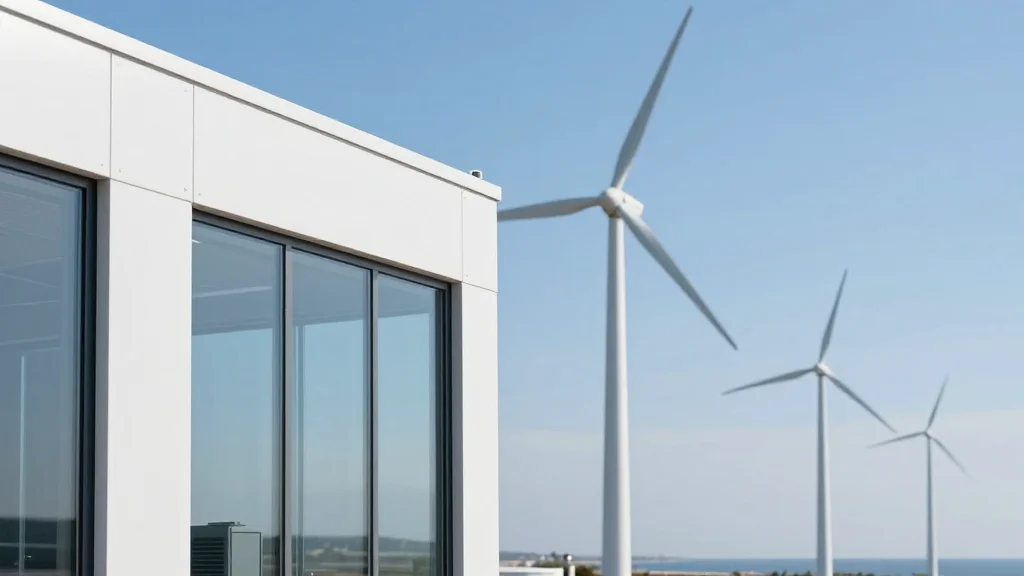
Omnia Secures $2 Billion Wind Power Deal for Brazil’s Largest Data Centre

Companies Mentioned
Why It Matters
The agreement illustrates how data‑centre operators in emerging markets are leveraging long‑term renewable contracts to lock in low‑cost, carbon‑free electricity, a critical factor for the energy‑intensive AI workloads driving next‑generation computing. By tying a $39 billion infrastructure project to a $2 billion wind supply deal, Omnia is reducing exposure to volatile fossil‑fuel prices and aligning with global decarbonisation goals. The deal also signals to investors that Brazil’s regulatory environment can support megaprojects that combine digital infrastructure with renewable energy. Successful execution could encourage similar financing structures across Latin America, accelerating the region’s transition to a low‑carbon digital economy.
Key Takeaways
- •Omnia signs a 20‑year, $2 billion wind‑power contract with Casa dos Ventos.
- •The power will come from 630 MW of wind capacity at Ibiapaba and Dom Inocêncio farms.
- •The data centre project in Pecém is valued at over $39 billion and targets AI workloads.
- •Construction began Jan 2026; operations slated for Q3 2027 with expansion through 2029.
- •Environmental groups flag water use and indigenous impact; developers claim minimal water needs.
Pulse Analysis
Omnia’s wind‑power pact reflects a broader shift where data‑centre developers are treating energy as a strategic asset rather than a utility expense. By securing a multi‑decade supply contract, Omnia can forecast operating costs with greater certainty, a competitive advantage in a market where AI workloads are driving exponential power demand. The equity stake in Casa’s wind farms further integrates the supply chain, reducing transaction costs and hedging against policy shifts.
Historically, data‑centre growth in Brazil has been constrained by grid reliability and high electricity tariffs. This deal mitigates those constraints, positioning the Pecém hub as a potential export‑ready AI compute center for Latin America. However, the project’s success hinges on navigating community concerns. If the minimal‑water claim holds up under scrutiny, it could set a precedent for low‑impact renewable integration in other high‑consumption sectors.
Looking ahead, the model may inspire similar arrangements in other emerging economies where renewable resources are abundant but grid infrastructure lags. Investors will likely monitor the first power delivery milestone in 2027 as a litmus test for the viability of large‑scale, renewable‑backed digital infrastructure in the Global South.
Omnia Secures $2 Billion Wind Power Deal for Brazil’s Largest Data Centre
Comments
Want to join the conversation?
Loading comments...