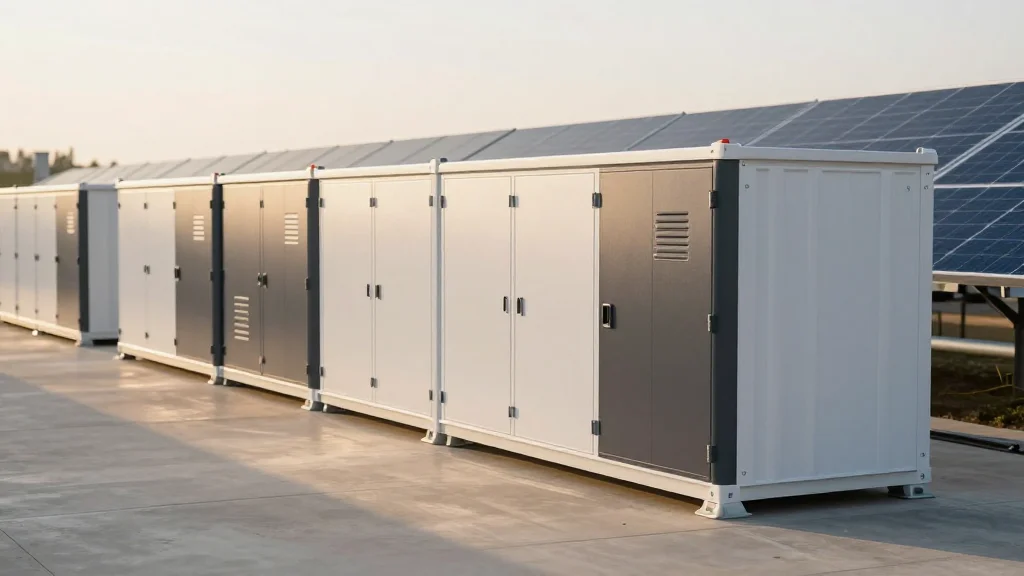
Owning the Full Stack: What U.S. Storage Has to Figure Out Next
Companies Mentioned
Why It Matters
Utilities need reliable, quickly deployable storage that isn’t vulnerable to foreign supply‑chain shocks, making domestic full‑stack providers a strategic necessity for grid resilience and cost control.
Key Takeaways
- •Utilities prioritize deployment speed, reliability, and domestic supply chains
- •Full‑stack providers bundle hardware, software, security, and service under one roof
- •Torus' flywheel‑battery platform achieves 99.9% uptime across 300 events
- •Domestic integration reduces megawatt‑hour costs and mitigates tariff risks
- •Procurement timelines demand 12‑16 week field deployment for new storage
Pulse Analysis
The storage landscape has shifted from a race for the highest energy‑density chemistry to a race for the most integrated, turn‑key system. While lithium‑iron‑phosphate, NMC, sodium‑ion and solid‑state cells each excel in niche applications, utilities care less about the chemistry and more about how quickly a solution can be installed, how reliably it dispatches, and how securely it connects to the grid. This pivot reflects broader market turbulence—tariff exposure, foreign‑entity restrictions, and a tightening supply chain—forcing buyers to prioritize domestic sourcing and end‑to‑end accountability.
Domestic full‑stack providers are emerging as the answer to these new procurement criteria. Companies like Torus combine flywheel and battery technologies in a single platform, manufacturing roughly 80% of the bill of materials in the United States. By owning the hardware, software, cybersecurity posture and long‑term service, they eliminate the integration gaps that traditionally inflate megawatt‑hour costs. Their field performance—99.9% uptime across more than 300 demand‑response events and deployment cycles as short as 12‑16 weeks—demonstrates how a unified stack can meet utility timelines while shielding projects from import‑related delays.
For utilities, the stakes are high. PJM’s recent capacity auction missed its reliability target by over 6,600 MW, underscoring the urgency of filling reliability gaps before 2027‑28. The ability to procure domestically integrated storage now can lock in firm capacity, reduce exposure to geopolitical risks, and streamline DERMS integration. As AI‑driven infrastructure loads continue to rise, the providers that master the full stack will shape the next decade of U.S. grid resilience and set new cost benchmarks for energy storage.
Owning the full stack: What U.S. storage has to figure out next
Comments
Want to join the conversation?
Loading comments...