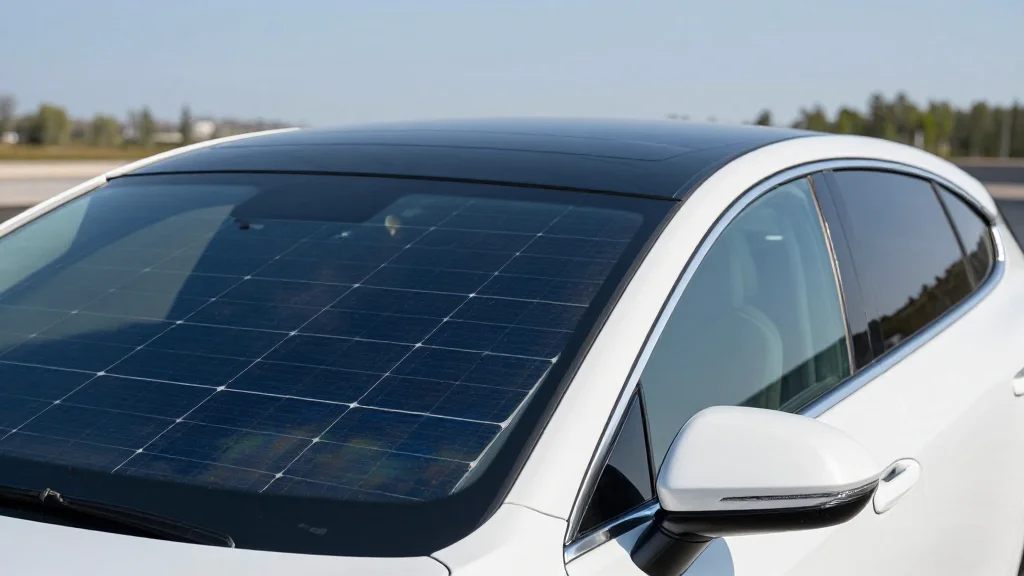
Oxford PV Says Tandem Solar Could Add up to 5 Km to Daily EV Range
Companies Mentioned
Nissan Canada

Innovate UK
Why It Matters
Extending EV range with solar cuts charging frequency, lowering operating costs and emissions, and could accelerate adoption of vehicle‑integrated solar solutions. It also provides a real‑world pathway for perovskite commercialization in a demanding automotive environment.
Key Takeaways
- •Tandem cells add 3‑5 km daily EV range.
- •Expected module efficiency: 27% by 2027, 29% by 2029.
- •Project aims for TRL 7 demonstrator vehicles by 2029.
- •Perovskite‑silicon design avoids reverse‑bias shading losses.
- •Solar could meet full daily energy for up to 50% of drivers.
Pulse Analysis
The integration of solar panels into electric vehicles has moved from concept to near‑production thanks to Oxford PV’s partnership with Nissan’s SUITE consortium. By layering a perovskite cell atop a conventional silicon wafer, the tandem architecture extracts more photons across the solar spectrum, delivering 20‑30% higher power density than silicon alone. In practical terms, a roof‑integrated system that currently yields 10‑15 km of range can now push that figure toward 15‑20 km, a modest but meaningful boost for daily commuters and fleet operators alike.
Technical hurdles have long hampered vehicle‑integrated photovoltaics, from mechanical fatigue to moisture ingress. Oxford PV’s two‑terminal tandem design sidesteps the reverse‑bias shading issues that plague many perovskite‑silicon approaches, while its robust interconnection technology resists hot‑spot formation under partial shading. The consortium’s focus on rigid, sealed modules ensures durability against the rapid thermal cycling and vibration typical of automotive use. Achieving 27% efficiency by 2027 and 29% by 2029 positions the technology at the forefront of commercial‑grade solar, meeting the stringent reliability standards required for mass‑market EVs.
From a business perspective, adding 3‑5 km of free driving range per day can reduce charging cycles by up to 65% for short‑haul drivers, translating into lower electricity costs and extended battery life. OEMs that adopt Oxford’s cell and interconnect solutions can differentiate their models with a built‑in sustainability feature without compromising design aesthetics. As regulatory pressure mounts for greener transportation and consumers seek lower‑total‑cost ownership, solar‑enhanced EVs could become a compelling selling point, accelerating the shift toward fully integrated renewable energy in automotive fleets.
Oxford PV says tandem solar could add up to 5 km to daily EV range
Comments
Want to join the conversation?
Loading comments...