Pantheon AI Launches $55 Bn Gigawatt AI Data‑center Campus in Croatia

Companies Mentioned
Why It Matters
Pantheon AI’s $55 bn campus could redefine Central Europe’s role in the global AI supply chain, offering a renewable‑powered alternative to data‑centre clusters in the U.S. and Asia. By committing to full solar and battery power, the project tests the feasibility of large‑scale, carbon‑neutral AI compute, a benchmark that could influence future policy and investment decisions across the continent. If successful, the campus may alleviate pressure on over‑burdened Western European hubs, diversify the geographic distribution of AI workloads, and stimulate local economies through high‑skill job creation. Conversely, any grid integration challenges could expose the limits of renewable‑only data‑centre models, prompting regulators to reconsider capacity planning and cross‑border energy coordination.
Key Takeaways
- •Pantheon AI announces €50 bn ($55 bn) AI data‑center campus in Topusko, Croatia
- •Project will deliver 1 GW total capacity, 800 MW usable IT load, and operate above Tier IV resilience
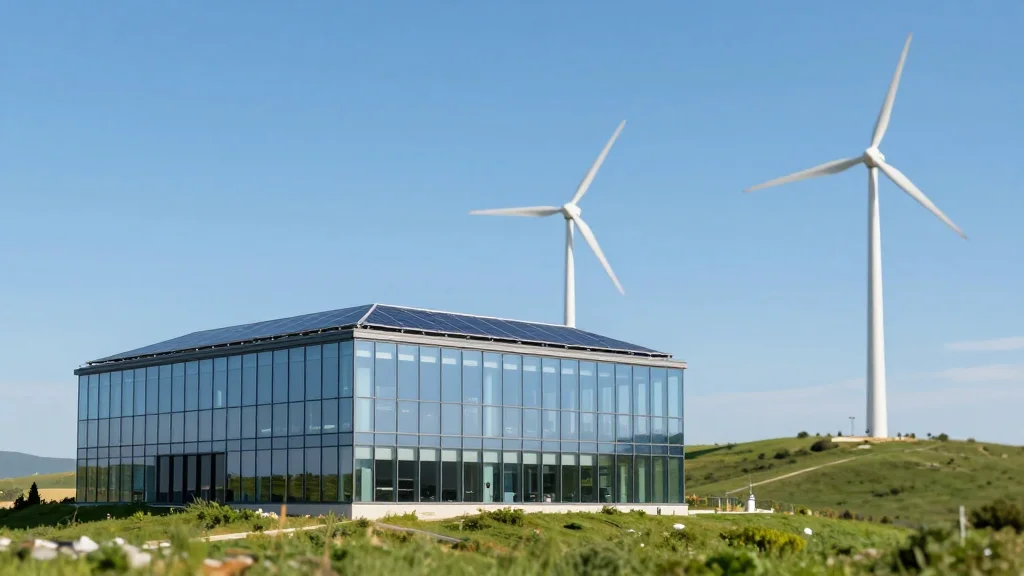
- •Power supplied by a 500 MW on‑site solar farm and 8,000 MWh battery storage, fully renewable
- •Construction starts early 2027; full operation expected Q1 2029
- •Projected to create 1,500 permanent jobs and 3,000 construction jobs
Pulse Analysis
Pantheon AI’s venture arrives at a moment when AI compute demand is outpacing traditional data‑centre supply, especially in Europe where vacancy rates are low and grid connections are delayed. By bundling renewable generation, high‑capacity transmission, and multi‑route fibre, the project attempts to solve the classic trilemma of power, connectivity, and regulatory certainty. If the renewable‑only model proves reliable, it could set a new industry standard, forcing competitors to accelerate green power contracts or risk losing hyperscale tenants.
However, the scale of the undertaking also amplifies risk. Integrating 1 GW of AI load into a national grid that must accommodate an additional 5.2 GW of renewable input will require meticulous coordination with regional TSOs and may expose Croatia to voltage stability issues. The success of the on‑site battery storage in smoothing intermittency will be a litmus test for similar future projects.
Strategically, the campus positions Croatia as a digital gateway between the Balkans and Western Europe, leveraging the GreenMed subsea cable to tap Italian markets. This could attract further foreign direct investment, but also invites scrutiny from EU energy regulators concerned about cross‑border grid impacts. In the next two years, the project's ability to secure grid permits, deliver on its renewable commitments, and attract anchor tenants will determine whether it becomes a blueprint for sustainable AI infrastructure or a cautionary tale of over‑ambitious scaling.
Pantheon AI launches $55 bn gigawatt AI data‑center campus in Croatia
Comments
Want to join the conversation?
Loading comments...