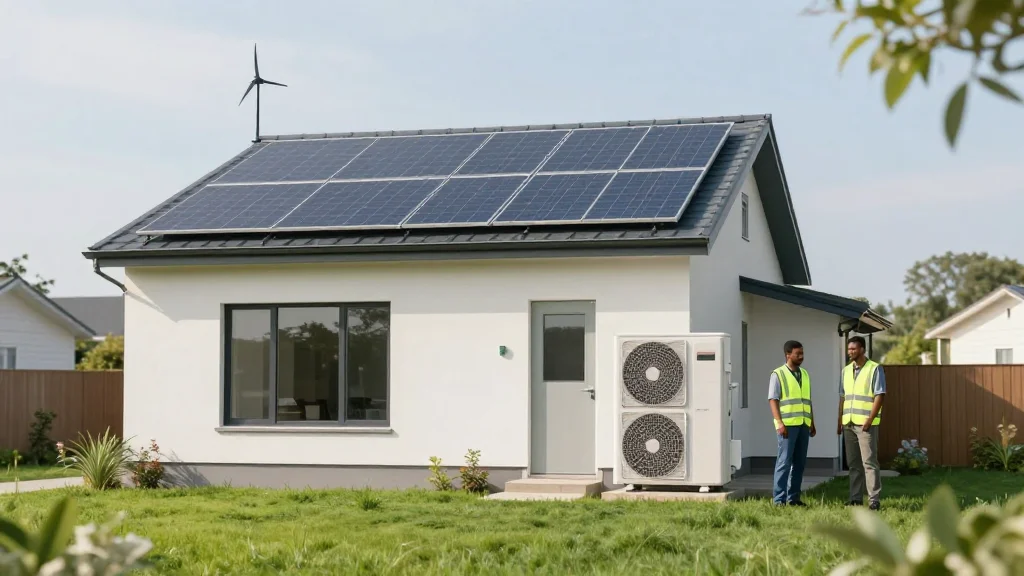
Portland's Clean Energy Fund Has Generated $1 Billion for Climate Action
Why It Matters
The fund proves that targeted climate taxes can generate large‑scale, equity‑focused resilience financing, offering a scalable model for cities seeking both emissions reductions and social justice outcomes.
Key Takeaways
- •$1 billion generated via 1% corporate sales tax
- •$262 million granted across four rounds since 2021
- •20,000 free AC units installed for low‑income households
- •3,100 homes retrofitted, cutting energy use
- •2,000 workers trained in renewable construction jobs
Pulse Analysis
Portland’s Clean Energy Community Benefits Fund illustrates how a modest, dedicated tax can become a powerful climate‑finance engine. By levying a 1% retail sales surcharge on large corporations, the city has captured roughly $1 billion since the measure’s 2018 approval. The revenue stream is insulated from annual budget negotiations, providing predictable funding for long‑term resilience projects. This structure contrasts with traditional grant‑or‑budget approaches, delivering a reliable fiscal backbone for climate action that other municipalities can emulate.
Beyond the headline dollar figure, the fund’s impact is deeply rooted in equity. Grants have funded over 20,000 free air‑conditioning units for low‑income households, mitigating heat‑related health risks. Energy‑efficiency retrofits in more than 3,100 homes lower utility bills and reduce carbon emissions, while a workforce development pipeline has upskilled 2,000 residents for jobs in renewable energy and construction. By aligning climate mitigation with social justice, Portland demonstrates that climate finance can simultaneously address emissions, affordability, and employment.
The Portland model is already sparking interest nationwide. Denver’s 0.25% consumer sales tax has generated $41 million for its Climate Protection Fund, and Ann Arbor has turned to property‑tax increments for similar goals. However, legal and political hurdles—such as state pre‑emptions on local sales taxes—limit replication in some regions. Policymakers must balance tax design, stakeholder buy‑in, and transparency to scale this approach. As more cities seek climate‑justice funding, Portland’s experience offers a concrete blueprint for building resilient, inclusive urban economies.
Portland's clean energy fund has generated $1 billion for climate action
Comments
Want to join the conversation?
Loading comments...