Power Corner: Ventiva CEO on Data Center’s Thermal Orphan Problem
Companies Mentioned
Why It Matters
By delivering targeted, low‑power cooling where traditional fans cannot reach, Ventiva improves server reliability, reduces fan‑related energy costs, and enables dense edge AI workloads that were previously limited by thermal constraints.
Key Takeaways
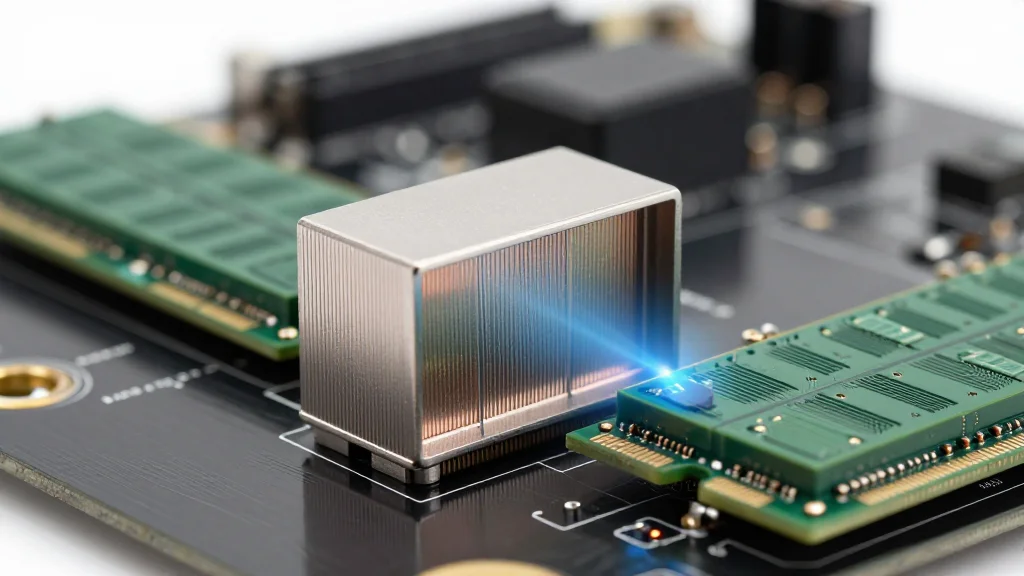
- •Ventiva’s EHD modules are 4‑5 mm high, up to 60 mm long.
- •Devices target “thermal orphans” like NICs and VRMs at server rear.
- •Catalytic fin coating converts ozone generated by ion flow back to O₂.
- •Digital control monitors dust, humidity, enabling predictive maintenance alerts.
- •Stacked modules provide up to three‑times airflow without moving parts.
Pulse Analysis
Data centers are increasingly relying on liquid cooling for GPUs, yet the rear of a server—home to NIC cards, voltage regulator modules and other high‑value components—often suffers from inadequate airflow. Traditional fans, designed as circular rotors, cannot be placed in the narrow gaps between memory modules, creating "thermal orphans" that can throttle performance or cause costly failures. Ventiva’s electrohydrodynamic (EHD) technology replaces the rotating mass with a solid‑state ion accelerator, delivering precise airflow directly to these hotspots while consuming far less power than bulk front‑to‑back fans.
The physics behind EHD involves energizing a wire emitter to create plasma, stripping ions from ambient air, and accelerating them toward a collector plate. As the ions collide with neutral molecules, a sustained airflow is generated without any moving blades. Ventiva’s proprietary catalytic fin‑stack coating neutralizes the ozone byproduct, converting O₃ back to breathable O₂, while digital controllers adjust performance based on real‑time dust and humidity data. This sensor‑driven approach not only extends device lifespan but also feeds predictive‑maintenance insights to data‑center operators, allowing pre‑emptive cleaning or environmental adjustments before a failure occurs.
Beyond servers, the compact rectangular modules—often likened to Lego bricks—enable new form factors for laptops, edge compute devices, robotics, and automotive systems. By eliminating mechanical fans, manufacturers gain valuable board space for additional memory, essential for local large‑language‑model inference. As AI workloads migrate closer to the user, Ventiva’s silent, vibration‑free cooling could become a cornerstone of next‑generation edge hardware, driving both performance gains and operational cost savings. The company’s ongoing collaborations with OEMs suggest a rapid rollout across multiple market segments in the coming years.
Power Corner: Ventiva CEO on Data Center’s Thermal Orphan Problem
Comments
Want to join the conversation?
Loading comments...