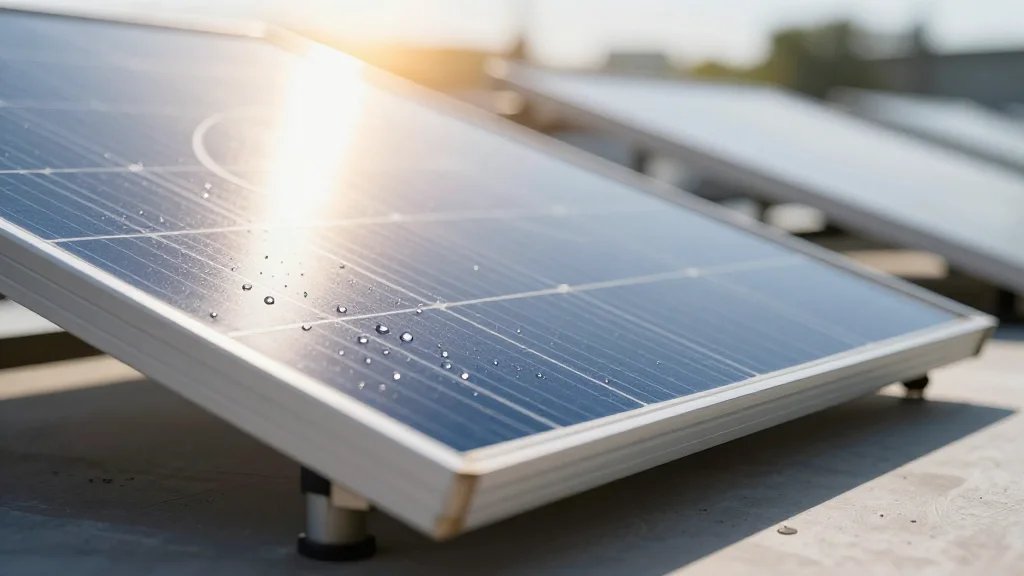
Premier Energies Unveils ESG Roadmap Targeting 10 GW Capacity and Decarbonisation

Why It Matters
Premier Energies’ ESG roadmap signals a maturing of climate‑tech strategy in India’s solar manufacturing sector, where ESG compliance is moving from a peripheral checkbox to a core growth lever. By tying decarbonisation targets to concrete capacity goals, the company sets a benchmark that could accelerate adoption of renewable‑energy‑powered production across the region. The plan also underscores the growing importance of supply‑chain transparency in climate‑tech. As global OEMs and investors demand low‑carbon inputs, Premier’s backward‑integration and supplier‑code initiatives could force a cascade of sustainability upgrades throughout the Indian solar value chain, amplifying emissions reductions beyond the company’s own facilities.
Key Takeaways
- •Premier Energies targets 10 GW integrated solar capacity by 2028 under its Mission‑2028 ESG plan.
- •Zero Liquid Discharge systems have cut water consumption by up to 95% in cell facilities.
- •Women now represent 34% of the shop‑floor workforce, reflecting the ‘People Centric’ pillar.
- •A Supplier Code of Conduct and backward‑integration strategy aim to tighten ESG control across the supply chain.
- •The roadmap includes a forthcoming Scope 3 decarbonisation pathway and renewable‑energy expansion at manufacturing sites.
Pulse Analysis
Premier Energies is betting that a robust ESG framework will become a competitive moat rather than a compliance cost. In the past five years, Indian solar manufacturers have struggled to secure foreign financing without clear carbon‑intensity metrics. By quantifying water savings, gender diversity and renewable‑energy sourcing, Premier creates a data‑driven narrative that aligns with the ESG criteria of major development banks and impact investors. This could unlock a new tranche of low‑cost capital, especially as the International Finance Corporation and Asian Development Bank tighten climate‑risk underwriting.
Historically, supply‑chain opacity has been a blind spot for Indian clean‑tech firms, leading to criticism over conflict‑miner sourcing and labor practices. Premier’s backward‑integration push may raise short‑term capex, but it also offers a lever to certify raw‑material provenance, a factor that will become decisive as European and North American buyers adopt stricter due‑diligence regimes. If the company can demonstrate measurable Scope 3 reductions, it may set a de‑facto standard that forces peers to follow suit, potentially reshaping the entire Indian solar ecosystem.
Looking ahead, the real test will be execution. The roadmap’s success hinges on the ability to translate governance structures—board oversight, ESG steering committees, operational working groups—into transparent reporting that satisfies both regulators and investors. Should Premier deliver on its 10 GW target while meeting its water, gender and renewable‑energy benchmarks, it could catalyze a wave of ESG‑first strategies across emerging‑market clean‑tech, positioning India as a leader in sustainable solar manufacturing.
Premier Energies Unveils ESG Roadmap Targeting 10 GW Capacity and Decarbonisation
Comments
Want to join the conversation?
Loading comments...