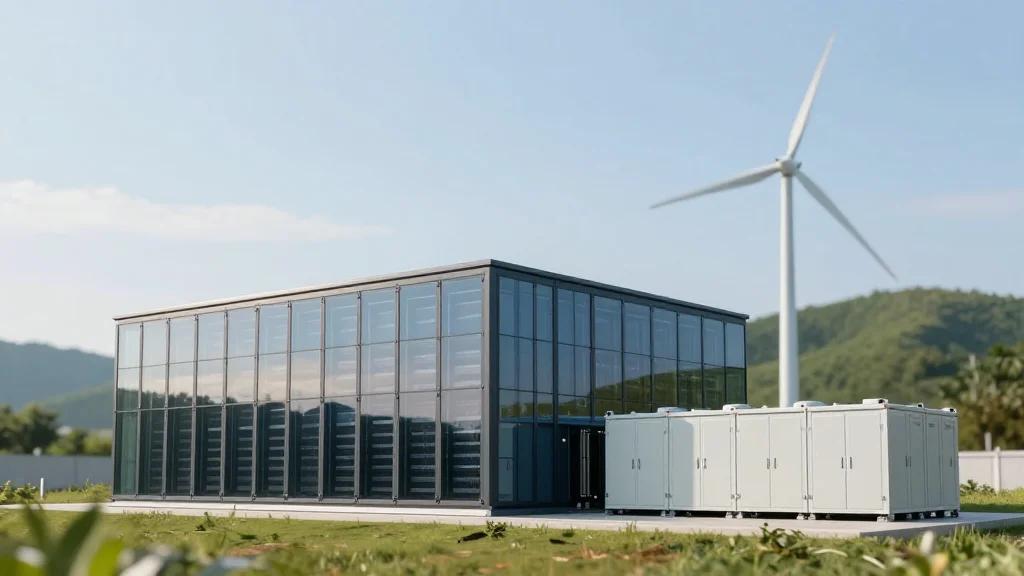
PureDC Unveils Europe’s First Microgrid-Powered Data Center in Dublin

Why It Matters
The Dublin microgrid demonstrates that data centers can achieve near‑perfect reliability without relying on overstretched public grids, a breakthrough for regions where electricity infrastructure lags behind digital demand. By coupling dual‑fuel engines with renewable gas certificates and battery storage, PureDC offers a replicable pathway to meet EU climate targets while supporting the exponential growth of AI workloads. If the model proves cost‑effective, it could reshape investment strategies for cloud providers and enterprise IT departments, shifting capital from grid connection fees toward on‑site generation assets. This would also stimulate demand for renewable gas production, battery manufacturers and engine makers capable of rapid fuel switching, creating a new ecosystem of climate‑tech suppliers aligned with the data economy.
Key Takeaways
- •PureDC launched a 54 MW microgrid data center on a 14.2‑acre Dublin site.
- •Facility achieves 99.999% uptime using 9.8 MW Wärtsilä engines, battery storage and 72‑hour HVO reserves.
- •Renewable Gas Guarantees of Origin (RGGOs) and Biomethane GOs retired to match 100% of consumption.
- •Grid connection delays of 8‑10 years in Europe make private microgrids a competitive alternative.
- •Initial customers are AI and blockchain firms; performance data to be released later this quarter.
Pulse Analysis
PureDC’s microgrid marks a strategic inflection point for European data center economics. Historically, operators have accepted grid constraints as a cost of doing business, often over‑provisioning capacity or locating near legacy power hubs. By internalizing generation, PureDC not only sidesteps lengthy grid connection timelines but also gains control over fuel sourcing, price volatility and carbon accounting. This vertical integration mirrors trends in other capital‑intensive sectors, such as cryptocurrency mining, where firms have built dedicated renewable farms to secure energy supply.
The broader market implication is a potential re‑pricing of data center real estate. Sites previously deemed unsuitable due to grid limitations may now become viable, expanding the geographic footprint of high‑performance compute. Moreover, the reliance on verified renewable gas could accelerate the European renewable gas market, encouraging investment in biomethane and synthetic methane projects that have struggled for commercial scale. Competitors will need to assess whether the higher upfront CAPEX is offset by faster time‑to‑market and ESG advantages, especially as corporate sustainability mandates tighten.
Looking ahead, the scalability of PureDC’s architecture will be the litmus test. If the model can be modularized for smaller facilities or adapted to multi‑site clusters, it could become a standard blueprint for climate‑aligned digital infrastructure. Conversely, regulatory hurdles around on‑site fuel storage and emissions reporting could slow adoption. Stakeholders should monitor policy developments, fuel price trends and the performance metrics PureDC releases in the next six months to gauge the durability of this microgrid revolution.
PureDC Unveils Europe’s First Microgrid-Powered Data Center in Dublin
Comments
Want to join the conversation?
Loading comments...