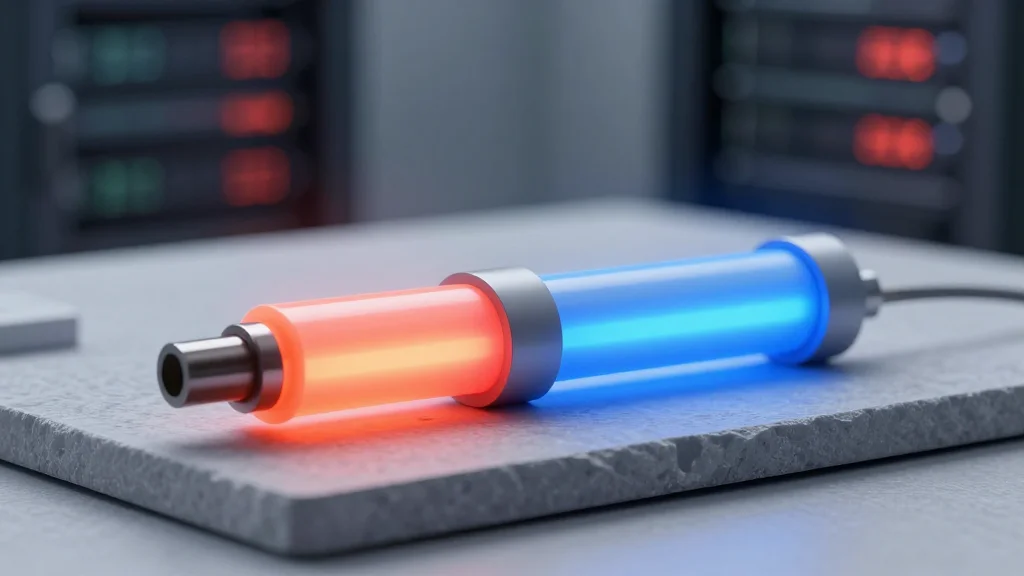
PyroDelta’s Thermoelectric Pipes Turn Data‑Center Waste Heat Into Power

Why It Matters
Turning waste heat into electricity addresses two pressing challenges: the soaring energy demand of AI‑driven data centers and the sector’s carbon‑intensity. By harvesting thermal energy that would otherwise be lost, PyroDelta’s technology offers a pathway to lower grid consumption, reduce operational costs, and help hyperscalers meet aggressive sustainability targets. Moreover, the modular nature of the thermoelectric pipes means they can be retrofitted into existing liquid‑cooling loops, accelerating adoption without massive capital expenditures. Beyond immediate energy savings, the approach could catalyze a broader shift toward circular energy flows in high‑tech infrastructure. If thermoelectric conversion becomes cost‑effective at scale, it may inspire similar solutions in other heat‑intensive industries, from semiconductor fabs to industrial manufacturing, amplifying the climate impact across the technology ecosystem.
Key Takeaways
- •PyroDelta Energy developed a capillary‑action method to grow bismuth telluride crystals in custom molds.
- •The crystals are integrated into liquid‑cooling pipes, converting waste heat into electricity via the thermoelectric effect.
- •Current prototypes recover a modest share of waste heat, but scalability could enable gigawatt‑scale energy savings.
- •A pilot with a major hyperscale provider is slated for later 2026 to validate performance and durability.
- •Successful deployment could help data centers cut grid electricity use and advance carbon‑neutral goals.
Pulse Analysis
The thermoelectric pipe concept arrives at a moment when data‑center power consumption is accelerating faster than any previous era, driven by AI model training and inference workloads. Historically, waste‑heat recovery in this sector has focused on district‑heat networks or heat‑to‑power cycles that require large temperature differentials and bulky equipment. PyroDelta’s approach sidesteps those constraints by embedding the conversion directly into the cooling loop, a design that mirrors the incremental innovation model that has historically driven data‑center efficiency (e.g., the shift from air‑cooled to liquid‑cooled racks).
From a market perspective, the technology could create a new sub‑segment within the data‑center infrastructure supply chain, attracting investment from both traditional cooling vendors and renewable‑energy firms. The modest initial efficiency is unlikely to disrupt existing power‑purchase agreements, but the cost‑avoidance potential—especially for hyperscalers operating on thin margins—makes the value proposition compelling. If the pilot demonstrates reliable, maintenance‑free operation, we may see a rapid cascade of retrofits, similar to the adoption curve of high‑efficiency power‑distribution units (PDUs) a few years ago.
Looking ahead, the key risk lies in scaling crystal growth while maintaining thermoelectric performance. Bismuth telluride is a mature material, yet its cost and supply chain constraints could limit large‑scale adoption unless PyroDelta can achieve economies of scale or develop alternative compounds. Regulatory hurdles around on‑site electricity generation may also shape rollout timelines. Nonetheless, the convergence of rising energy costs, ESG pressures, and the relentless push for AI compute suggests that thermoelectric pipes could become a standard component of next‑generation, carbon‑aware data centers.
PyroDelta’s Thermoelectric Pipes Turn Data‑Center Waste Heat into Power
Comments
Want to join the conversation?
Loading comments...