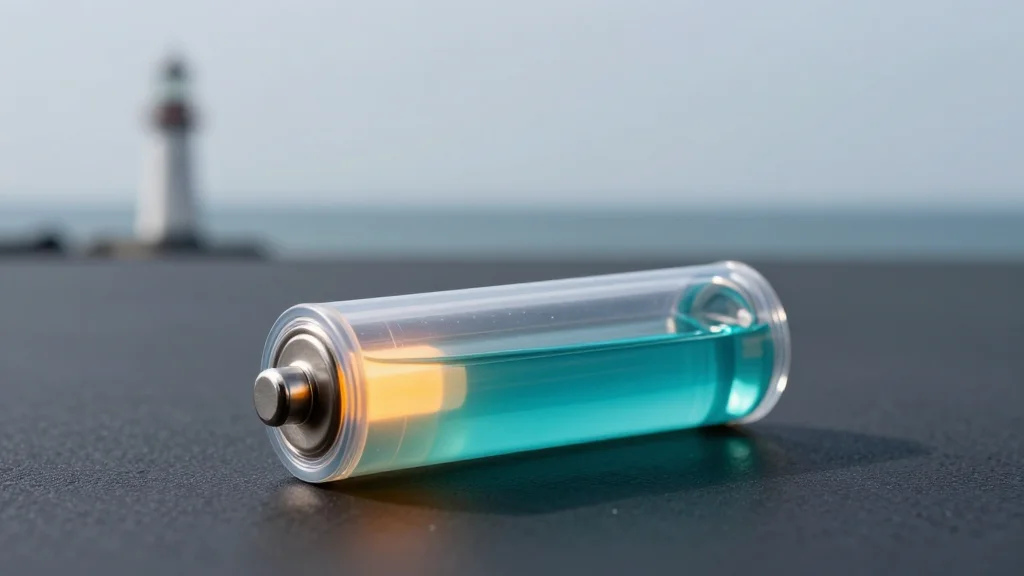
Rechargeable Na‐Seawater Batteries—A Promising Battery Energy Storage Solution for Coastal Economies
Why It Matters
SWBs could deliver affordable, long‑duration storage for coastal economies, accelerating net‑zero targets and enabling multi‑function infrastructure like desalination and EV charging.
Key Takeaways
- •SWBs achieve >4 kWh/L volumetric energy density, five times hydrogen storage
- •Seawater serves as inexpensive cathode material, reducing battery cost
- •Design enables integration with desalination and CO₂ capture at coastal sites
- •Studies show feasibility for EV charging stations in New York, Chennai
Pulse Analysis
Battery energy storage systems are a linchpin of the transition to renewable power, yet many existing technologies struggle with safety, cost, or duration constraints. Sodium‑based rechargeable seawater batteries emerge as a compelling solution because they leverage abundant seawater as a cathode, sidestepping the need for scarce minerals. Their reported volumetric energy density of over 4 kWh per liter not only surpasses conventional lithium‑ion packs but also dwarfs hydrogen‑based storage by a factor of five, positioning SWBs as a high‑performance, low‑cost option for long‑duration applications.
Beyond raw energy metrics, the SWB architecture offers functional versatility that aligns with coastal infrastructure needs. The compartmentalized cell design can be retrofitted to drive water desalination or capture carbon dioxide, turning storage sites into multi‑purpose hubs. Real‑world feasibility analyses in New York and Chennai illustrate how behind‑the‑meter deployments could power electric‑vehicle charging stations while simultaneously supporting local water treatment. This dual‑use capability not only improves asset utilization but also creates new revenue streams for municipalities and utilities operating near the sea.
Commercializing SWBs, however, requires addressing material durability and corrosion challenges inherent to saline environments. Advances in protective coatings, robust anode formulations, and scalable manufacturing processes are critical to bridge laboratory performance to field reliability. As governments worldwide tighten net‑zero mandates, the ability of coastal economies to adopt a storage technology that couples high energy density with ancillary services could reshape regional energy markets. Early adopters that navigate these technical hurdles stand to gain a strategic advantage in the emerging green economy.
Rechargeable Na‐Seawater Batteries—A Promising Battery Energy Storage Solution for Coastal Economies
Comments
Want to join the conversation?
Loading comments...