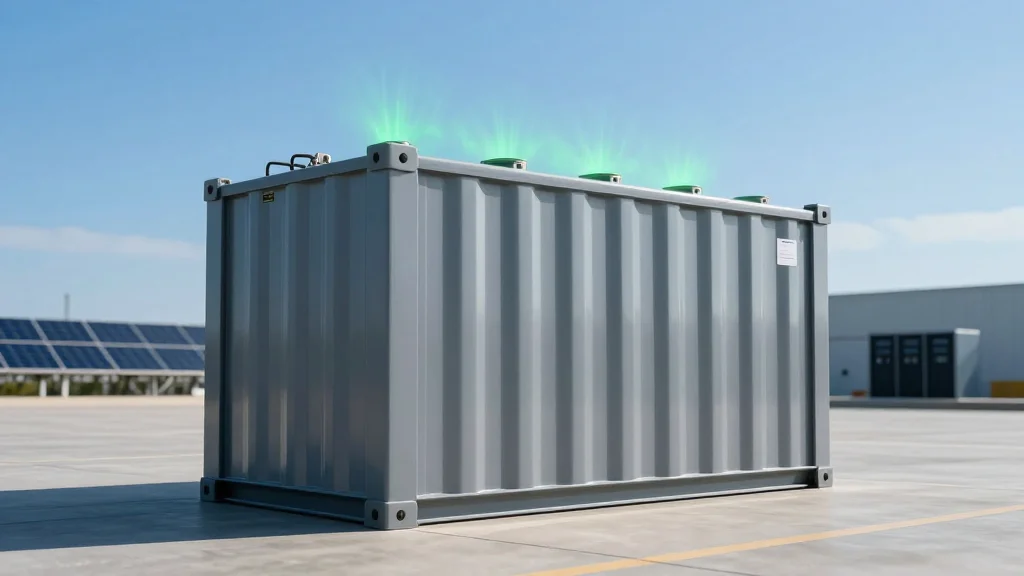
Redwood Materials, GM Sign MOU to Deploy EV Batteries for Grid‑Scale Storage

Companies Mentioned
Why It Matters
The Redwood‑GM initiative directly addresses two of the climate‑tech sector’s most pressing hurdles: battery waste and grid reliability. By giving EV packs a second life, the partnership reduces the need for virgin material extraction, cuts landfill risk, and improves the overall carbon footprint of the battery supply chain. Simultaneously, the added storage capacity is critical for integrating higher shares of renewable energy, thereby lowering emissions from the power sector. As AI workloads continue to balloon, the electricity grid will face unprecedented stress. Large‑scale, domestically sourced storage offers a pragmatic solution that can be deployed faster than building new generation assets, helping utilities meet reliability standards while supporting the United States’ climate commitments.
Key Takeaways
- •Redwood Materials and GM sign a non‑binding MOU on July 16, 2025 to deploy grid‑scale storage using new and second‑life EV batteries.
- •AI data centers are projected to increase their share of U.S. electricity use from 4.4% in 2023 to 12% by 2028.
- •GM’s Ultium battery technology will be repurposed for stationary applications, leveraging Redwood’s high‑recovery recycling process.
- •The partnership builds on a May 2024 agreement where GM supplied battery scrap from its Warren, Michigan Ultium plants.
- •If scaled, the effort could address a portion of the $30 billion U.S. grid‑storage market expected by 2030.
Pulse Analysis
Redwood Materials' move to partner with an OEM of GM's scale underscores a maturing circular economy for lithium‑ion batteries. Historically, second‑life applications have lagged behind recycling due to performance uncertainty and lack of standardized testing. By coupling GM's proprietary Ultium chemistry with Redwood's proven material recovery rates, the collaboration reduces technical risk and creates a clear value proposition for utilities seeking reliable, domestically sourced storage.
The timing is strategic. With AI‑driven data centers poised to become a dominant electricity consumer, grid operators are under pressure to secure flexible, fast‑response resources. Traditional pumped‑hydro or large‑scale gas peakers cannot scale quickly enough, and new battery storage offers the needed agility. Redwood’s ability to deliver megawatt‑hour‑scale modules at a competitive cost per kilowatt‑hour could shift the economics in favor of battery storage over legacy solutions, accelerating the retirement of carbon‑intensive peakers.
Looking ahead, the partnership’s success will hinge on policy support and the ability to demonstrate long‑term durability of second‑life packs. If Redwood can prove that repurposed EV batteries maintain high round‑trip efficiency over a 10‑year horizon, it could unlock additional financing mechanisms, such as green bonds tied to storage projects. This would not only bolster the business case for other recyclers but also set a precedent for OEM‑recycler collaborations worldwide, potentially reshaping the global battery value chain toward greater sustainability.
Redwood Materials, GM Sign MOU to Deploy EV Batteries for Grid‑Scale Storage
Comments
Want to join the conversation?
Loading comments...