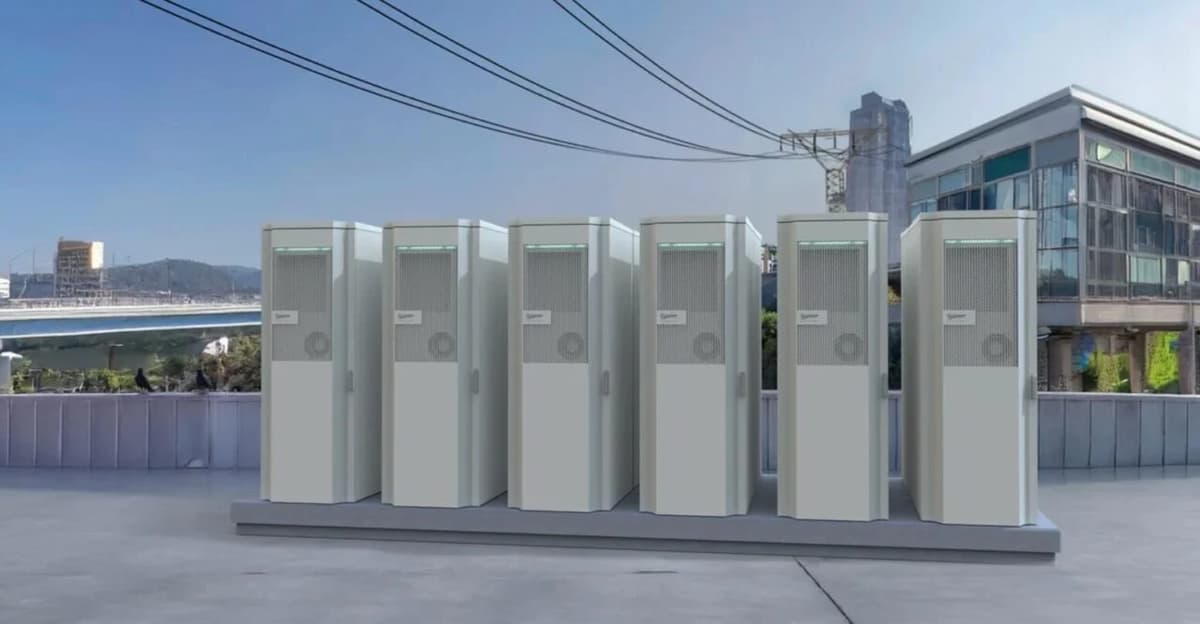
RWE and Polarium to Combine Distributed Batteries Into 50MW/135MWh Germany VPP
Why It Matters
The aggregation unlocks flexible, fast‑responding capacity for the German grid, enhancing reliability and creating new revenue streams for both RWE and commercial‑industrial battery owners.
Key Takeaways
- •1,600 batteries provide 50 MW/135 MWh, scaling to 10,000 units
- •Average battery size ~30 kW/80 kWh, targeting C&I sites
- •Tolling agreement gives RWE real‑time market participation
- •Germany’s mature market accelerates VPP growth and grid flexibility
Pulse Analysis
Germany’s power sector is rapidly embracing virtual power plants (VPPs) as a bridge between intermittent renewables and grid stability. RWE’s partnership with Polarium leverages a cloud‑based aggregation platform to marshal thousands of small‑scale batteries—originally installed for mission‑critical backup—into a coordinated 50 MW resource. By treating each 30 kW unit as a dispatchable asset, the VPP can respond within seconds, a speed that traditional fossil‑fuel generators cannot match. This model showcases how utility‑scale flexibility can be built from distributed, commercial‑industrial installations rather than relying solely on large, centralized storage.
The German market provides a fertile regulatory backdrop for such initiatives. The Federal Network Agency has streamlined the qualification process for distributed storage, and transmission system operators like TransnetBW have begun accepting aggregated capacity for ancillary services. Polarium’s tolling agreement with RWE sidesteps the need for ownership transfer, allowing battery owners to retain their assets while monetising idle capacity. Scaling from 1,600 to 10,000 batteries could push the VPP to 300 MW, positioning it among Europe’s largest battery aggregations and complementing existing projects from sonnen and other pioneers. This growth trajectory underscores the commercial viability of VPPs in a market where grid congestion and renewable curtailment remain pressing challenges.
For investors and industry observers, the RWE‑Polarium deal signals a broader shift toward decentralized energy resources as a core component of the energy transition. As utilities seek cost‑effective flexibility, the tolling model offers a low‑capital pathway to tap distributed assets without heavy balance‑sheet exposure. Moreover, the data‑rich platform enables sophisticated forecasting and market participation, enhancing revenue predictability. Expect to see more utilities replicate this approach across Europe, accelerating the deployment of grid‑scale storage capacity while unlocking new income streams for commercial‑industrial battery owners.
RWE and Polarium to combine distributed batteries into 50MW/135MWh Germany VPP
Comments
Want to join the conversation?
Loading comments...