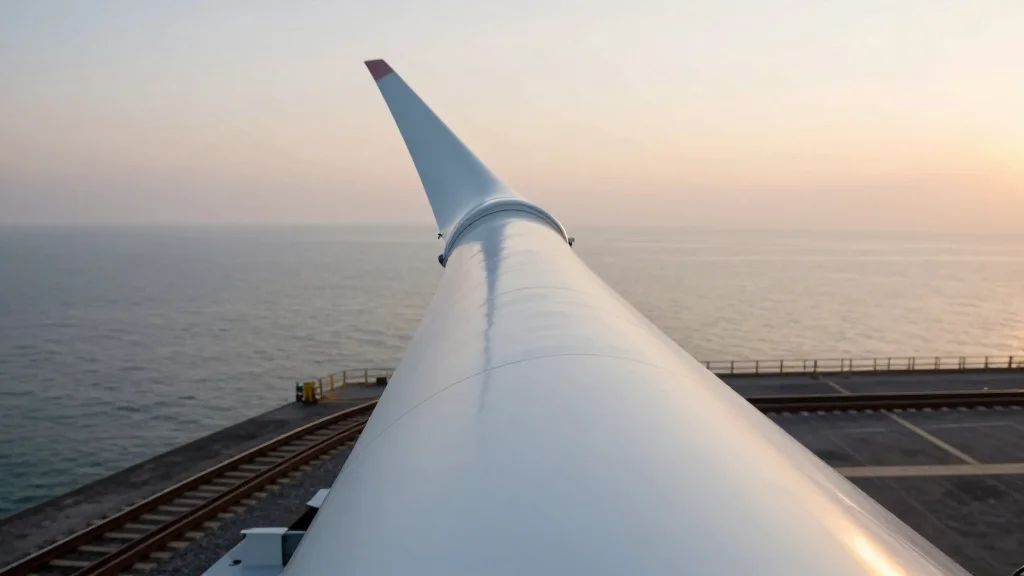
RWE Secures 300 GWh Offshore Wind Deal with Network Rail, Covering 65% of Non‑Traction Power

Companies Mentioned
Why It Matters
The agreement illustrates how large‑scale renewable assets can be monetised through long‑term contracts with public‑sector customers, reducing financing risk and accelerating decarbonisation of critical infrastructure. By securing 65% of its non‑traction electricity from offshore wind, Network Rail moves closer to its 2030 renewable target, setting a benchmark for other transport operators. For RWE, the deal validates the commercial viability of existing offshore farms and strengthens its position as a preferred supplier to the UK public sector, potentially spurring further offshore wind development. Beyond the immediate carbon savings, the contract signals a maturing market for public‑sector PPAs in the UK, where the Government Commercial Agency framework is beginning to deliver tangible outcomes. If replicated, such agreements could drive a wave of new offshore wind projects, create jobs, and help the UK meet its net‑zero commitments while delivering cost‑stable electricity to essential services.
Key Takeaways
- •RWE signs a five‑year CoPPA to deliver 300 GWh of offshore wind electricity annually to Network Rail.
- •The deal covers about 65% of Network Rail’s non‑traction electricity consumption.
- •Carbon emissions are expected to fall by roughly 168,000 t CO₂e, equivalent to planting 6.5 million trees.
- •Power will be sourced from the 576 MW Gwynt y Môr offshore wind farm, with deliveries starting April 1, 2027.
- •The agreement helps Network Rail aim for 80% renewable non‑traction power by 2030 and showcases the first public‑sector CoPPA under the UK Government Commercial Agency framework.
Pulse Analysis
RWE’s contract with Network Rail is more than a headline‑grabbing renewable supply deal; it is a strategic play that leverages existing offshore capacity to meet a growing public‑sector appetite for clean power. Historically, the UK’s public‑sector procurement of renewable energy lagged behind private‑sector PPAs, largely due to bureaucratic hurdles and a lack of standardised frameworks. The Government Commercial Agency’s new CoPPA model removes many of these barriers, offering a streamlined path for large‑scale, long‑term contracts. RWE’s early entry positions it as a go‑to partner for future public‑sector deals, potentially locking in revenue streams that can underwrite new offshore projects.
From a market perspective, the deal could catalyse a virtuous cycle: as more public entities sign similar PPAs, demand for offshore wind capacity will rise, encouraging developers to accelerate project pipelines. This, in turn, could drive down levelized cost of electricity (LCOE) through economies of scale, making offshore wind increasingly competitive against fossil fuels and even onshore renewables. For Network Rail, the agreement mitigates exposure to volatile wholesale power prices and aligns its energy procurement with the broader sustainability narrative of rail travel, enhancing its public image and compliance with upcoming regulatory targets.
Looking ahead, the success of this CoPPA will likely influence policy discussions around renewable procurement mandates for other critical infrastructure, such as hospitals and schools. If the RWE‑Network Rail partnership delivers on its emissions and reliability promises, it could become a template for a national rollout of public‑sector renewable PPAs, accelerating the UK’s net‑zero trajectory while providing a stable market for offshore wind developers.
RWE Secures 300 GWh Offshore Wind Deal with Network Rail, Covering 65% of Non‑Traction Power
Comments
Want to join the conversation?
Loading comments...