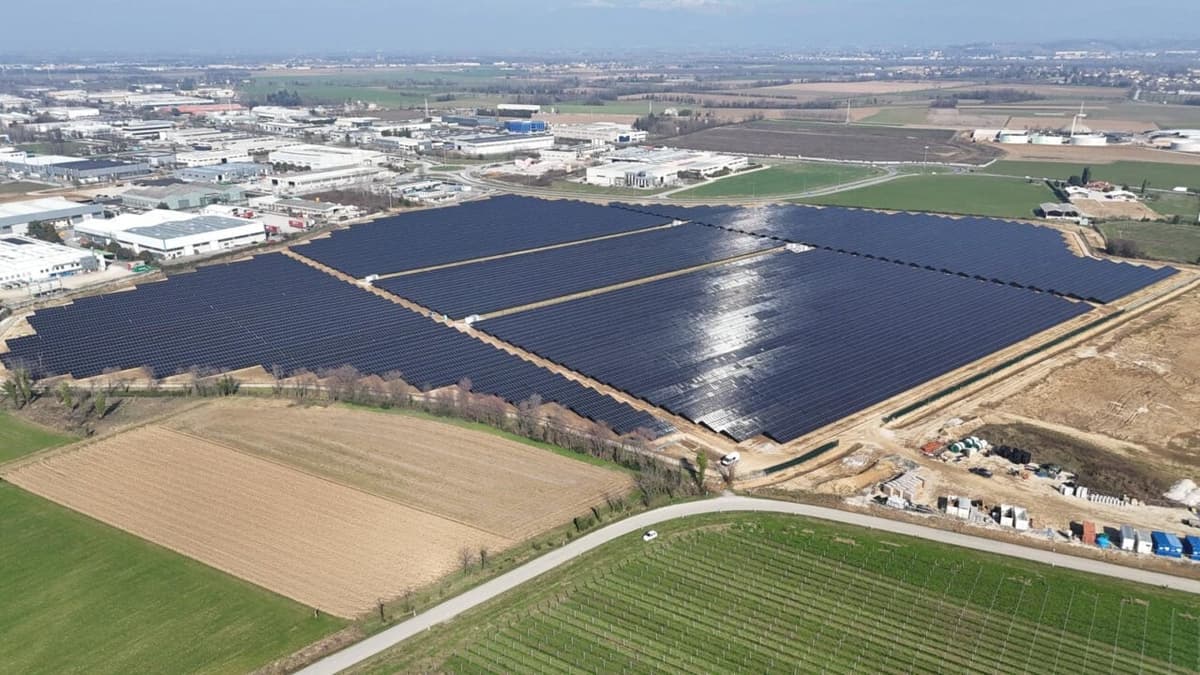
Schletter Installs Mounting at ‘Earthquake-Prone’ Italian Solar PV Site
•March 3, 2026
0
Why It Matters
The deployment proves that seismic‑resilient solar infrastructure can meet rigorous safety margins, setting a benchmark for future PV projects in earthquake‑prone regions and influencing EPC and supplier standards across Europe.
Key Takeaways
- •96 MWp Udine solar farm uses Schletter FS Duo system.
- •Three‑module vertical stacking maximizes land use efficiency.
- •Driven galvanized steel foundations meet stringent seismic standards.
- •Independent engineer approval exceeds Italy’s typical PV regulations.
- •Highlights market shift toward robust, terrain‑adaptable racking solutions.
Pulse Analysis
Italy’s northern regions sit on active fault lines, making seismic resilience a critical factor for large‑scale solar farms. Schletter’s FS Duo system addresses this challenge by combining a two‑post steel structure with a three‑module vertical layout, which not only conserves valuable land but also distributes loads more evenly across the foundation. The use of hot‑dip galvanized driven foundations adds corrosion resistance and ensures the mounting can absorb ground motion, meeting higher safety thresholds required by local authorities and independent engineers.
The Udine project illustrates a broader industry shift toward stricter engineering verification and supply‑chain reliability. EPC contractors like EnValue Solar now collaborate closely with racking manufacturers and structural engineers from the planning stage, integrating regional seismic codes into design specifications. This collaborative approach reduces permitting delays and aligns with emerging European standards, such as those recently published by SolarPower Europe, which aim to harmonize technical requirements for PV EPCs and component suppliers.
Looking ahead, the demand for bespoke mounting solutions will grow as developers target marginal lands, steep slopes, and other challenging sites. Companies that can deliver modular, high‑strength racking with proven seismic performance will gain a competitive edge, accelerating renewable‑energy deployment in risk‑laden regions worldwide. The Udine installation serves as a proof point that robust design, certified material quality, and proactive regulatory engagement can unlock new markets while safeguarding long‑term asset performance.
Schletter installs mounting at ‘earthquake-prone’ Italian solar PV site
0
Comments
Want to join the conversation?
Loading comments...