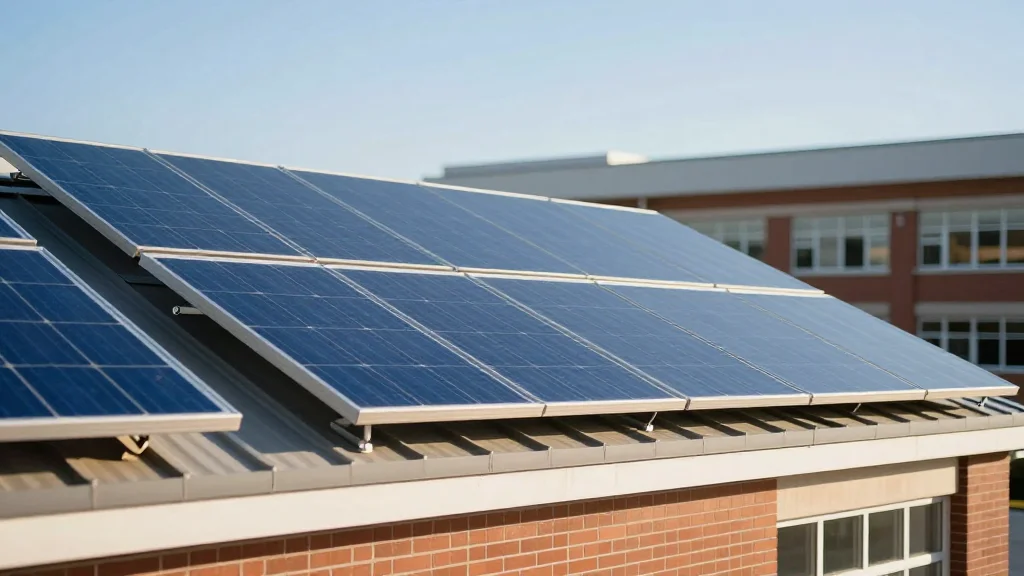
School Installs Solar Panels on Rooftop, Promotes Clean Energy
Why It Matters
The initiative demonstrates how educational institutions can drive renewable‑energy deployment while cutting operating costs, accelerating India’s climate goals. It also creates a living laboratory that embeds sustainability into the curriculum, shaping future innovators.
Key Takeaways
- •First North Kolkata school to install rooftop solar panels
- •System cuts electricity bills and feeds surplus to grid
- •Panels have 25+ year lifespan, low maintenance
- •Students now undertake projects on solar energy
- •Supports India's renewable energy goals in education sector
Pulse Analysis
India’s push toward renewable power has increasingly spotlighted the education sector as a catalyst for change. Recent policy incentives, such as the Ministry of New and Renewable Energy’s subsidies for rooftop installations, have lowered capital barriers for schools. By adopting solar, institutions like Mangalam Vidya Niketan not only align with national targets to reach 450 GW of solar capacity by 2030 but also showcase a replicable model for cost‑conscious budgeting in a country where electricity prices have risen sharply over the past decade.
Technically, the school’s 25‑kilowatt photovoltaic array utilizes monocrystalline panels that deliver higher efficiency in the humid, cloudy conditions typical of Kolkata. The system’s net‑metering arrangement allows surplus generation to be exported to the state grid, offsetting peak‑hour demand and earning feed‑in credits. With an expected operational life exceeding 25 years and only periodic cleaning required, the total cost of ownership is modest compared with conventional diesel generators or grid reliance, delivering a clear return on investment through reduced utility expenses and carbon‑credit opportunities.
Beyond the balance sheet, the solar installation serves as an educational platform that immerses students in real‑world sustainability challenges. Curriculum modules now include hands‑on monitoring of energy output, data analysis, and design of mini‑projects, fostering STEM skills and environmental stewardship. As more schools emulate this approach, the cumulative effect could accelerate India’s transition to a low‑carbon economy while cultivating a generation equipped to innovate in clean‑energy technologies.
School installs solar panels on rooftop, promotes clean energy
Comments
Want to join the conversation?
Loading comments...