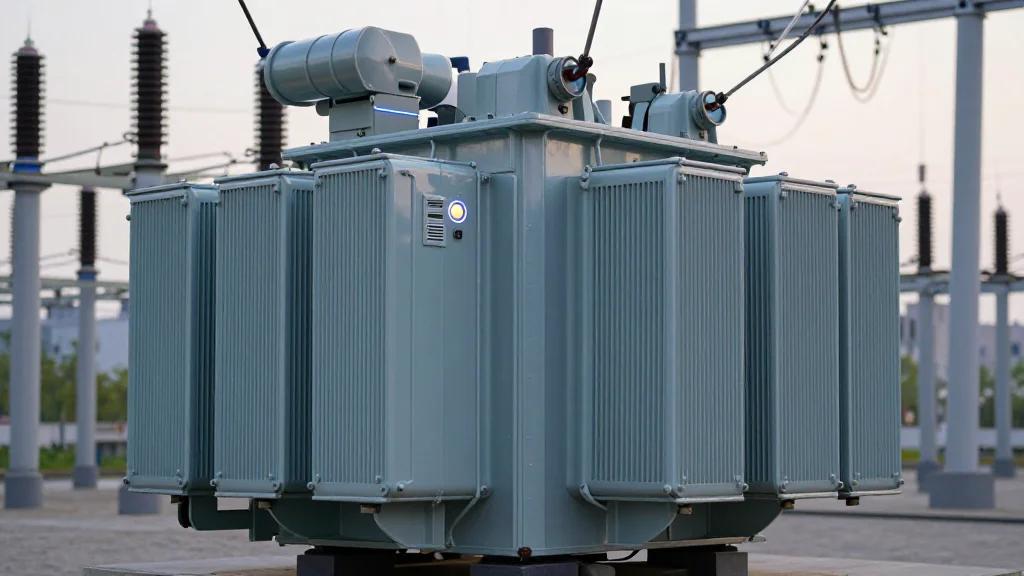
Schwab Forecasts $5.8 T Global Grid Upgrade Surge Fueled by AI Power Demand

Companies Mentioned

Why It Matters
The projected $5.8 trillion spend on grid upgrades represents one of the largest, decade‑long capital cycles in modern infrastructure history, directly linking AI growth to climate‑tech outcomes. By modernizing transmission lines, deploying advanced storage and integrating renewable sources, the upgrades can reduce reliance on fossil‑fuel peaker plants, lower emissions and improve grid resilience against extreme weather. For investors, the shift expands the definition of AI‑related exposure beyond chips and cloud services to include traditional utilities and construction firms. This re‑allocation could reshape index compositions, drive new ESG metrics, and accelerate the decarbonization of the power sector as AI workloads become a catalyst for cleaner, more reliable electricity supply.
Key Takeaways
- •Schwab forecasts $5.8 trillion global grid‑upgrade spending from 2026‑2035, with $1 trillion in the U.S.
- •U.S. data‑center electricity demand projected to rise from 147 TWh (2023) to >606 TWh by 2030.
- •Germany commits €500 billion ($540 billion) to a 12‑year infrastructure fund starting in 2025.
- •AI training and inference together drive a structural deficit in grid capacity, compounded by EVs and heat‑pump adoption.
- •Utilities, construction firms and materials suppliers are positioned to capture sustained capital flows.
Pulse Analysis
Schwab’s report reframes AI as a catalyst for a massive, climate‑focused infrastructure renaissance rather than a purely digital phenomenon. Historically, technology booms have spurred ancillary hardware upgrades—think semiconductors in the 1990s—but the scale here is unprecedented because AI’s power appetite is both continuous (inference) and peak‑intensive (training). This dual‑phase demand forces utilities to adopt flexible, renewable‑compatible solutions, accelerating the rollout of battery storage, demand‑response platforms and high‑voltage direct‑current (HVDC) lines that can ferry power over long distances with minimal loss.
From a market perspective, the investment thesis widens the AI exposure universe. Traditional AI‑centric funds may miss upside in utility stocks that are now tied to AI‑driven demand. Conversely, investors wary of the carbon footprint of data centers can view grid upgrades as a mitigation pathway, aligning capital with ESG goals. The German €500 billion commitment also signals a European benchmark; other nations may follow suit, creating a coordinated global push that could standardize grid‑modernization regulations and technology standards.
Looking ahead, the key risk lies in execution. Grid upgrades are capital‑intensive, politically sensitive and often delayed by permitting bottlenecks. If policy inertia or supply‑chain constraints slow projects, the anticipated climate benefits could be deferred, and AI firms may face higher electricity costs, potentially dampening AI deployment rates. However, the convergence of AI growth, climate urgency and massive public funding creates a compelling feedback loop: as grids become greener and more resilient, they can support even larger AI workloads, reinforcing the investment narrative Schwab outlines.
Schwab Forecasts $5.8 T Global Grid Upgrade Surge Fueled by AI Power Demand
Comments
Want to join the conversation?
Loading comments...