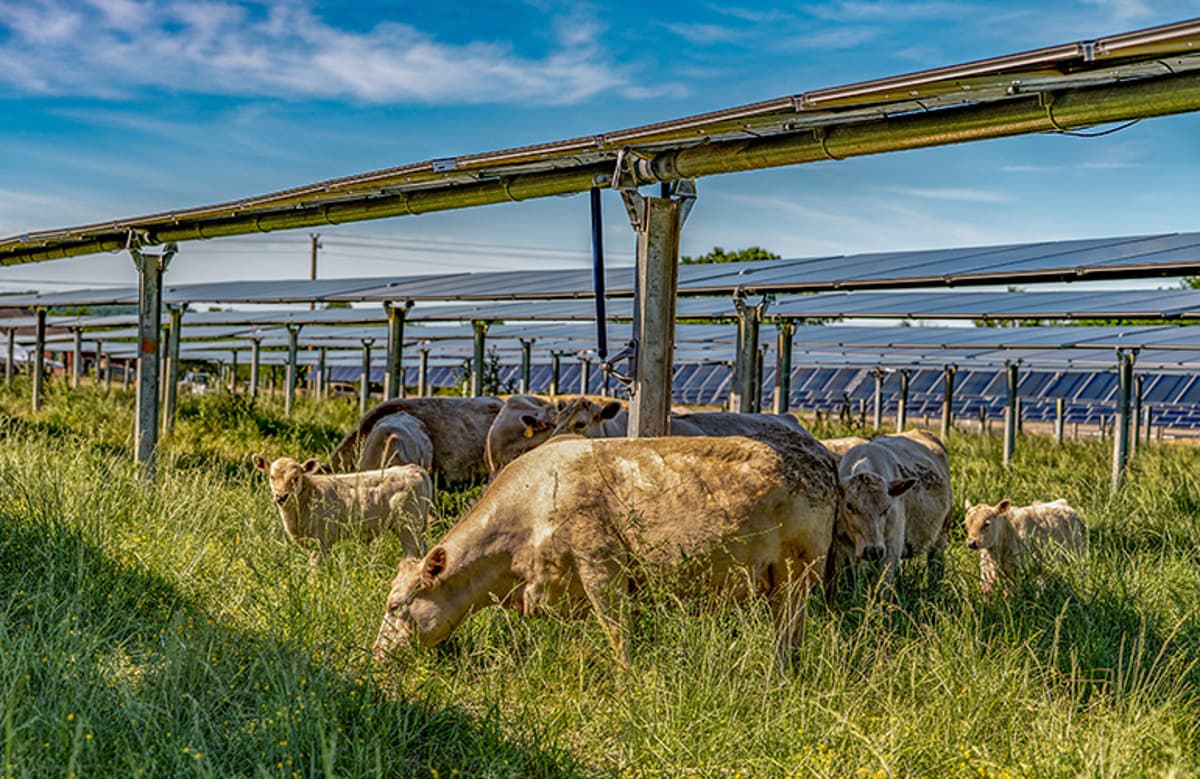
Silicon Ranch Debuts Cattle-Friendly Solar Tracker Technology in Tennessee
Companies Mentioned
Why It Matters
The deployment proves that large‑scale solar can coexist with livestock, unlocking new revenue streams for farmers and expanding renewable capacity without sacrificing agricultural land.
Key Takeaways
- •First commercial cattle-compatible agrivoltaics platform launched in Tennessee
- •MTE will buy power, saving members across 11 counties
- •Solar trackers switch to grazing mode, allowing safe cattle movement
- •Project uses regional manufacturers, including First Solar and Nextpower
- •Regenerative land‑stewardship program improves soil and pollinator habitat
Pulse Analysis
Agrivoltaics—combining solar arrays with agricultural use—has moved beyond experimental plots into commercial reality with Silicon Ranch’s CattleTracker system. By engineering a solar‑tracking array that can shift into a “grazing” mode, the company enables beef cattle to move safely beneath panels, preserving normal herd behavior while protecting the land. The Christiana Solar Ranch in Tennessee marks the world’s first large‑scale deployment that pairs a fully operational solar farm with a working cattle operation, validating two new patents and setting a benchmark for multi‑use renewable projects.
The partnership with Middle Tennessee Electric (MTE), the nation’s second‑largest cooperative, illustrates the economic upside. MTE will purchase the electricity and associated environmental attributes, delivering immediate cost savings to more than 750,000 members across 11 counties. By sourcing components from First Solar’s new Alabama plant and Nextpower’s Memphis facility, the project keeps supply chains domestic and creates regional jobs. Silicon Ranch also assumes long‑term land stewardship, applying regenerative grazing practices that improve soil carbon, biodiversity, and pollinator habitats, thereby turning a traditional energy site into a net‑positive ecosystem.
CattleTracker’s success could accelerate adoption of livestock‑friendly solar farms nationwide, especially in the Southeast where grazing land is abundant. Ongoing research involving Colorado State University, Michigan State, and industry groups is already generating peer‑reviewed data on yield, animal welfare, and carbon sequestration, providing a robust evidence base for policymakers. As utilities seek to meet renewable mandates without sacrificing agricultural productivity, the model offers a replicable pathway that aligns climate goals with farm profitability, positioning agrivoltaics as a cornerstone of the next generation of sustainable energy infrastructure.
Silicon Ranch debuts cattle-friendly solar tracker technology in Tennessee
Comments
Want to join the conversation?
Loading comments...