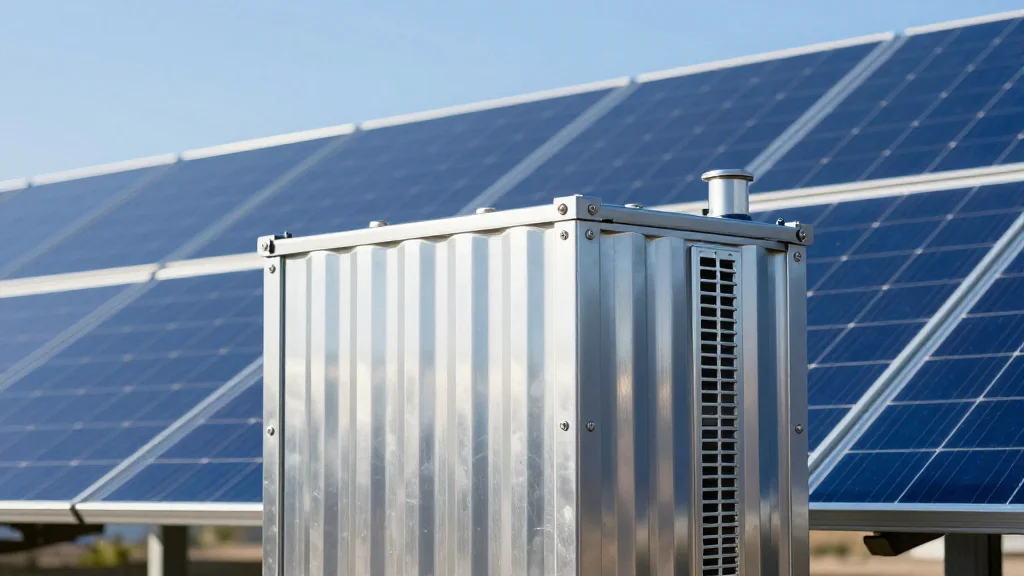
Singareni Implements State's First Battery Energy Storage System, Saves ₹26 Lakh
Why It Matters
The BESS turns otherwise unpaid surplus solar into cost savings, improving the economics of SCCL’s renewable assets and demonstrating a scalable model for Indian utilities facing similar net‑metering constraints.
Key Takeaways
- •First Telangana BESS, 1 MW capacity, attached to 28 MW solar plant.
- •Saved ₹26 lakh (~$32k) by storing 335,485 kWh of excess power.
- •Project cost ₹2.5 crore (~$305k), showing strong ROI potential.
- •SCCL operates 245.5 MW solar, 98.5 MW in‑house, 147 MW open‑access.
- •Plans to expand storage to capture value from surplus renewable generation.
Pulse Analysis
India’s renewable surge has outpaced traditional grid‑balancing mechanisms, leaving many state‑run enterprises with excess solar that must be supplied to the grid at no charge. This structural mismatch erodes the financial returns of solar investments, especially under power purchase agreements that only remunerate local consumption. Battery energy storage systems (BESS) have emerged as a pragmatic solution, enabling firms to capture, store, and redeploy surplus generation, thereby unlocking hidden value and enhancing grid stability.
Singareni Collieries Company Limited’s 1‑MW BESS at the Mandamarri plant illustrates the economics of this approach. By diverting 335,485 kWh of otherwise free‑exported electricity into on‑site batteries, SCCL realized savings of roughly ₹26 lakh (about $32,000) within four months, against a capital outlay of ₹2.5 crore ($305,000). The rapid payback underscores the high return on investment possible when storage is paired with existing solar assets, especially for utilities that operate both in‑house and open‑access plants. The initiative also aligns with Telangana’s renewable incentives, positioning SCCL as a pioneer in the state’s clean‑energy transition.
The broader implication is clear: as India scales its solar capacity, BESS deployments will become essential for monetizing surplus power and meeting reliability targets. Policymakers may consider revising net‑metering rules or offering storage subsidies to accelerate adoption. For corporate and public sector generators, SCCL’s model provides a replicable blueprint—leveraging modest‑size batteries to convert idle generation into tangible cost savings, improve energy security, and support national decarbonization goals.
Singareni implements state's first battery energy storage system, saves ₹26 lakh
Comments
Want to join the conversation?
Loading comments...