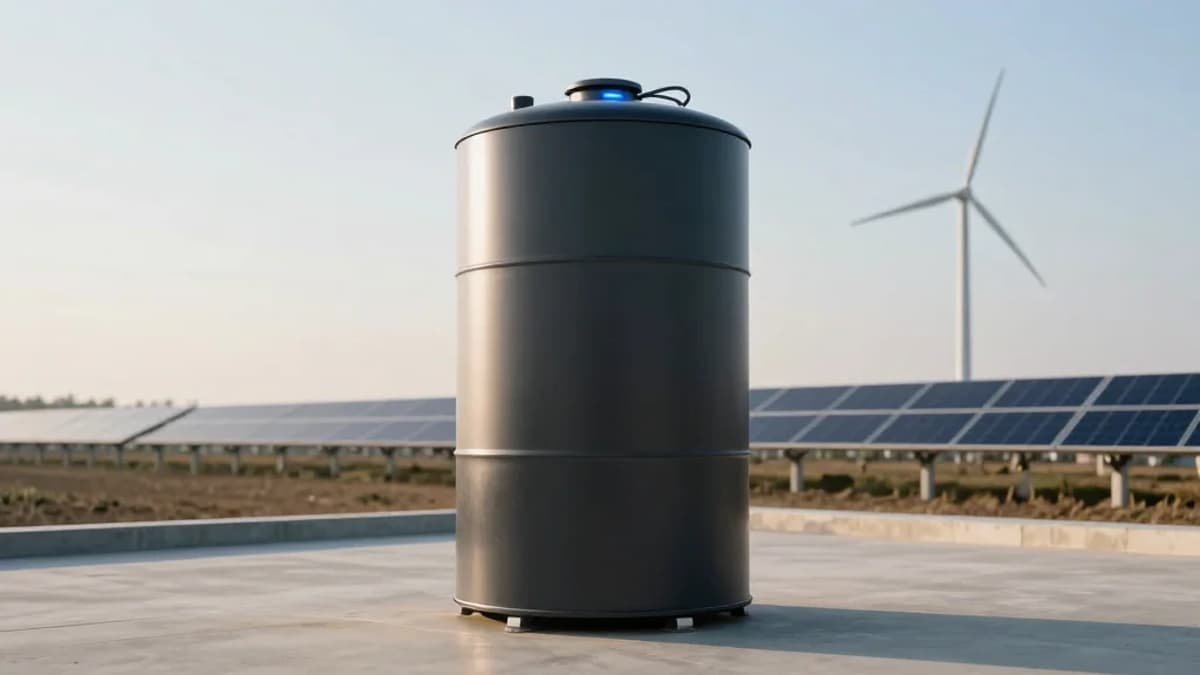
Small 24/7 Clean Power Commitments Could Cut Costs for Long-Duration Storage
•March 9, 2026
0
Why It Matters
Modest corporate procurement can de‑risk and accelerate long‑duration storage, a linchpin for deep decarbonization, while bridging the “valley of death” for nascent clean‑energy technologies.
Key Takeaways
- •24/7 clean power contracts cut emerging tech costs.
- •3% corporate demand can break‑even iron‑air batteries by 2030.
- •Learning rates accelerate cost declines for Allam generators.
- •Google’s funding links procurement to large‑scale iron‑air deployment.
- •Early adoption creates virtuous cycle of investment and innovation.
Pulse Analysis
Corporate demand for round‑the‑clock carbon‑free electricity is reshaping how utilities and developers approach new energy assets. As carbon‑accounting frameworks tighten, the most ambitious off‑takers—particularly tech giants—are signing 24/7 clean‑power contracts that align generation timing with consumption. This shift not only reduces Scope 2 emissions but also creates a predictable revenue stream for nascent technologies that struggle to secure financing under traditional procurement models.
The TU Berlin‑Princeton study quantifies the learning effect that such contracts generate. By applying empirically‑derived learning rates to an Allam‑cycle generator and an iron‑air battery, the researchers show that each doubling of deployment experience can cut costs by up to 20 percent, depending on the technology. Even a modest 3 percent share of German corporate electricity demand is projected to bring iron‑air storage to cost‑parity by 2030, while Allam generators could become competitive alternatives to fossil‑fuel peakers. These cost trajectories stem from accelerated field data, economies of scale, and iterative design improvements that only large‑scale operation can unlock.
The implications extend beyond individual firms. Investors see a clearer path to returns, policymakers gain a lever to meet net‑zero targets, and supply chains receive the volume needed to drive down component prices. Google’s recent announcement of the world’s largest iron‑air battery underscores how corporate commitment can translate into tangible market momentum. As more companies adopt 24/7 clean‑power procurement, the feedback loop of deployment‑driven learning is likely to accelerate, making long‑duration storage and near‑zero‑emission generation mainstream components of the future grid.
Small 24/7 clean power commitments could cut costs for long-duration storage
0
Comments
Want to join the conversation?
Loading comments...