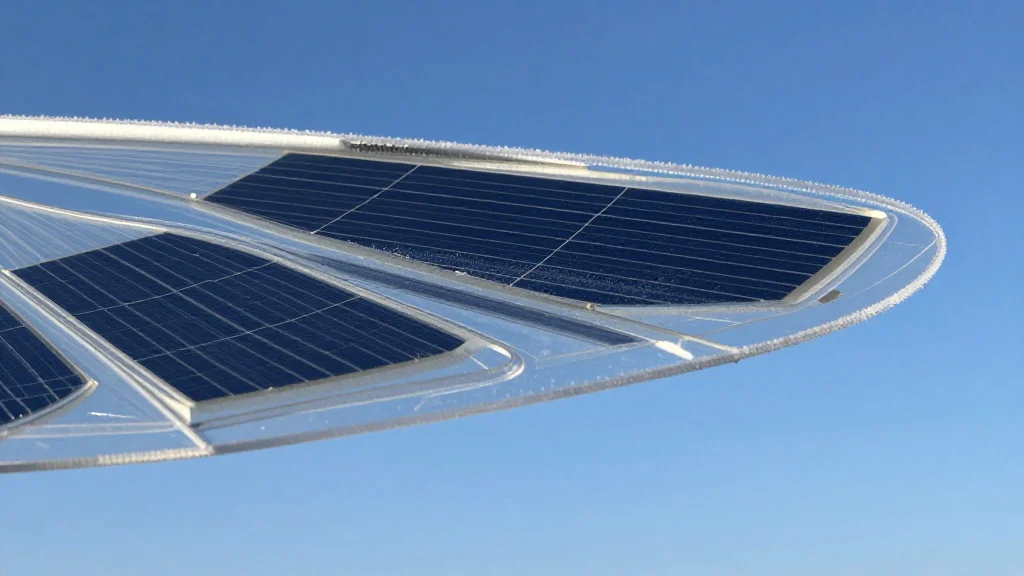
SoftBank Corp. And TOPPAN Holdings Develop Lightweight, Durable Skin for Solar HAPS Aircraft Wings
Companies Mentioned
Why It Matters
The breakthrough skin extends HAPS endurance, unlocking reliable, low‑latency connectivity for disaster zones and remote regions, and positions SoftBank and TOPPAN as key suppliers in the emerging stratospheric communications market.
Key Takeaways
- •SoftBank and TOPPAN created ultra‑light wing skin for stratospheric HAPS
- •Skin resists UV‑C, ozone, and temperatures down to –95 °C
- •Testing chamber simulates ultra‑low temperature, UV, and ozone simultaneously
- •HTA‑type 1 HAPS to launch commercial services by 2029
- •Mass‑production target set for fiscal 2028 to ensure supply
Pulse Analysis
High‑Altitude Platform Stations are poised to become a middle‑ground between terrestrial towers and satellites, offering broadband‑grade, low‑latency links from 20 km above Earth. Their promise hinges on staying aloft for weeks or months, a challenge that traditional aircraft skins cannot meet due to relentless UV‑C exposure, ozone, and near‑freezing temperatures. By marrying SoftBank’s operational data with TOPPAN’s advanced resin‑lamination processes, the new skin delivers a weight advantage while protecting critical communications payloads, effectively turning the stratosphere into a viable operating environment.
The technical breakthrough lies in a proprietary multi‑layer structure that integrates impact‑resistant resin with precision‑laminated films originally designed for high‑performance packaging. This architecture tolerates temperature swings from –95 °C up to 100 °C under direct sunlight and shields against short‑wave UV‑C and ozone concentrations of up to 20 ppm. Complementing the material, TOPPAN engineered a climate‑chamber that simultaneously subjects samples to ultra‑low temperatures, intense UV, and ozone, delivering granular insight into degradation pathways and shortening development cycles.
Commercially, the partnership targets a 2029 launch of SoftBank’s HTA‑type 1 HAPS, with mass‑production pipelines slated for fiscal 2028. Extended flight times will enable rapid deployment of communication services after natural disasters and bridge connectivity gaps in mountainous or island communities. The skin’s durability also opens doors for other high‑stress sectors, such as aerospace, defense, and extreme‑environment manufacturing, positioning both companies at the forefront of next‑generation stratospheric infrastructure.
SoftBank Corp. and TOPPAN Holdings Develop Lightweight, Durable Skin for Solar HAPS Aircraft Wings
Comments
Want to join the conversation?
Loading comments...