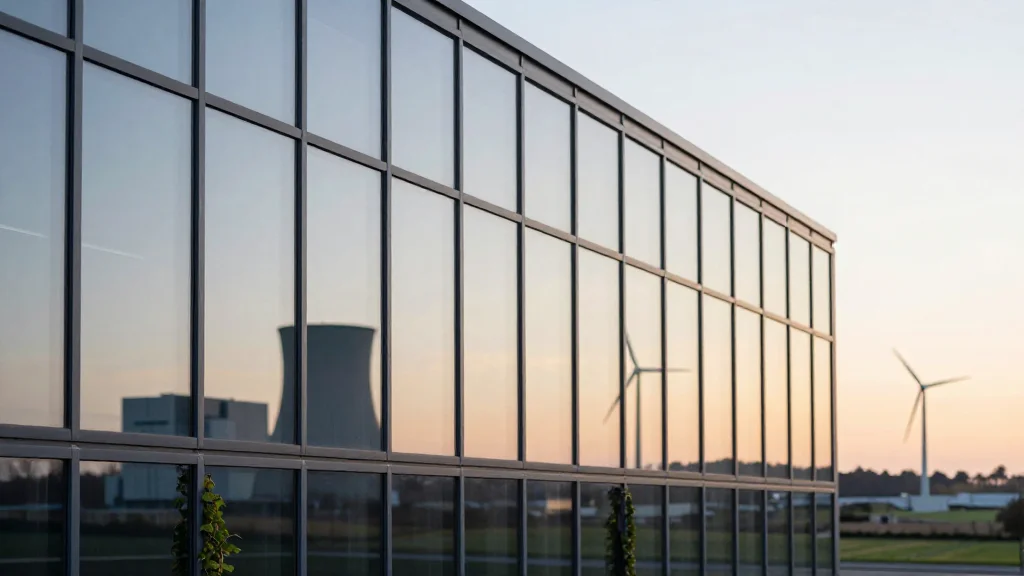
SoftBank Pledges up to $86 Bn for Nuclear‑powered AI Data Centers in France

Companies Mentioned
Why It Matters
The investment directly addresses the growing electricity demand of AI training and inference, offering a low‑carbon pathway that could set a template for future compute hubs. By tying AI infrastructure to nuclear power, SoftBank challenges the prevailing narrative that AI expansion must rely on renewable sources that are intermittently available, potentially reshaping policy debates around energy planning for high‑performance computing. If successful, the French data‑center cluster could attract AI startups, cloud providers, and research institutions seeking stable, affordable power, thereby strengthening Europe’s AI ecosystem. Conversely, the project's scale may pressure local grids and spark public scrutiny over nuclear reliance, highlighting the trade‑offs between climate goals and energy security.
Key Takeaways
- •SoftBank commits up to €75 bn ($86 bn) to build 5 GW of AI data‑center capacity in France.
- •First phase of €45 bn will deliver 3.1 GW by 2031 in Dunkirk, Bosquel and Bouchain.
- •Partnerships with EDF (nuclear utility) and Schneider Electric (power‑cooling specialist).
- •Project leverages France’s nuclear‑heavy grid to provide low‑carbon, dispatchable power.
- •Launch slated for late 2024 with initial modules online by 2027.
Pulse Analysis
SoftBank’s French venture marks a decisive bet that energy security, rather than chip supply, will dictate the next wave of AI expansion. Historically, data‑center growth has been driven by cheap fossil‑fuel electricity; the shift to nuclear reflects both a response to climate imperatives and a strategic maneuver to sidestep the grid constraints that have hampered U.S. and Gulf projects. By embedding compute next to a decommissioned nuclear site, SoftBank reduces capital expenditures on transmission infrastructure and mitigates exposure to volatile spot‑market power prices.
The partnership also illustrates how corporate strategy can align with national energy policy. France’s commitment to maintaining a robust nuclear fleet provides a rare, stable supply that can be monetized through large‑scale compute contracts. This creates a feedback loop: as AI workloads consume more power, the government gains a compelling argument to preserve nuclear capacity, while SoftBank secures a predictable cost base. Competitors lacking similar access may be forced to either invest in costly renewable storage solutions or accept higher operating expenses, potentially widening the performance gap between European and non‑European AI services.
Looking ahead, the success of the French cluster will hinge on regulatory clarity around nuclear site reuse, community acceptance of increased local power demand, and SoftBank’s ability to lock in long‑term power purchase agreements. If these hurdles are cleared, the model could be exported to other nuclear‑rich nations—such as Canada or South Korea—creating a new class of low‑carbon AI super‑hubs. Failure, however, would reinforce the narrative that AI infrastructure must diversify its energy mix, perhaps accelerating investment in advanced battery storage or green hydrogen for data‑center cooling. Either outcome will shape the competitive dynamics of the global AI market for years to come.
SoftBank pledges up to $86 bn for nuclear‑powered AI data centers in France
Comments
Want to join the conversation?
Loading comments...