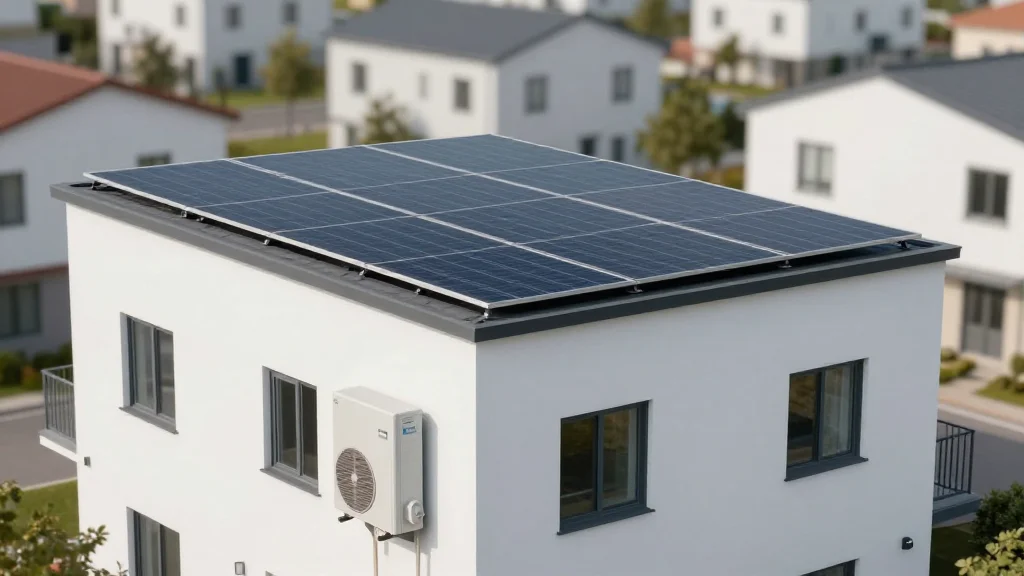
Solar, Heat Pumps, Electric Cooktops: Another 8,000 Social Housing Homes to Get Energy Upgrades
Why It Matters
By lowering utility costs for vulnerable renters, the program eases cost‑of‑living pressure while advancing Australia’s net‑zero emissions targets.
Key Takeaways
- •$79 M USD boost funds solar, heat pumps for 8,000 homes
- •SHEPI totals $174 M USD, covering 19,000 upgrades
- •Upgrades delivered via state’s Energy Efficiency in Social Housing Program
- •Community Housing Upgrades Stream grants average $12 k USD per property
- •Goal: upgrade over 100,000 social‑housing units across Australia
Pulse Analysis
Australia’s push for energy‑efficient social housing has gained fresh momentum with a new $79 million USD injection under the federal Social Housing Energy Performance Initiative (SHEPI). The funding targets Victorian public and community housing, where more than 8,000 households will receive rooftop solar panels, heat‑pump water heaters, electric cooktops, ceiling fans and insulation. By addressing the steep utility bills that many low‑income renters face, the program directly tackles the cost‑of‑living crisis while delivering tangible comfort improvements.
The latest allocation builds on an earlier $94 million USD joint investment, bringing total SHEPI spending in Victoria to about $174 million USD. Delivered through the state‑run Energy Efficiency in Social Housing Program, the upgrades are part of a broader strategy to cut greenhouse‑gas emissions from the residential sector. Heat‑pump technology and solar generation reduce reliance on fossil‑fuel‑derived electricity, contributing to Australia’s net‑zero ambition. Moreover, the Community Housing Upgrades Stream, funded with roughly $6 million USD, offers average grants of $12 k USD per property, accelerating retrofits for community‑owned dwellings.
Looking ahead, the federal government envisions extending SHEPI to more than 100,000 social‑housing units across the country. If successful, the model could become a template for other jurisdictions seeking to combine climate action with social equity. Scaling the program will require sustained funding, robust measurement of energy savings, and coordination between federal, state and community stakeholders. Nonetheless, the initiative signals a clear policy direction: energy efficiency is not just an environmental priority but a critical lever for affordable, resilient housing.
Solar, heat pumps, electric cooktops: Another 8,000 social housing homes to get energy upgrades
Comments
Want to join the conversation?
Loading comments...