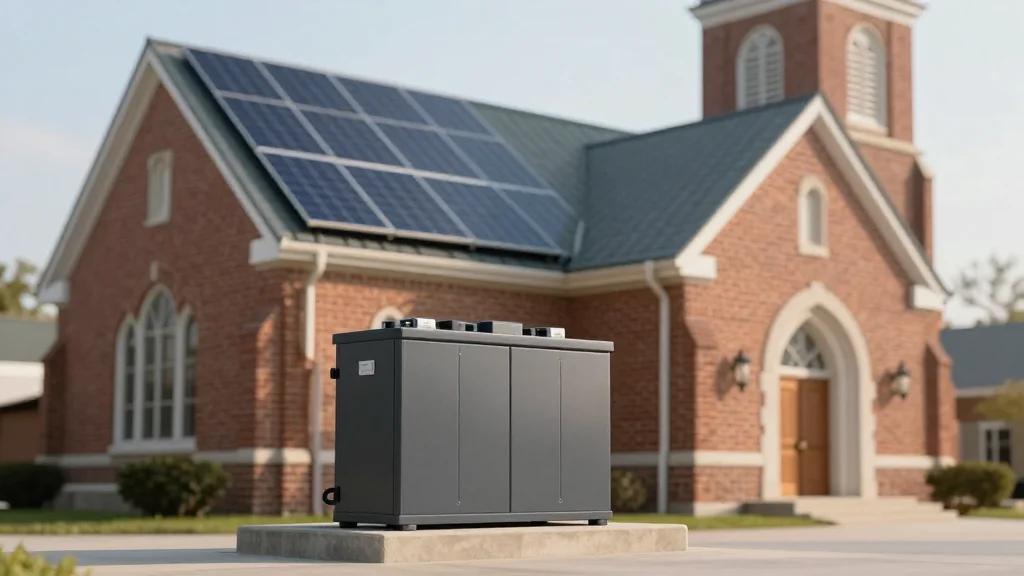
Solar Power + Energy Storage Transform Church Into Resilience Hub
Why It Matters
The deployment shows a low‑cost, replicable pathway for churches and similar venues to lower operating costs and provide emergency power, strengthening community resilience. It also signals accelerating adoption of decentralized renewable energy that supports climate and grid‑stability goals.
Key Takeaways
- •70‑kW solar + 41‑kWh battery saves church ~$15k/year
- •No upfront cost thanks to Hive Fund, Black Voters Matter, Georgia BRIGHT
- •System can power refrigeration, medical supplies, and EV chargers during outages
- •Project positions church as a community resilience hub for energy security
- •Highlights rapid drop in solar costs, enabling broader adoption
Pulse Analysis
The New Bethel AME Church project reflects a growing trend of leveraging nonprofit funding to accelerate renewable energy adoption in community spaces. Federal and state incentives, combined with philanthropic partners like Hive Fund and Black Voters Matter, have eliminated capital barriers, allowing organizations to install sizable solar arrays and battery storage without upfront outlays. This financing model not only reduces operating expenses but also creates a template for schools, libraries and other public venues seeking similar cost‑effective sustainability upgrades.
Beyond bill savings, the integration of a 41‑kWh battery transforms the church into a micro‑grid node capable of supplying critical loads during grid failures. When paired with planned electric‑vehicle chargers, the site could serve as a regional resilience hub, powering refrigeration for medicines, lighting for emergency shelters, and even providing “battery‑on‑wheels” support from charged EVs. Such capabilities are especially valuable in regions prone to severe weather, where traditional utilities may be slow to restore service.
On a broader scale, projects like this underscore the accelerating economics of solar power—panel costs have fallen more than 99% since the 1970s—making community‑scale installations financially viable. As more institutions adopt storage‑enabled solar, the aggregate effect can ease peak demand, lower wholesale electricity prices, and cut carbon emissions. Policymakers are likely to view these grassroots deployments as proof points for expanding incentives and grid‑integration standards, paving the way for a more resilient, decentralized energy future.
Solar Power + Energy Storage Transform Church Into Resilience Hub
Comments
Want to join the conversation?
Loading comments...