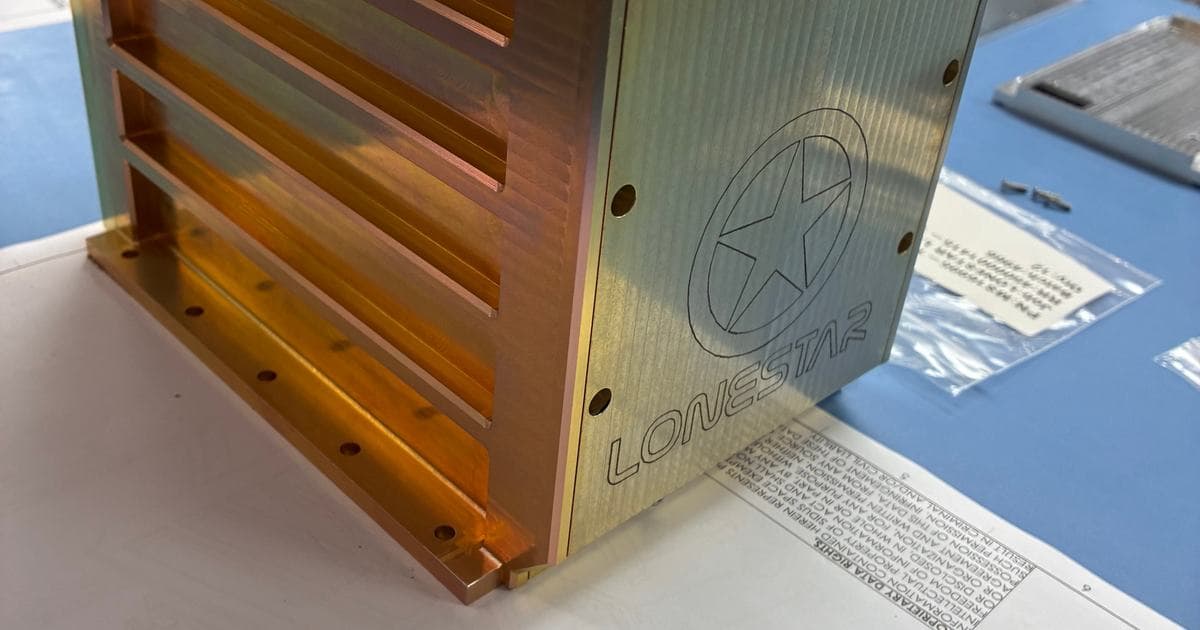
Space Solar Agrees to Host Lonestar Data Storage Aboard Orbital Power Stations
Why It Matters
By coupling high‑capacity orbital power with resilient space‑based storage, the alliance could accelerate the commercial viability of orbital data centers and reduce reliance on terrestrial infrastructure. This synergy positions both firms at the forefront of a market poised for rapid growth as AI compute and data demand move beyond Earth.
Key Takeaways
- •Space Solar to host Lonestar StarVault on OSPREYBuilder by 2028.
- •Partnership merges orbital power generation with sovereign space data storage.
- •Lonestar previously tested storage on lunar surface and cislunar space.
- •SBSP demo aims to beam 600 MW to Earth, funded $2.27 m.
- •Plans target multi‑orbit data vaults, scaling from 2030 onward.
Pulse Analysis
The orbital solar‑power sector is gaining traction as governments and investors seek alternatives to terrestrial energy grids. Space Solar, founded in 2022, has already secured £1.7 million (about $2.27 million) from the UK Space Agency and a NATO Diana cohort selection, underscoring strategic interest in large‑scale space‑based solar (SBSP). Its OSPREYBuilder demonstrator, planned for a 2028 launch, will showcase the ability to assemble and power modules in orbit, a capability that could underpin future megawatt‑scale power stations.
Lonestar’s StarVault modules represent a parallel trend: orbital data centers that promise sovereign, low‑latency storage for AI and critical workloads. After successful lunar and cislunar tests, Lonestar is now looking to scale across multiple orbital regimes. By partnering with Space Solar, Lonestar gains a reliable power source, while Space Solar secures a high‑value payload that validates its assembly platform. This collaboration exemplifies the convergence of two hot space‑industry themes—in‑space power generation and off‑Earth data infrastructure.
If the joint effort succeeds, it could reshape the economics of data sovereignty and resilience. Enterprises wary of terrestrial network disruptions may turn to orbital vaults powered by megawatt‑class solar stations, reducing latency for space‑based AI compute. The roadmap to 2030 and beyond envisions thousands of interconnected vaults, potentially creating a new asset class for investors and a strategic capability for nations. However, technical hurdles such as radiation hardening, thermal management, and launch costs remain significant, making the partnership’s progress a key barometer for the broader orbital data economy.
Space Solar agrees to host Lonestar data storage aboard orbital power stations
Comments
Want to join the conversation?
Loading comments...