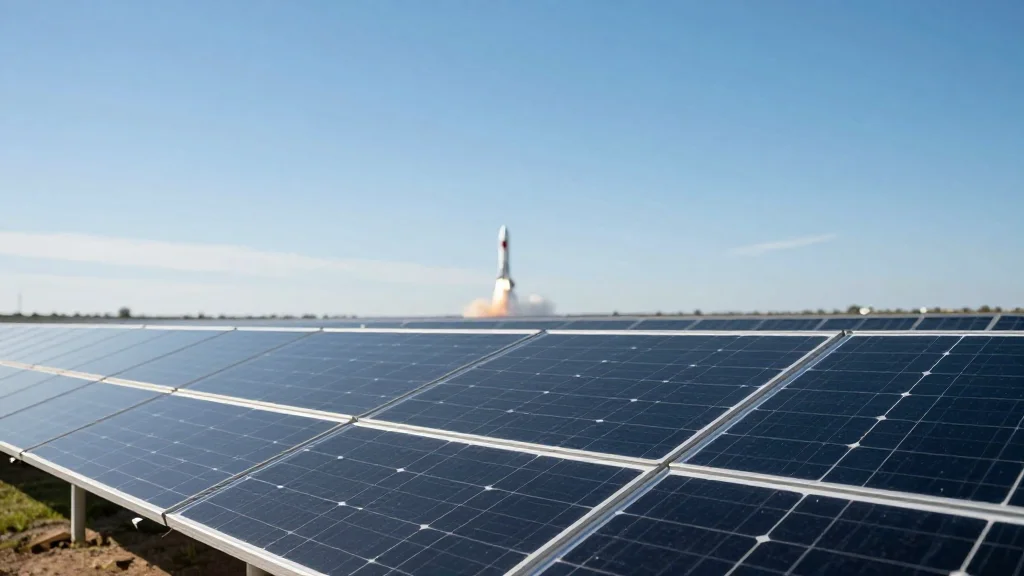
SpaceX Announces 10‑GW Solar Cell Factory in Texas to Power Starlink and Orbital AI Data Centers

Companies Mentioned
Why It Matters
The 10‑GW solar factory represents a convergence of two megatrends—rapid AI compute expansion and the push for decarbonized energy. By producing its own solar cells, SpaceX can lower the carbon footprint of both its satellite constellation and the envisioned orbital data centers, addressing growing scrutiny over the energy intensity of AI workloads. Moreover, the project could catalyze a new supply chain for high‑volume, space‑qualified solar components, potentially lowering costs for the broader satellite industry. Beyond environmental benefits, the factory could influence the economics of space‑based services. Dedicated clean power reduces reliance on terrestrial grids, enabling more predictable operating costs for Starlink and future space‑based AI platforms. This vertical integration may give SpaceX a competitive edge over rivals that must purchase power on the open market, thereby shaping the competitive dynamics of both the satellite broadband and space‑compute markets.
Key Takeaways
- •SpaceX plans a 10‑GW solar cell manufacturing plant in Bastrop, Texas.
- •The facility will produce enough panels to power millions of homes and power Starlink satellites.
- •Project aims to supply dedicated clean energy for orbital AI data centers.
- •Construction has begun; permits filed with Bastrop County.
- •Factory ties into SpaceX’s upcoming IPO, targeting a valuation above $1 trillion.
Pulse Analysis
SpaceX’s decision to build a 10‑GW solar factory is a bold bet on vertical integration that mirrors trends in other capital‑intensive tech sectors, where firms secure their own energy supply to hedge against volatile power markets. The scale of the plant suggests a multi‑year capital outlay likely exceeding $2 billion, a sum that the company hopes to raise through its anticipated Nasdaq debut. If the IPO proceeds at the projected $1 trillion valuation, the solar venture could be financed largely by equity, reducing debt exposure and signaling confidence to investors.
From a competitive standpoint, the move could force other satellite operators—such as OneWeb and Amazon’s Project Kuiper—to explore similar renewable strategies or risk higher operating costs. The solar plant also positions SpaceX to become a supplier of space‑grade solar modules, potentially opening a new revenue stream beyond its core launch services. However, the project faces significant risks: securing a reliable polysilicon supply, meeting the stringent reliability standards for space applications, and navigating Texas’s regulatory landscape. Delays or cost overruns could strain the company’s balance sheet, especially if the IPO market softens.
Looking ahead, the success of the factory will hinge on how quickly SpaceX can translate solar cell output into usable power for its orbital assets. Integration challenges—such as adapting panels for the harsh space environment and ensuring seamless power delivery to satellites and data centers—will test the company’s engineering capabilities. If resolved, the initiative could set a new standard for sustainable, compute‑intensive space infrastructure, reinforcing SpaceX’s dominance in both the launch and satellite services arenas while advancing the broader ClimateTech agenda.
SpaceX Announces 10‑GW Solar Cell Factory in Texas to Power Starlink and Orbital AI Data Centers
Comments
Want to join the conversation?
Loading comments...