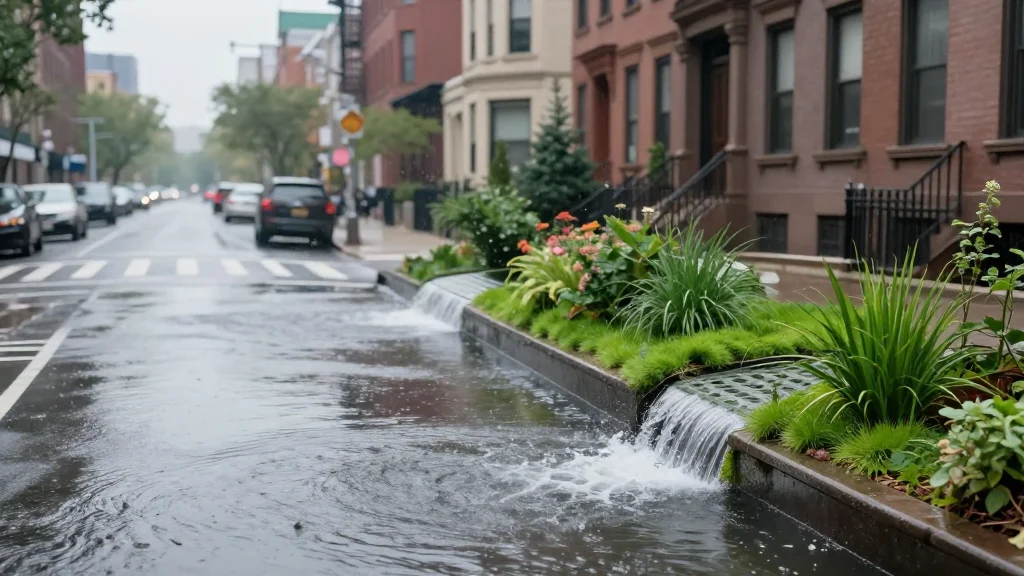
Sponge City Designs Gain Momentum as NYC Floods Highlight Infrastructure Gaps

Why It Matters
The Brooklyn flash flood underscores a growing mismatch between historic drainage capacity and the intensifying precipitation patterns driven by climate change. Sponge‑city designs offer a scalable, nature‑based approach that can reduce peak runoff, lower flood risk, and provide ancillary benefits such as urban cooling and biodiversity. Successful implementation could set a template for other megacities facing similar challenges, accelerating the transition toward resilient, low‑impact urban water management. Beyond flood mitigation, the shift toward green infrastructure signals a broader market transformation. As municipalities allocate billions toward climate‑adaptation projects, climate‑tech firms that specialize in permeable surfaces, bio‑retention cells, and real‑time water‑flow monitoring stand to capture significant new revenue streams, reshaping investment patterns in the sector.
Key Takeaways
- •Brooklyn downburst delivered >2 inches of rain in <15 minutes, flooding streets and subways.
- •Sensors recorded 22.4 inches of street‑level water in 25 minutes, classified as a 5‑10‑year event.
- •City officials cite the event as a catalyst for sponge‑city pilot projects in flood‑prone neighborhoods.
- •Estimated $12 billion needed for a decade‑long citywide sponge‑city rollout.
- •Venture capital funding for green‑infrastructure startups rose 35 % after the flood.
Pulse Analysis
The Brooklyn incident is a textbook case of how climate‑induced extreme precipitation can expose the fragility of legacy urban drainage. Historically, cities have relied on expanding pipe diameters and pump stations to keep pace with growth. That approach is reaching its limit as storms become more intense and less predictable. Sponge‑city concepts—rooted in the integration of vegetation, soil, and engineered wetlands—represent a paradigm shift from merely moving water to actually storing and slowly releasing it.
From a market perspective, the flood has acted as a catalyst, aligning public policy with private capital. Investors are now seeing a clearer path to returns, given the city’s willingness to embed performance‑based contracts into procurement. Companies that can demonstrate quantifiable reductions in runoff per square foot will likely dominate upcoming RFPs. Moreover, the co‑benefits of green infrastructure—heat‑island mitigation, air‑quality improvement, and enhanced urban aesthetics—create ancillary revenue opportunities through public‑private partnerships and community development funds.
Looking ahead, the success of New York’s sponge‑city pilots will hinge on three factors: (1) the ability to streamline permitting processes for green retrofits, (2) the development of robust data platforms to monitor performance in real time, and (3) sustained political commitment to allocate the necessary capital amid competing budgetary demands. If these hurdles are cleared, the city could not only reduce flood damage costs—estimated in the hundreds of millions annually—but also set a replicable model for coastal megacities worldwide.
In the short term, the upcoming feasibility studies and public‑comment period will reveal how quickly the city can move from concept to construction. The stakes are high: delayed action could mean another costly flood event, while swift implementation could position New York as a leader in climate‑resilient urban design.
Sponge City Designs Gain Momentum as NYC Floods Highlight Infrastructure Gaps
Comments
Want to join the conversation?
Loading comments...