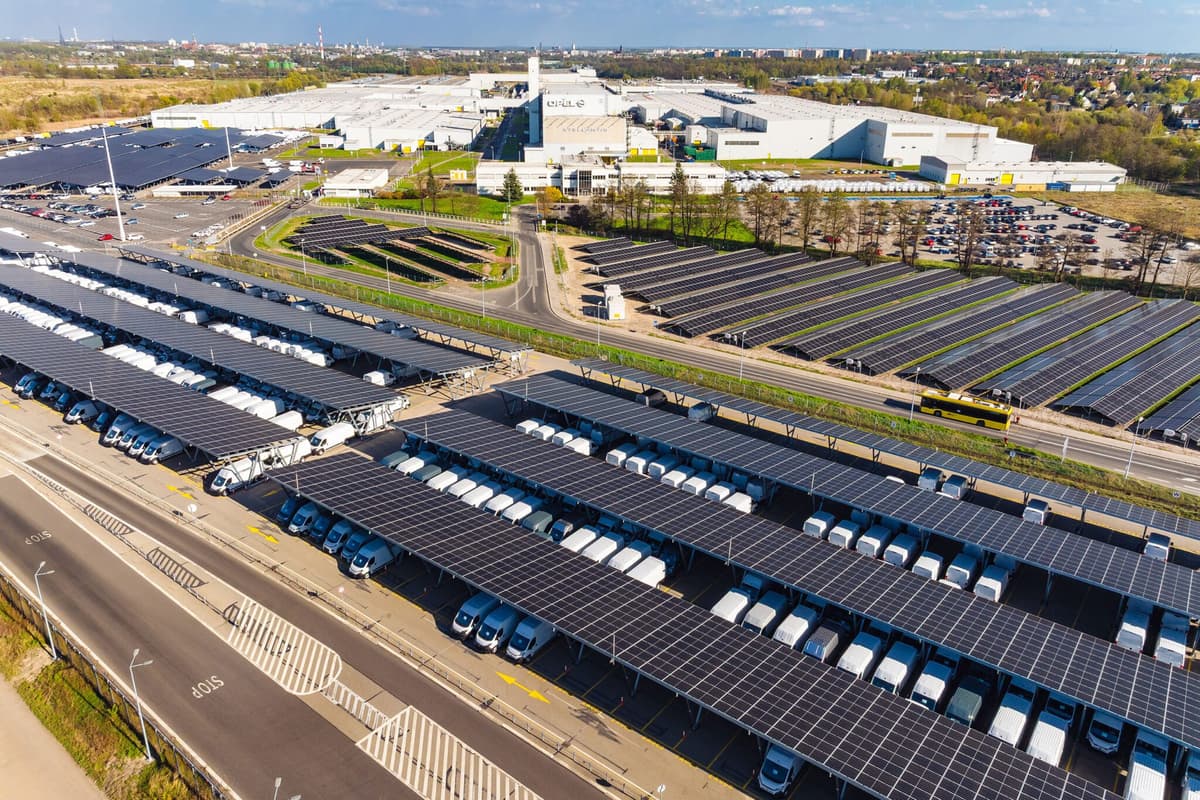
Stellantis Solar Sites to Cut 100,000 Tonnes of CO₂ a Year
Companies Mentioned
Why It Matters
The initiative cuts emissions, boosts energy independence and strengthens Stellantis’s competitiveness as EU regulators tighten carbon‑reduction mandates for manufacturers.
Key Takeaways
- •Stellantis sources 68% of European electricity from renewables
- •27 solar sites will total over 500 MW capacity
- •Expected CO₂ reduction exceeds 100,000 tonnes annually
- •Battery storage of 200 MWh planned at 20 sites by 2026
- •Target 31% on‑site self‑consumption, leading sites 80% by 2026
Pulse Analysis
Stellantis’s aggressive rollout of on‑site solar reflects a broader shift among automakers to secure energy resilience amid tightening European carbon regulations. By 2026 the company expects more than half of its European factories to draw power from a growing portfolio of photovoltaic installations, pushing renewable electricity sourcing to 68% today. The 500 MW of solar capacity, spread across 27 sites, not only reduces reliance on grid electricity but also aligns with the EU’s Fit for 55 agenda, which mandates steep cuts in industrial greenhouse‑gas emissions.
Complementing the solar push, Stellantis is deploying roughly 200 MWh of battery storage across 20 plants, a move that smooths intermittent generation and enables higher self‑consumption rates. Pilot projects such as the Madrid facility and the Zaragoza plant—already pairing solar with wind—demonstrate how storage can capture excess generation for use during peak demand, cutting operational costs and shielding production lines from volatile energy prices. The integration of geothermal and biomass at sites like Caen further diversifies the energy mix, showcasing a holistic approach to decarbonisation beyond photovoltaics.
The strategic emphasis on renewable generation and storage gives Stellantis a competitive edge in a market where sustainability is increasingly a purchasing criterion. Reducing annual emissions by more than 100,000 tonnes not only improves the company’s ESG profile but also positions it favorably for potential carbon‑credit revenues and regulatory incentives. As other OEMs scramble to meet EU climate targets, Stellantis’s model of on‑site energy autonomy could become a benchmark for the industry, driving broader adoption of clean‑energy infrastructure across automotive manufacturing.
Stellantis solar sites to cut 100,000 tonnes of CO₂ a year
Comments
Want to join the conversation?
Loading comments...