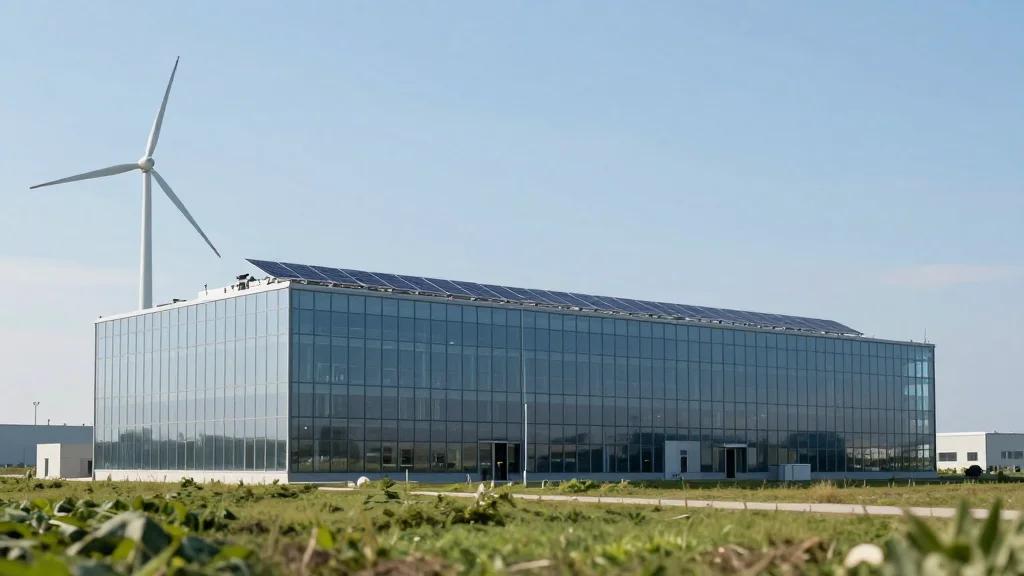
Stellium Datacenters Slashes Emissions 75% with Hourly‑Matched Renewable Power

Why It Matters
The HPC sector consumes vast amounts of electricity, and its growth is tightly linked to AI and scientific research. Stellium’s 75% emissions reduction demonstrates that high‑performance compute can be decarbonised without sacrificing performance, challenging the assumption that digital expansion must come at the cost of the climate. By proving that hourly‑matched renewable power is technically and economically viable, the case study provides a template for other data‑centres, potentially accelerating the sector’s overall shift toward genuine clean energy. Moreover, the initiative arrives as regulators tighten scrutiny of data‑centre sustainability. Demonstrable, real‑time renewable sourcing could become a de‑facto compliance metric, influencing future legislation and investment decisions. Investors seeking climate‑aligned assets may view Stellium’s model as a lower‑risk proposition, prompting capital to flow toward operators that can prove transparent, low‑carbon operations.
Key Takeaways
- •Stellium Datacenters cut carbon emissions by 75% through hourly‑matched renewable electricity.
- •Renewable matching score reached 95.4%, more than double the sector average of ~43%.
- •Partnership with Good Energy links the data‑centre to over 3,300 UK renewable generators.
- •Future battery storage expected to raise matching to 97‑98% within 12‑18 months.
- •UK Environmental Audit Committee is investigating data‑centre sustainability, raising regulatory pressure.
Pulse Analysis
Stellium’s move is a watershed for the data‑centre industry because it tackles the most contentious loophole in renewable accounting: the temporal mismatch between consumption and generation. By proving that real‑time matching can be operationalised at scale, Stellium forces a re‑evaluation of the ‘green’ label that many facilities rely on to attract ESG‑focused investors. The approach also aligns with the UK’s broader net‑zero roadmap, which increasingly emphasises demand‑side flexibility and grid resilience.
Historically, data‑centre operators have leaned on power‑purchase agreements (PPAs) and renewable certificates to claim 100 % renewable status, a practice that critics argue is more about optics than impact. Stellium’s model flips that script, turning the data‑centre from a passive consumer into an active participant in the renewable market. The partnership with Good Energy, which aggregates thousands of small‑scale generators, showcases a decentralized supply chain that can be more responsive to real‑time demand spikes than traditional utility‑scale PPAs.
If other operators follow suit, the competitive landscape could shift dramatically. Facilities that cannot achieve comparable hourly matching may face higher capital costs, regulatory penalties, or loss of enterprise customers demanding verifiable sustainability. In the longer term, the integration of battery storage will not only smooth intermittency but also provide ancillary grid services, turning data‑centres into flexible loads that support renewable integration at a national level. Stellium’s roadmap thus signals a broader transformation: data‑centres evolving from carbon‑intensive back‑ends to active, climate‑positive assets.
Stellium Datacenters Slashes Emissions 75% with Hourly‑Matched Renewable Power
Comments
Want to join the conversation?
Loading comments...