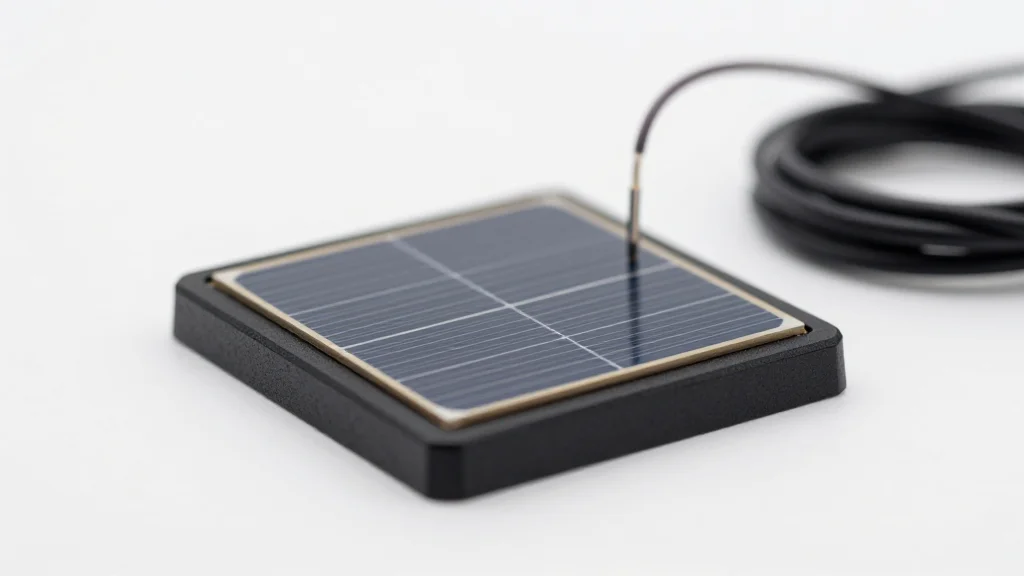
Study Finds ‘Relatively Good’ Agreement in Worldwide Solar Cell Calibrations, but Flags Key Differences in Testing Methods
Why It Matters
Consistent solar‑cell calibration is essential for reliable performance claims, market certification, and investment decisions across the rapidly expanding PV industry.
Key Takeaways
- •Nine institutes achieved ±1.6% agreement on short‑circuit current
- •High‑pass filtered cell HP2 showed largest temperature‑related deviation
- •Spectral‑mismatch correction remains dominant uncertainty source
- •Natural‑sun measurements need precise irradiance spectrum monitoring
Pulse Analysis
The recent interlaboratory comparison underscores the growing maturity of photovoltaic metrology, yet it also highlights lingering sources of variance that can affect product certification and warranty calculations. By using four reference silicon cells—two low‑pass and two high‑pass filtered—the participating labs were able to isolate how spectral content, temperature control, and instrument alignment influence key parameters such as short‑circuit current (Isc), open‑circuit voltage (Voc) and maximum power (Pmax). The findings reveal that while most laboratories stay within a 1‑2% uncertainty envelope, high‑pass cells, especially HP2, deviate more sharply due to filter temperature shifts and spectroradiometer instability, pointing to the need for standardized temperature‑compensated filters.
For manufacturers and investors, these calibration nuances translate directly into financial risk. A 1% error in Isc or Pmax can shift a module’s rated efficiency by several percentage points, influencing project economics, financing terms, and competitive positioning. The study’s emphasis on spectral‑mismatch correction aligns with industry moves toward more accurate simulator spectra and real‑world outdoor testing, ensuring that performance guarantees hold under diverse climatic conditions. Moreover, the comparison builds confidence that traceability frameworks like the World Photovoltaic Scale can support cross‑border trade and regulatory compliance, especially as new markets adopt perovskite and tandem technologies.
Looking ahead, the research community is poised to tighten measurement protocols, incorporating real‑time irradiance spectrometry and advanced temperature‑control rigs. Parallel efforts in China, where a national traceability system for silicon and perovskite cells has been launched, suggest a converging global standard. As uncertainties shrink further—potentially below the 0.5% threshold—solar‑module manufacturers will benefit from more predictable certification outcomes, accelerating deployment of high‑efficiency PV technologies worldwide.
Study finds ‘relatively good’ agreement in worldwide solar cell calibrations, but flags key differences in testing methods
Comments
Want to join the conversation?
Loading comments...