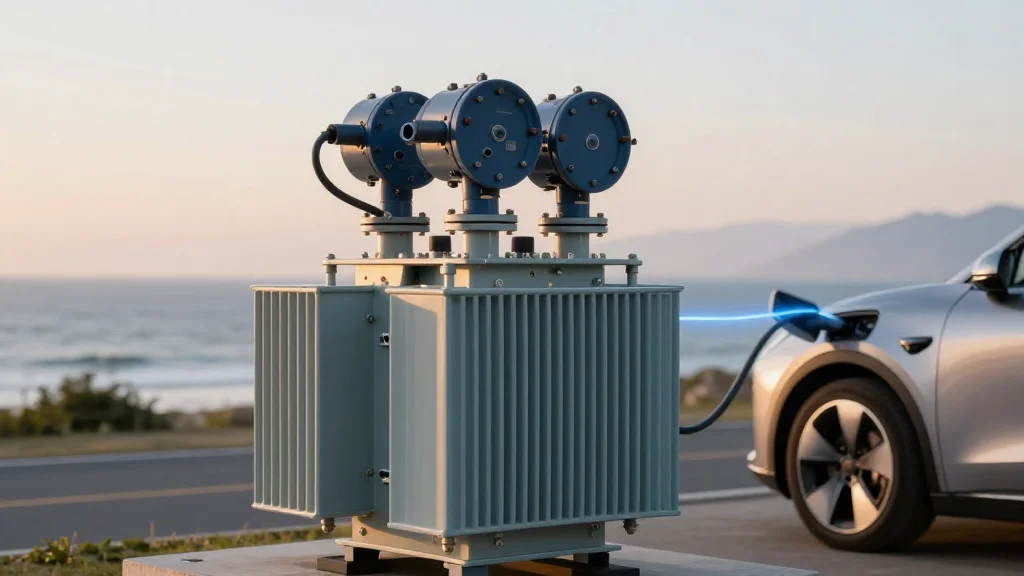
Study Says Grid Upgrades Needed to Unlock Vehicle‑to‑Grid Power From U.S. Driveways

Why It Matters
Vehicle‑to‑grid technology could turn the rapid growth of electric‑vehicle ownership into a distributed energy resource, easing the strain on aging distribution networks and reducing reliance on costly, centralized battery farms. By demonstrating that early grid upgrades are financially preferable, the study provides a roadmap for utilities, policymakers, and automakers to coordinate investments that accelerate renewable integration and lower overall system costs. If utilities act on these recommendations, the United States could see a more resilient grid capable of handling higher penetrations of solar and wind power, while EV owners gain a new revenue stream from supplying electricity during peak periods. Conversely, postponing upgrades risks creating bottlenecks that limit V2G’s effectiveness, potentially slowing the broader clean‑energy transition.
Key Takeaways
- •Study models San Francisco Bay Area EV charging and renewable adoption scenarios
- •Proactive transformer and transmission upgrades are cheaper than phased retrofits
- •V2G can supplement but not replace large‑scale battery farms for peak demand
- •"You have to upgrade your power system as soon as possible," says Ziyou Song
- •California batteries recently met 43 percent of state demand in a single hour
Pulse Analysis
The study’s emphasis on pre‑emptive grid reinforcement aligns with a growing consensus that the traditional, top‑down approach to electricity distribution is ill‑suited for a future dominated by distributed resources. Historically, utilities have deferred infrastructure investment until capacity constraints become acute, a strategy that often leads to higher total costs and reliability risks. By quantifying the cost advantage of early upgrades, the research provides a data‑driven argument for shifting capital planning cycles forward.
Automakers are already rolling out bidirectional charging capabilities in new EV models, but without a supportive grid, those features remain underutilized. The analysis suggests a symbiotic relationship: utilities gain a flexible, on‑demand storage layer, while EV owners could monetize idle battery capacity. This could reshape business models, prompting utilities to offer incentives or revenue‑sharing agreements for V2G participation, much like demand‑response programs for thermostats.
Policy implications are equally significant. State clean‑energy targets often assume a certain level of storage availability; incorporating V2G into those calculations could lower projected investment needs for utility‑scale batteries. However, realizing this potential will require coordinated action across regulators, utility planners, and vehicle manufacturers. The next round of utility rate cases and state energy storage mandates will likely be the testing ground for whether the industry embraces the proactive upgrade path advocated by the study or defaults to incremental fixes that could stall V2G’s scalability.
Study Says Grid Upgrades Needed to Unlock Vehicle‑to‑Grid Power from U.S. Driveways
Comments
Want to join the conversation?
Loading comments...