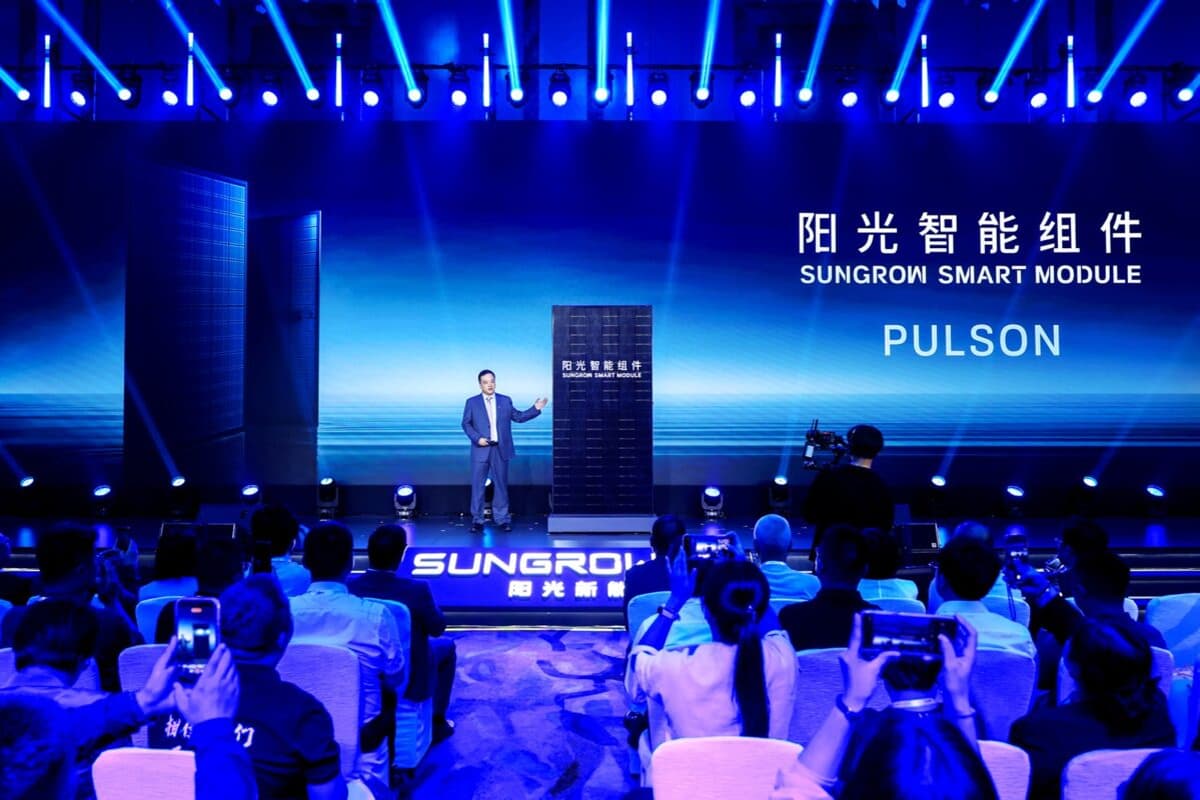
Sungrow Enters PV Module Production with AI-Enabled ‘Smart’ Product
Companies Mentioned
Why It Matters
Sungrow’s smart‑module launch could reshape PV hardware by integrating AI, safety and performance analytics, giving commercial developers higher yields and lower risk. It also positions the company to compete directly with traditional module manufacturers as the industry moves toward intelligent, autonomous solar assets.
Key Takeaways
- •Sungrow launches Pulson, first AI-enabled smart PV module
- •TÜV SÜD certifies Pulson as world’s first high‑efficiency smart module
- •Self‑diagnosis, self‑RSD, self‑cleaning boost safety and yield by ~6%
- •New classification defines four smart‑module intelligence levels (L1‑L4)
- •iBuilding BIPV 2.0 adds 20% rooftop capacity with same footprint
Pulse Analysis
The solar industry is rapidly evolving from static panels to connected, data‑rich assets, and AI‑driven smart modules are at the forefront of this shift. By embedding power electronics, sensors and machine‑learning algorithms directly into the module, manufacturers can monitor performance in real time, predict failures and optimize output without external hardware. This trend mirrors broader trends in renewable energy where edge computing and IoT are becoming standard, allowing operators to extract more value from existing installations while reducing O&M costs.
Pulson’s suite of intelligent features—self‑diagnosis, rapid‑shutdown (RSD), self‑cleaning and the proprietary "SilverAnt" cooling system—addresses two perennial challenges: safety and efficiency. The dual‑layer RSD can isolate a faulty cell within milliseconds, preventing cascade failures and electrical fires, while the nano‑hydrophilic coating plus active cooling claim a near‑6% boost in energy yield. Coupled with a new four‑level classification framework, these capabilities give developers a clear roadmap for upgrading from basic monitoring (L1) to fully autonomous decision‑making across generation, storage and load management (L4).
For investors and market watchers, Sungrow’s entry into module manufacturing signals a strategic diversification beyond its core inverter and BESS business. By offering a complete, intelligent PV solution—including the iBuilding BIPV 2.0 rooftop system that promises 20% more capacity per square meter—Sungrow can capture a larger share of the value chain and differentiate itself from traditional silicon‑only manufacturers. As utilities and commercial customers prioritize reliability and data transparency, AI‑enabled modules like Pulson are likely to become a new benchmark, accelerating the industry’s move toward fully autonomous solar farms.
Sungrow enters PV module production with AI-enabled ‘smart’ product
Comments
Want to join the conversation?
Loading comments...