SwitchedOn Podcast: How I Electrified – the Unexpected Payoffs From Ditching Gas at Home
Why It Matters
Residential electrification is becoming a scalable pathway to cut emissions while reducing household energy costs, signaling a shift in the Australian housing market toward sustainable, grid‑independent living.
Key Takeaways
- •Melbourne couple eliminated gas, installed solar panels and battery storage
- •Electric heat pumps replaced gas furnace, cutting heating bills by ~40%
- •Home upgrades improved comfort, insulation, and grid resilience
- •Electrification required upfront capital, helped by favorable financing
- •Their experience illustrates broader Australian push toward residential decarbonisation
Pulse Analysis
Australia’s residential sector is at a tipping point as solar panel prices have fallen below $1,000 per kilowatt and battery storage costs have dropped 60% in the past five years. Federal and state rebates, combined with low‑interest green loans, are making full‑home electrification financially viable for middle‑income families. Utilities are also adjusting tariffs to reward self‑generation, creating a market environment where homeowners can offset a large share of their consumption without relying on the traditional gas network.
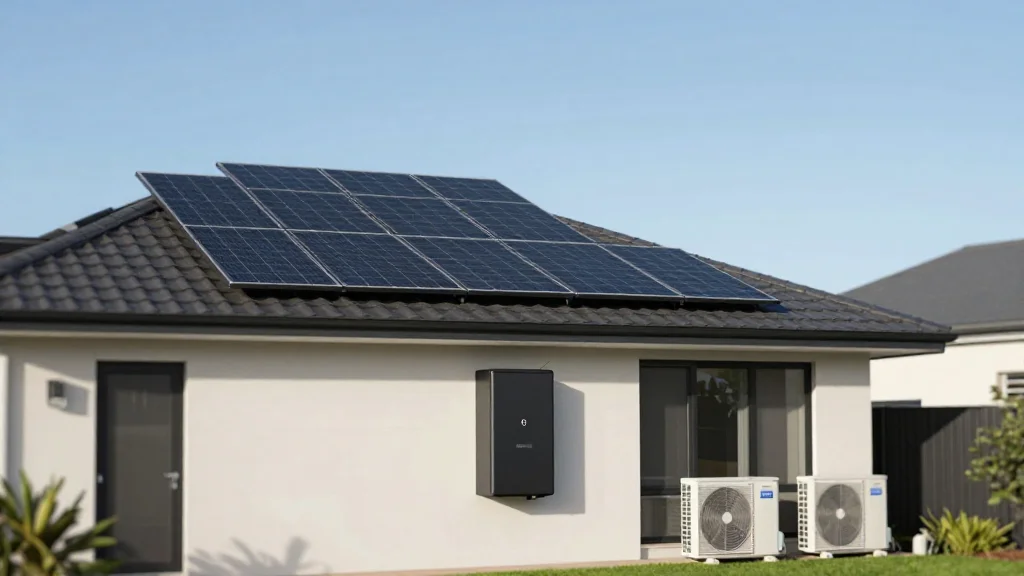
The Smithers’ renovation illustrates the practical steps involved. They installed a 6‑kilowatt rooftop solar array paired with a 10‑kilowatt‑hour lithium‑ion battery, allowing them to store excess daylight generation for evening use. Replacing the gas boiler with a high‑efficiency air‑source heat pump cut heating energy demand by roughly 40%, while upgraded insulation and draught‑proofing reduced overall load. The result is a home that not only lowers its carbon footprint but also delivers a more consistent indoor temperature and protection against peak‑price spikes.
For investors and policymakers, stories like this signal a growing demand for residential clean‑energy solutions. Appliance manufacturers are accelerating the rollout of electric heating and cooking products, while fintech firms are tailoring financing products to bridge upfront costs. As more households adopt similar setups, grid operators will need to manage increased distributed generation, prompting investments in smart‑grid technologies and demand‑response programs. The ripple effect could accelerate Australia’s broader net‑zero targets and reshape the residential energy market for the next decade.
SwitchedOn podcast: How I electrified – the unexpected payoffs from ditching gas at home
Comments
Want to join the conversation?
Loading comments...