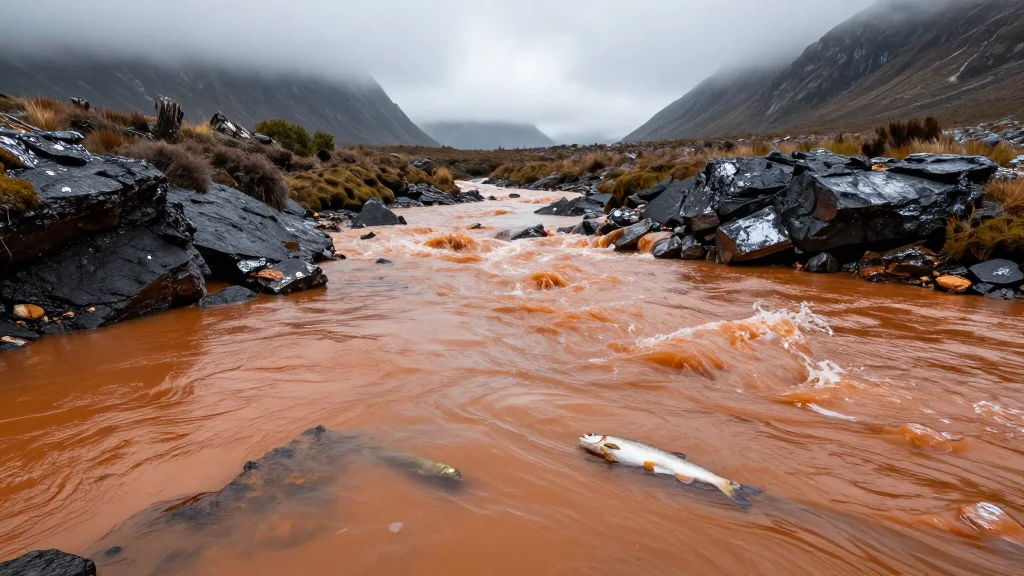
Tasmania’s King River Declared Biologically Dead by Legacy Copper Mining

Why It Matters
The King River’s classification as biologically dead spotlights the long‑term environmental costs of mineral extraction, a factor often omitted from economic assessments of mining projects. By linking legacy contamination to present‑day ecosystem collapse, the story underscores the need for climate‑tech solutions that can remediate acid mine drainage and stabilize sediments before climate‑driven floods exacerbate the problem. Moreover, the global statistics cited—23 million people living on polluted floodplains—highlight that Tasmania’s experience is not isolated; it reflects a worldwide challenge that will demand coordinated policy, investment, and innovation. For investors and policymakers, the case illustrates a market gap: technologies capable of treating legacy tailings at scale could unlock billions in remediation contracts while delivering measurable climate and public‑health benefits. As climate change intensifies flood risks, the urgency to deploy such solutions will only grow, positioning climate‑tech firms that specialize in water purification, bio‑remediation, and sustainable mining practices for rapid expansion.
Key Takeaways
- •Tasmania’s EPA labels lower King River "biologically dead" due to historic copper tailings
- •Millions of tons of sulfide‑rich tailings from Mount Lyell continue to leach metals into the river
- •Science study estimates 23 million people live on floodplains contaminated by mining waste
- •Mark Macklin warns that 90 % of mining‑related metals reside in sediments, persisting for centuries
- •Climate‑driven floods could remobilize buried contaminants, raising remediation urgency
Pulse Analysis
The King River’s demise is a stark reminder that the financial calculus of mining projects must incorporate post‑closure liabilities that can span generations. Historically, companies have set aside limited reclamation funds, often based on optimistic assumptions about natural attenuation. The Tasmanian case shows those assumptions are flawed when tailings contain sulfide minerals that generate acid long after extraction stops. Climate‑tech innovators now have a clear market signal: investors are looking for proven, scalable solutions that can neutralize acid mine drainage and extract metals from sediments without high energy inputs.
From a market perspective, the remediation sector is poised for a surge in demand. The International Council on Mining and Metals projects that global mine‑closure costs could exceed $150 billion over the next two decades, with a sizable share allocated to water treatment. Companies that can demonstrate cost‑effective, low‑carbon remediation—such as passive limestone wetlands, electro‑chemical metal recovery, or engineered microbial consortia—will likely secure public‑private partnerships, especially in jurisdictions like Australia where regulatory scrutiny is tightening.
Strategically, the King River episode also illustrates the intersection of climate risk and legacy pollution. As extreme weather events become more frequent, the probability of tailings‑derived contaminants entering floodplains rises, creating a feedback loop that threatens both ecosystems and downstream communities. Policymakers may respond with stricter discharge standards and mandatory remediation timelines, further expanding the addressable market for climate‑tech solutions. For the industry, the imperative is clear: develop technologies that not only clean current waterways but also build resilience against future climate shocks, turning a legacy problem into a growth engine for sustainable innovation.
Tasmania’s King River Declared Biologically Dead by Legacy Copper Mining
Comments
Want to join the conversation?
Loading comments...