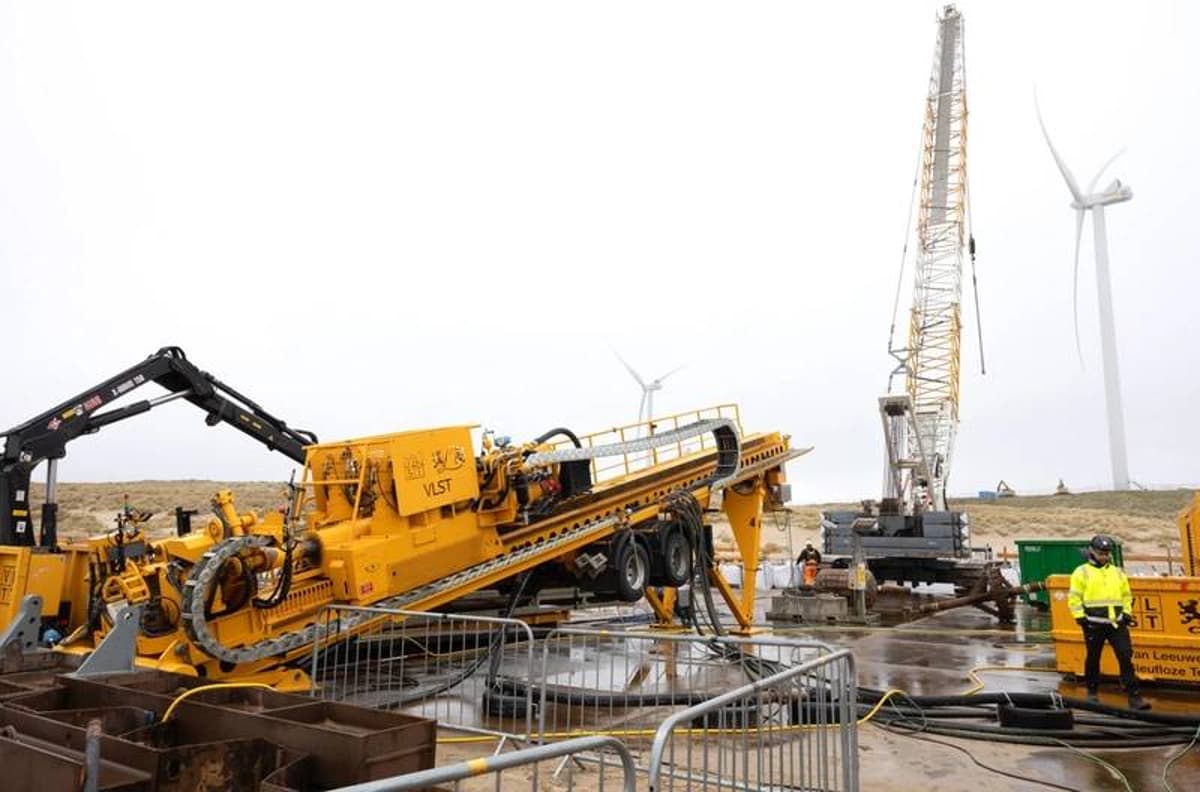
TenneT Set to Start Beach Directional Drilling for Offshore Wind Farm Links
Why It Matters
The project secures a critical transmission route for a 6 GW offshore wind portfolio, accelerating Europe’s renewable‑energy targets while protecting coastal ecosystems. It demonstrates a scalable, low‑impact solution for connecting offshore generation to onshore grids.
Key Takeaways
- •TenneT begins directional drilling at Maasvlakte for offshore wind links
- •Project targets 6 GW capacity from three Dutch wind farms
- •Cable installation slated for 2027, grid connection by 2029
- •Drilling avoids shallow water, protecting beach and wildlife
- •Steel casings enable safe pilot bore and conduit placement
Pulse Analysis
Europe’s offshore wind sector is entering a phase of rapid expansion, driven by ambitious decarbonisation goals and the need for reliable transmission infrastructure. In the Netherlands, TenneT, the national grid operator, is tackling a common bottleneck: shallow coastal waters that limit the use of traditional cable‑laying vessels. By employing horizontal directional drilling (HDD) from the Maasvlakte beach, TenneT creates a protected underground corridor that can accommodate high‑capacity conduits without disturbing the marine environment. This approach aligns with broader EU initiatives that encourage innovative, low‑impact construction techniques for renewable projects.
The technical execution involves installing steel casing pipes at three beach sites, followed by a pilot bore that establishes the initial trajectory toward the sea. Subsequent widening of the borehole allows for the placement of conduit pipes, which will later serve as pull‑through pathways for the electricity cables. HDD offers several advantages: it reduces the need for extensive seabed trenching, limits visual and ecological disruption, and provides a stable conduit that can withstand the dynamic coastal conditions. For stakeholders, the method translates into lower permitting risks and potentially faster project timelines, especially when weather windows are tight.
From a market perspective, the Maasvlakte project underpins the integration of the IJmuiden Ver Beta, IJmuiden Ver Gamma and Nederwiek 2 wind farms, collectively delivering 6 GW of clean power. With cable installation slated for 2027 and first grid injection expected in 2029, the initiative positions the Netherlands to meet its 2030 renewable‑energy targets and supports the broader European goal of 1 TW of offshore wind by 2030. Investors and developers will watch this deployment closely, as its success could set a precedent for similar HDD solutions across other shallow‑water offshore wind sites worldwide.
TenneT Set to Start Beach Directional Drilling for Offshore Wind Farm Links
Comments
Want to join the conversation?
Loading comments...