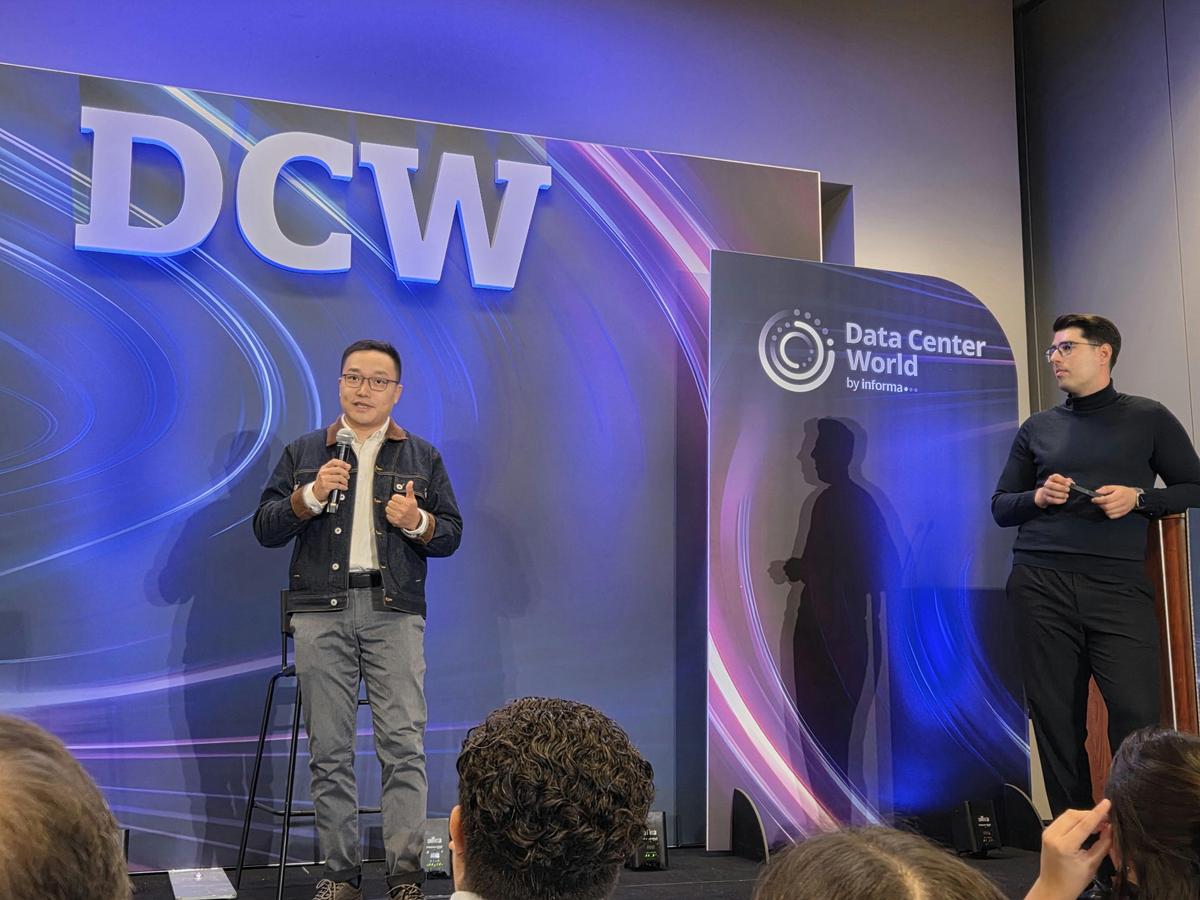
The Trillion-Dollar AIDC Boom Gets Real: Omdia Maps the Path From Megaclusters to Microgrids
Why It Matters
The expanding AI‑driven spend reshapes data‑center engineering and economics, creating new opportunities for power‑tech vendors while raising barriers for under‑funded operators.
Key Takeaways
- •Omdia lifts 2030 data‑center spend forecast above $1.6 trillion
- •AI racks projected to reach 2 MW power density by 2030
- •High‑voltage DC, onsite generation, and BESS become core infrastructure
- •Monetization of AI services drives real‑world demand, not speculative build‑out
Pulse Analysis
The AI‑driven data‑center surge has moved from a niche hype cycle to a trillion‑dollar industry, as Omdia’s latest summit revealed. By lifting its 2030 investment outlook beyond the $1.6 trillion mark, the firm signals that demand is no longer confined to hyperscalers; tier‑2 cloud providers and enterprise IT departments are adding their own AI workloads. This additive effect means that every new model, from large language agents to autonomous bots, creates parallel compute, storage, and networking requirements. Consequently, the market is seeing a faster‑than‑expected transition from speculative capacity planning to concrete, revenue‑linked infrastructure spending.
The engineering reality of that growth is a dramatic rise in rack power density. Early‑generation DGX systems operated around 20 kW per rack, but Omdia projects future Rubin‑class and Feynman platforms to consume 200 kW, with megawatt‑scale racks conceivable by decade’s end. Such loads invalidate traditional AC‑centric power distribution, prompting a shift toward high‑voltage DC (800 VDC and beyond), on‑site gas‑engine generation, and integrated battery energy storage systems (BESS). Microgrids and solid‑state transformers are emerging as essential tools for smoothing generation fluctuations, while longer‑duration batteries—six to eight hours, even 100‑hour prototypes—provide grid‑independence and peak‑shaving capabilities.
For investors and operators, the implications are clear: success will hinge on access to reliable, high‑density power and the capital to fund rapid build‑outs. Power‑technology vendors stand to capture a sizable share of the emerging market, from HVDC converters to modular BESS units. Meanwhile, data‑center owners must rethink business models, integrating energy‑cost optimization and flexible financing to monetize AI services at scale. Companies lacking either power infrastructure or continuous funding risk being left behind as the industry redefines the very architecture of the modern data center.
The Trillion-Dollar AIDC Boom Gets Real: Omdia Maps the Path From Megaclusters to Microgrids
Comments
Want to join the conversation?
Loading comments...