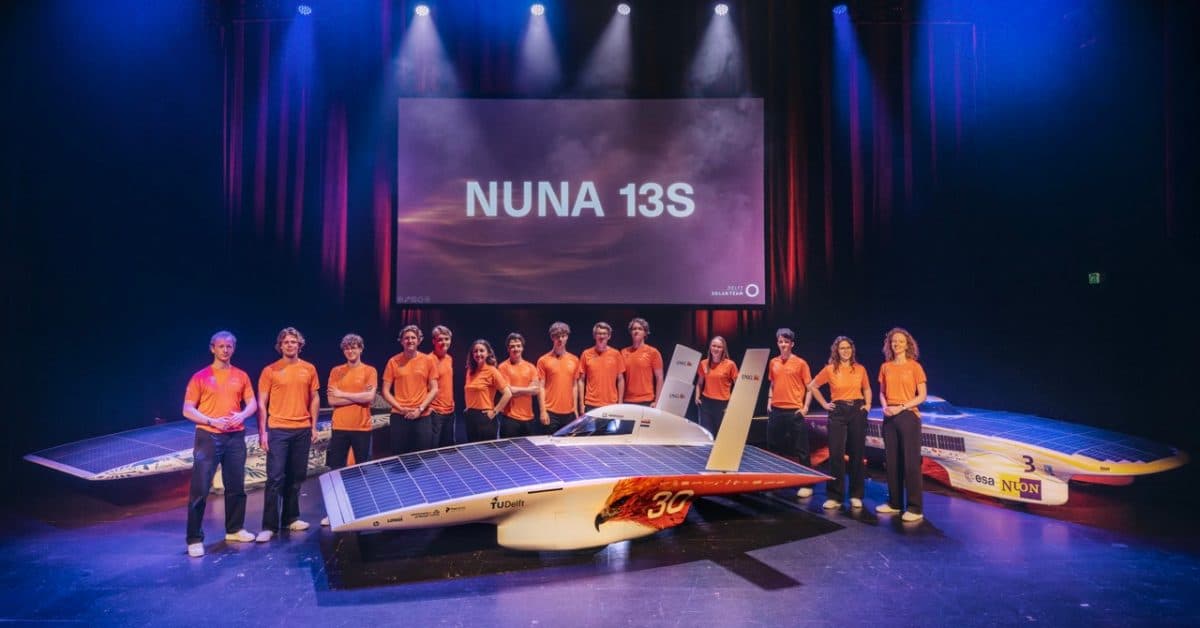
These Dutch Students Are Bringing a World Champion Solar Car to the 2026 Electrek American Solar Challenge
Why It Matters
The entry showcases European engineering talent in a premier U.S. solar‑car series, highlighting the scalability of solar‑powered mobility and fostering cross‑continental innovation. A strong showing could accelerate adoption of high‑efficiency solar technologies in transportation.
Key Takeaways
- •Delft Solar Team brings Nuna 13S, a refined version of its 2025 champion
- •New solar cells cut build time by 50%, boosting development speed
- •Added triple fins act as sails, improving propulsion and stability
- •Metal roll cage meets ASC safety rules, challenging integration into carbon‑fiber chassis
- •First Dutch entry in ASC could set precedent for international solar‑car competition
Pulse Analysis
The American Solar Challenge (ASC) and its qualifying Formula Sun Grand Prix have become proving grounds for cutting‑edge solar‑propulsion research, attracting university teams from around the globe. Delft University of Technology’s Solar Team, a veteran of the World Solar Challenge, is the first Dutch outfit to cross the Atlantic for this event. Their participation underscores the growing international appeal of solar‑car racing, where engineering students test real‑world applications of photovoltaic efficiency, lightweight composites, and autonomous energy management under race conditions.
Nuna 13S, the vehicle Delft will field, represents a significant technical leap. The team swapped legacy cells for a new high‑efficiency array, halving panel assembly time and increasing power density. Three aerodynamic fins now function like sails, capturing crosswinds to augment thrust while stabilizing the catamaran‑style chassis. Integrating a metal roll cage to satisfy ASC safety standards posed a structural challenge, but the solution preserves the carbon‑fiber body’s rigidity and keeps weight within competitive limits. These refinements have already enabled the car to reach 130 km/h (80 mph) in testing, positioning it among the fastest solar racers.
Beyond the race itself, Delft’s entry signals broader market implications. Demonstrating that a student‑built solar car can meet stringent U.S. safety codes and perform on diverse terrain validates the commercial viability of solar‑driven transport solutions. The transatlantic collaboration also creates talent pipelines, exposing American engineers to European design philosophies and vice‑versa. As solar technology continues to drop in cost, high‑visibility events like the ASC accelerate public confidence and may spur investment in solar‑powered vehicles for logistics, public transit, and niche consumer markets.
These Dutch students are bringing a world champion solar car to the 2026 Electrek American Solar Challenge
Comments
Want to join the conversation?
Loading comments...