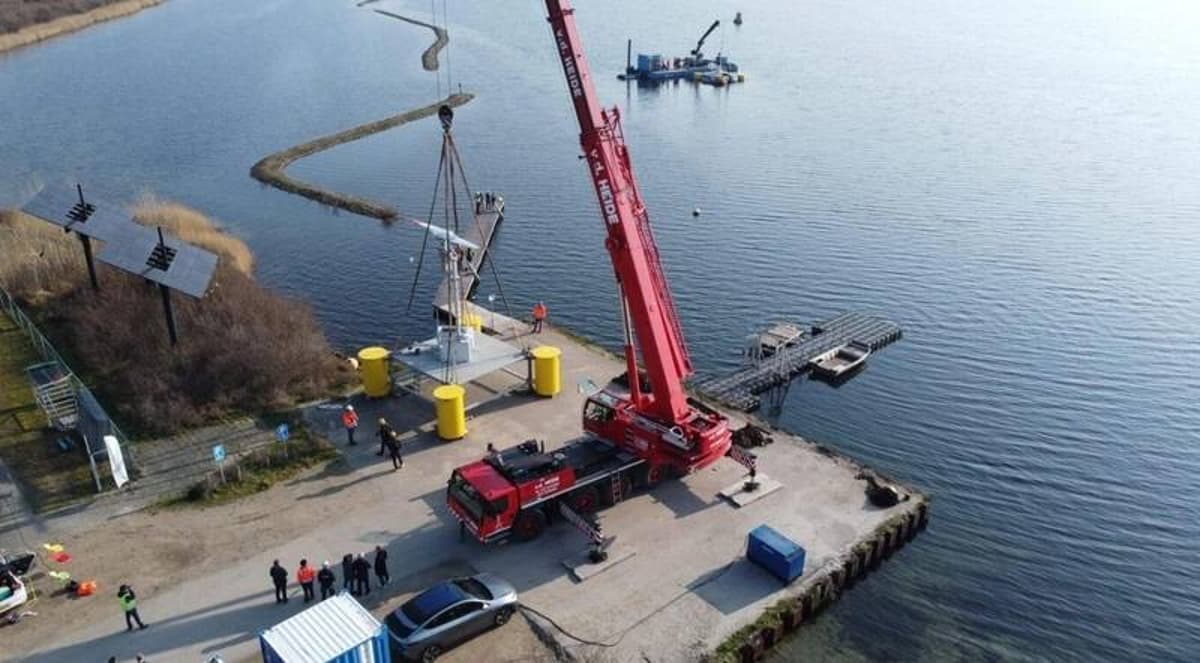
TouchWind Installs Floating Wind Prototype in Dutch Waters
Companies Mentioned
Why It Matters
If the tilted‑rotor concept proves effective, offshore wind farms could achieve higher energy output at lower capital and operating costs, accelerating the transition to renewable power in Europe and beyond.
Key Takeaways
- •TouchWind deployed floating prototype at Westvoorne fieldlab, Netherlands
- •POWER project tests tilted‑rotor design to reduce wake losses
- •Mooring uses steel/polyester lines and 3D‑printed reef anchors
- •Testing runs through 2026, gathering performance and load data
- •Consortium includes MOL, TNO, MARIN, Nidec, funded by RVO
Pulse Analysis
The floating‑wind sector is entering a new phase as developers seek to overcome the cost and efficiency barriers of traditional offshore turbines. By mounting a one‑piece rotor on a tiltable platform, TouchWind aims to manipulate wake patterns, allowing downstream turbines to capture cleaner, higher‑velocity air. This approach could raise the overall capacity factor of wind farms, a critical metric as Europe pushes toward its 2030 renewable targets. Early data from the POWER project will inform whether the aerodynamic gains offset the added mechanical complexity.
Beyond performance, the project showcases innovative environmental stewardship. The concrete anchors are fitted with 3D‑printed reef structures designed by Coastruction, providing habitat for marine life and mitigating the ecological footprint of offshore installations. Such bio‑integrated designs are gaining traction as regulators and investors demand greener energy infrastructure. The inclusion of load‑shackle sensors and a dedicated meteorological mast reflects a data‑driven methodology that could set new standards for offshore testing protocols.
Financially, the consortium’s backing by the Netherlands Enterprise Agency signals strong governmental confidence in next‑generation offshore technologies. Partners such as MOL and Nidec bring deep expertise in energy markets and turbine manufacturing, positioning TouchWind to scale the concept if pilot results are favorable. Successful validation could attract further private capital, accelerate deployment timelines, and influence policy incentives across the EU, reshaping the competitive landscape of offshore wind development.
TouchWind Installs Floating Wind Prototype in Dutch Waters
Comments
Want to join the conversation?
Loading comments...