Toward Stable and Efficient Perovskite Solar Cells: Unlocking the Potential of Porous PbI2 Scaffolds via Two‐Step Sequential Deposition
Why It Matters
Enhanced efficiency and long‑term stability address the two biggest barriers to market entry for perovskite solar technology, positioning it as a viable competitor to silicon‑based panels.
Key Takeaways
- •Porous PbI2 scaffolds boost perovskite efficiency above 26%
- •Solvent engineering creates rapid nanoporosity for better salt diffusion
- •Molecular additives act as Lewis bases, disrupting Pb2+ crystallization
- •Stability improves, retaining >90% performance after thousands of hours
Pulse Analysis
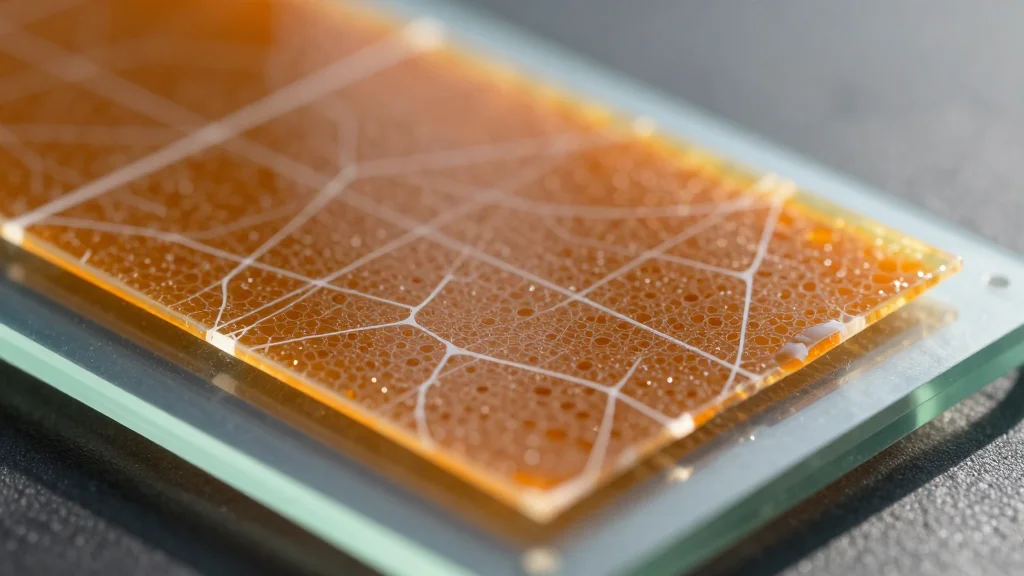
Perovskite solar cells have attracted intense interest because they can be manufactured with low‑temperature processes and promise high power conversion efficiencies. However, the conventional two‑step sequential deposition often leaves a dense PbI2 film that hinders full reaction with the organic halide, resulting in residual PbI2, high defect densities, and sub‑optimal performance. Researchers have therefore turned to morphology engineering, recognizing that a porous PbI2 scaffold can dramatically improve precursor infiltration and crystallization dynamics, unlocking efficiencies that rival or surpass traditional silicon cells.
A suite of techniques now exists to generate the desired porosity. Solvent‑based methods—such as anti‑solvent dripping, vapor treatment, or rapid solvent extraction—create nanoscopic channels within the PbI2 layer. Molecular additives like volatile amines or Lewis‑base ligands coordinate with Pb2+, interrupting crystal growth and leaving behind a sponge‑like network. Ionic liquids and salts serve dual roles as templating agents and defect passivators, while sacrificial frameworks (MOFs, COFs) provide predefined pore geometries that are later removed. These strategies not only accelerate organic salt diffusion but also promote larger grain formation, higher crystallinity, and lower trap densities, consistently pushing device efficiencies beyond the 25‑26% threshold.
The commercial implications are profound. By delivering >90% of peak performance after thousands of hours, porous PbI2 scaffolds address the long‑term stability concerns that have long plagued perovskite technology. Moreover, the methods are compatible with roll‑to‑roll coating and other scalable manufacturing processes, suggesting a clear pathway from laboratory breakthroughs to mass‑market modules. Future research will likely focus on integrating these porosity‑engineered layers with tandem architectures and exploring environmentally benign additives, further cementing perovskites as a disruptive force in the renewable energy landscape.
Toward Stable and Efficient Perovskite Solar Cells: Unlocking the Potential of Porous PbI2 Scaffolds via Two‐Step Sequential Deposition
Comments
Want to join the conversation?
Loading comments...