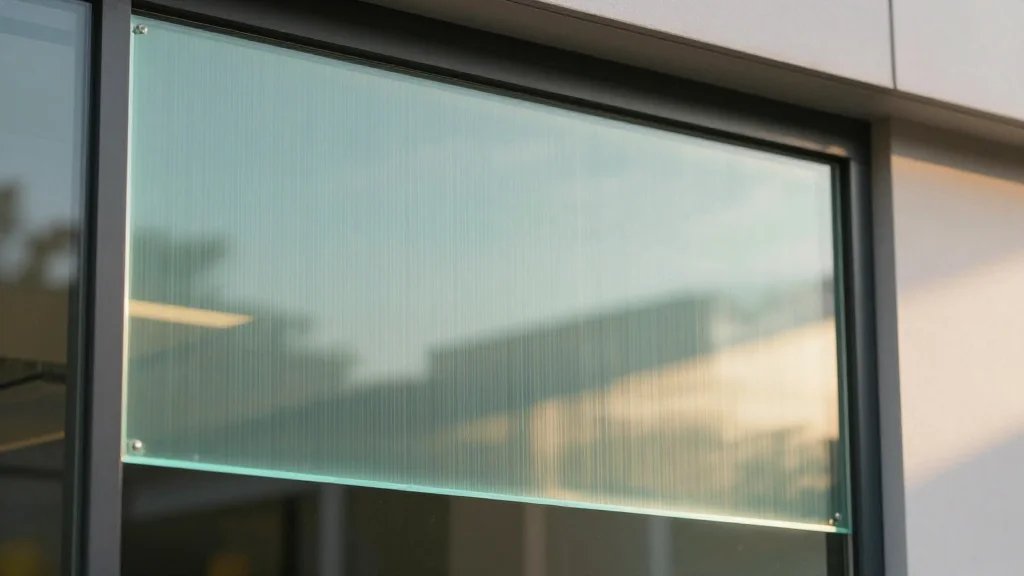
Transparent Solar Cells Could Be Mounted Right on Windows
Why It Matters
Embedding photovoltaics into ubiquitous glass surfaces could supply urban electricity without new land, reshaping building energy strategies. Overcoming durability and scale challenges will determine whether the concept moves from lab to city skylines.
Key Takeaways
- •Cells 10 nm thick, 10,000× thinner than human hair
- •Semi‑transparent version reaches 7.6% efficiency, transmits 41% visible light
- •Vacuum thermal evaporation enables scalable, solvent‑free manufacturing
- •Façade could generate hundreds of MWh annually, powering ~40 homes
- •Durability and large‑area scaling remain critical hurdles
Pulse Analysis
Urban centers face a mounting pressure to generate electricity without expanding their physical footprint. Traditional photovoltaic panels, with their bulky frames and heavy glass, are ill‑suited for dense cityscapes where rooftops are scarce and façades are dominated by glass. Transparent photovoltaics promise to turn every window into a micro‑power plant, leveraging the vast surface area that already exists on skyscrapers, office towers, and even vehicle glass. By harvesting diffuse and indirect light, these thin films could provide a steady, albeit modest, power stream throughout the day, complementing rooftop solar and reducing reliance on centralized grids.
The NTU breakthrough lies in marrying perovskite chemistry with a vacuum‑based thermal evaporation process. Unlike solution‑based methods that require toxic solvents and struggle with uniformity, thermal evaporation deposits a uniform 10‑nanometer perovskite layer across large glass panels, offering precise thickness control and industry‑ready scalability. While conventional silicon panels routinely exceed 20% efficiency, the semi‑transparent perovskite cells achieve 7.6% efficiency while maintaining 41% visible light transmission—a balance that ranks among the best for this class of devices. Their ultralight, color‑neutral nature means buildings retain aesthetic appeal and thermal performance, while still generating electricity.
If durability hurdles—moisture, heat, and UV degradation—are resolved, the market impact could be transformative. A single skyscraper façade could produce several hundred megawatt‑hours annually, enough to power dozens of homes, and the same technology could be applied to vehicle sunroofs, smart glasses, and wearable electronics, creating truly ubiquitous energy harvesting. Industry partners are already engaging with NTU's commercialization arm to pilot the vacuum‑evaporation line, signaling the first steps toward commercial roll‑out. The next decade will likely see rigorous field testing, standard‑setting for long‑term stability, and, if successful, a new revenue stream for property owners who can monetize their glass surfaces as clean‑energy assets.
Transparent solar cells could be mounted right on windows
Comments
Want to join the conversation?
Loading comments...