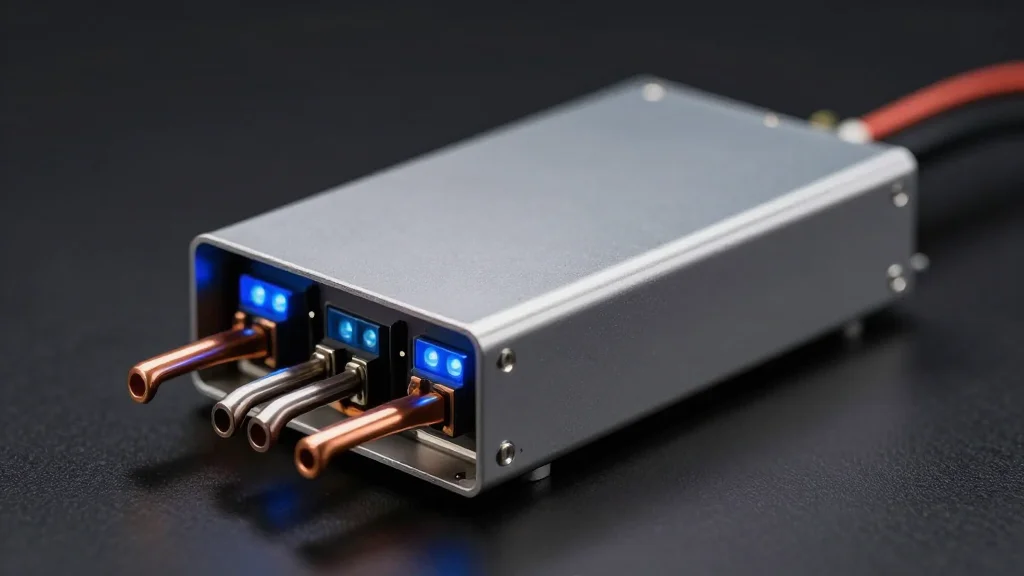
Turning the AC-DC Switch: A Legacy Technology Has Reached Its Limits.
Why It Matters
DC adoption can slash energy losses and operating costs while enabling AI and EV scaling, and reshoring component manufacturing bolsters U.S. energy security.
Key Takeaways
- •Data centers lose ~18% power converting AC to DC
- •DC distribution cuts conversion losses, boosting overall efficiency
- •Advanced capacitors stabilize voltage across DC distribution stages
- •Fast‑charging EV stations require high‑power DC architectures
- •U.S. must reshore DC component manufacturing for grid resilience
Pulse Analysis
The legacy of alternating current dates back to the "War of the Currents," when AC won because it could be easily stepped up for long‑distance transmission. That advantage faded as modern workloads demand power density and low‑latency conversion. Today’s hyperscale data centers run dozens of megawatts of AI training hardware, and each AC‑to‑DC‑to‑AC conversion cycle erodes up to 18% of that electricity as heat. By delivering power in a single DC stream—from the substation directly to server racks—operators can eliminate redundant transformers, reduce cooling loads, and reclaim valuable floor space.
DC’s resurgence is most visible in two high‑growth sectors: cloud infrastructure and electric‑vehicle charging. Data‑center pioneers are experimenting with 400 V and 800 V DC busbars, integrating silicon‑carbide converters and high‑energy capacitors that smooth voltage sag and handle rapid load spikes. Meanwhile, fast‑charging stations rely on DC to push 350 kW or more into a vehicle in minutes, a feat impossible with AC without bulky on‑site inverters. The common thread is a need for robust power‑electronics that can sustain continuous, high‑current flow while preserving power quality. Advanced capacitors act as buffers, absorbing transient demands and protecting downstream equipment, making them critical infrastructure in a DC‑centric grid.
The strategic implications extend beyond efficiency. Most DC‑grade converters, silicon‑carbide devices, and specialty capacitors are produced overseas, exposing the supply chain to geopolitical risk and logistics disruptions. Reshoring these components would not only safeguard the emerging DC ecosystem but also create high‑value manufacturing jobs in the United States. Policymakers and industry leaders are therefore urged to align standards, invest in domestic fab capacity, and accelerate the transition to a flexible, resilient grid where DC powers the next wave of AI, EVs, and even electric aviation.
Turning the AC-DC switch: A legacy technology has reached its limits.
Comments
Want to join the conversation?
Loading comments...