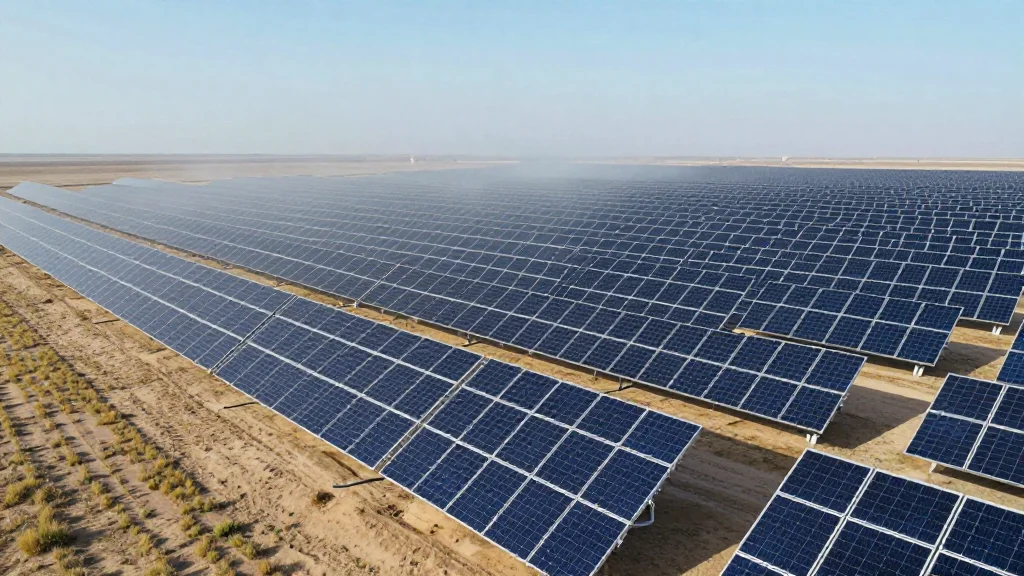
Two-Year Testing Shows How PV Plants Increase Local Temperatures in Semi-Arid Regions
Why It Matters
The findings reveal that utility‑scale solar installations can create measurable micro‑climatic warming, a factor that must be weighed against renewable energy benefits when planning future solar farms in arid regions.
Key Takeaways
- •PV farm raised air temperature by 0.8 °C over two years
- •Daily temperature range shrank by 1.9 °C near the installation
- •Net radiation increased 8.3 W/m², driven by lower albedo
- •UAV imaging showed surface warming up to 4.1 °C above baseline
Pulse Analysis
The rapid expansion of utility‑scale solar power is reshaping energy landscapes worldwide, yet its environmental side effects remain under‑examined. In the semi‑arid deserts of Inner Mongolia, a two‑year experiment combined 15‑minute temperature logs, tower‑based radiative flux measurements, and high‑resolution UAV thermal surveys to capture the full energy balance of a 100 MW photovoltaic array. By juxtaposing data from the PV field with a control site 10 km distant, the study isolated the farm’s climatic fingerprint, offering a rare, data‑rich glimpse into how solar infrastructure interacts with dryland atmospheres.
The research pinpointed three physical mechanisms behind the observed warming. First, the panels lower surface albedo, allowing more shortwave solar energy to be absorbed and raising net radiation by roughly 8 W m⁻². Second, the altered surface energy balance boosts daytime longwave emission but not enough to offset the shortwave gain, leading to a net heat surplus. Third, the thermal inertia of the array dampens nocturnal cooling, raising minimum temperatures more than maximums and compressing the diurnal temperature range by nearly 2 °C. UAV‑derived thermal maps confirmed heterogeneous surface heating, with hotspots up to 4 °C hotter than adjacent barren ground.
These insights carry practical implications for planners and policymakers. While solar farms cut carbon emissions at the grid level, their localized warming could affect agriculture, water demand, and ecosystem resilience in already water‑stressed regions. Mitigation strategies—such as higher‑albedo panel coatings, strategic spacing, or integrating vegetation—may help balance renewable gains with micro‑climate stewardship. As the industry scales, incorporating climate‑impact assessments into site selection will be essential to ensure that the transition to clean energy does not create unintended environmental trade‑offs.
Two-year testing shows how PV plants increase local temperatures in semi-arid regions
Comments
Want to join the conversation?
Loading comments...