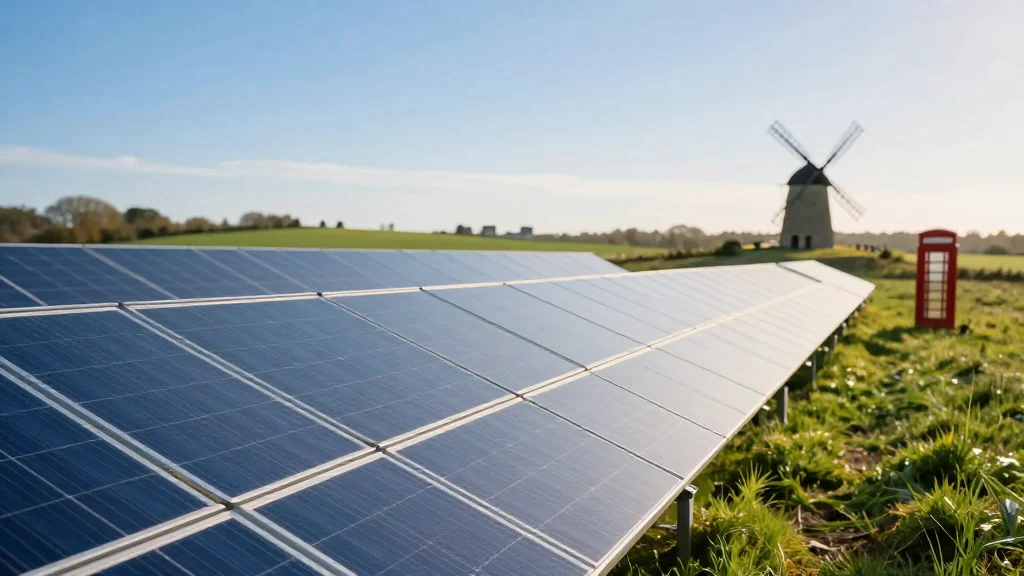
UK Approves 800 MW Springwell Solar Farm, Largest Clean‑Energy Project to Date

Why It Matters
The Springwell Solar Farm’s approval represents a concrete step toward the UK’s legally binding net‑zero emissions goal for 2050. By adding 800 MW of solar capacity, the project helps diversify the nation’s renewable mix, reducing reliance on intermittent wind and fossil‑fuel generation. The scale of the farm also showcases the UK’s ability to host utility‑scale solar projects, which could attract further domestic and foreign investment into the sector. Beyond emissions, the farm is poised to create jobs in construction, operations, and maintenance, while stimulating demand for solar‑module manufacturing and related supply‑chain services. Its location in the East Midlands could also spur regional economic development, aligning with broader government objectives to balance growth across the country.
Key Takeaways
- •UK government approves 800 MW Springwell Solar Farm, the largest clean‑energy project in the country.
- •The farm will generate enough electricity to power approximately 180,000 homes.
- •Site is located between Lincoln and Sleaford in the East Midlands.
- •Approval follows recent UK policies on rooftop solar, mandatory solar for new homes, and space‑based solar research.
- •Project advances the UK’s net‑zero 2050 target by adding significant solar capacity to the grid.
Pulse Analysis
The Springwell approval is more than a bureaucratic win; it signals a strategic shift in the UK’s energy policy toward large‑scale solar as a core pillar of decarbonisation. Historically, the UK has leaned heavily on offshore wind to meet renewable targets, but solar has lagged due to perceived land‑use constraints and lower capacity factors. By green‑lighting an 800 MW ground‑mounted farm, policymakers are acknowledging that solar can play a complementary role, especially in regions with favorable irradiance and existing grid connections.
From a market perspective, the decision could catalyse a wave of similar projects. Investors have watched the UK’s renewable pipeline closely, and the Springwell farm offers a proof point that regulatory risk can be managed. The absence of detailed financing information in the source suggests that the project may still be in the early stages of capital raising, but the approval itself reduces a major hurdle, making the venture more attractive to private equity, green‑bond issuers, and institutional investors seeking exposure to climate‑aligned assets.
Looking ahead, the real test will be execution. The UK’s grid operators will need to integrate the intermittent output of a large solar farm without compromising reliability. Advances in storage, demand‑response, and grid‑balancing technologies will be essential. If the Springwell project proceeds smoothly, it could set a template for future utility‑scale solar developments, reinforcing the UK’s reputation as a leader in the global transition to clean energy.
UK Approves 800 MW Springwell Solar Farm, Largest Clean‑Energy Project to Date
Comments
Want to join the conversation?
Loading comments...